Get Full Government Meeting Transcripts, Videos, & Alerts Forever!
Get email alerts on the State Budget topic
No spam. Unsubscribe anytime.
Oregon Department of Revenue budget request centers on IT projects, collections and property-tax shortfall
Summary
Presenters briefed the Senate General Government Subcommittee on the governor’s 2025–27 budget for the Oregon Department of Revenue, highlighting investments to finish an electronic property-tax system, temporary general‑fund support for a property-tax division shortfall, and a small increase for collections capacity.
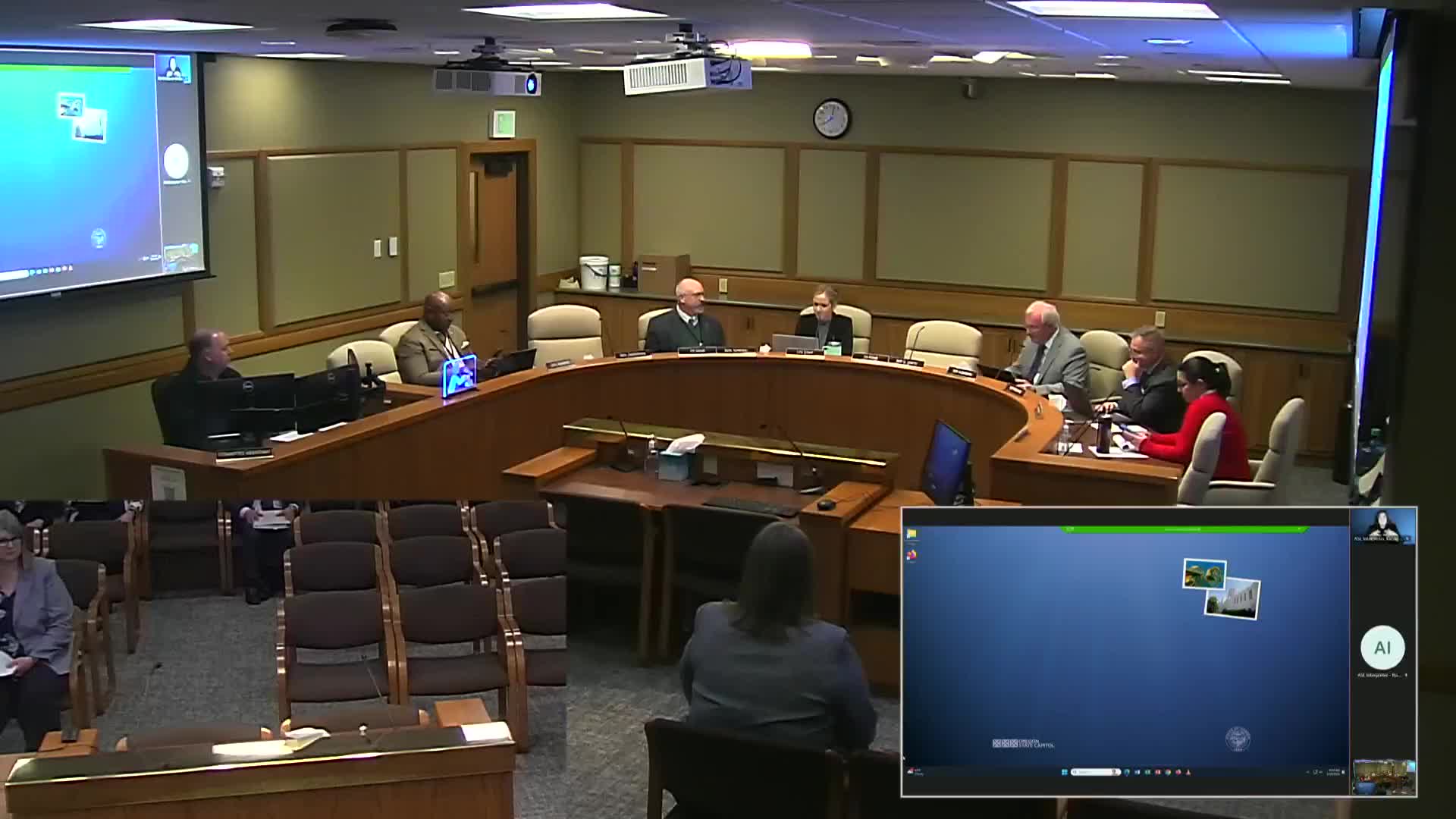
Renee Klein, chief financial officer for the Department of Administrative Services, and Betsy Eimholt, director of the Oregon Department of Revenue, told the Senate General Government Subcommittee on March 10 that the governor’s 2025–27 budget for the department focuses on finishing an electronic property-tax system, backing a portion of a property-tax division funding shortfall with general fund, and funding modest increases in collections capacity.
The presentations matter because the Department of Revenue administers dozens of tax and fee streams that fund state and local services; changes to its operating budget affect how those programs are administered and how money flows to counties and other recipients. Klein said the governor’s budget “make[s] 1 investment in the collections division to assist with anticipated workload increases” and recommended investments “to finish that project” — a reference to the department’s electronic evaluation information system, commonly called Elvis, in the property‑tax division.
Klein gave an overview of recent spending trends and fund sources for the department. She said general fund would make up about 62% of the recommended budget with the remaining 38% from other funds. She described “other funds” as a mix of administrative charges on programs, bond proceeds for IT projects, fees for services (including debt collection on behalf of other agencies) and receipts from programs such as the senior deferral revolving account and county assessment assistance (CAFA).
Klein said the department has experienced cost growth in property-tax programs and that statutory caps on administrative funding have left some programs underfunded. As a result, revenue reduction packages were submitted in prior biennia; the governor’s budget recommends backfilling a portion of that shortfall with general fund to restore some program reductions. She described reductions elsewhere in the recommended budget tied to cost‑allocation savings, rental savings following a reduced footprint, postage and services-and‑supplies savings, and a roughly $380,000 reduction in the nonprofit homes program.
Klein and Eimholt both emphasized that most of the department’s spending is for personnel delivering direct program services and that IT-related spending is split between ongoing IT services and a much smaller project-investment line item. Eimholt said the department’s work rests on four “buckets”: administering about 63 revenue streams, collecting and redistributing revenue (she noted the department moved roughly $45,000,000,000 in the last full biennium), overseeing the property-tax system, and collections for delinquent non‑tax accounts for roughly 200 entities.
Eimholt said the department has modernized several systems over the past decade and is finishing the final major modernization project; she described that work as costly but central to allowing the agency to handle a large growth in returns, calls and revenue with only modest FTE increases. She also described strategic‑planning, outreach and customer‑experience projects — including a multiyear “letters project” to simplify confusing notices — as priorities.
The presenters answered committee questions about how other funds are collected and used, the senior deferral alignment to recent enrollment trends, and how the department balances transparency and fraud prevention when improving online refund status tools.
The subcommittee did not take formal action during the informational hearing; the presentation was the opening overview for a three‑day informational review of the department’s budget under Senate Bill 5536.
Klein and Eimholt said more division‑level briefings would follow in subsequent days, and the committee recessed until the next scheduled hearing.