Get Full Government Meeting Transcripts, Videos, & Alerts Forever!
Get email alerts on the Judicial Budget topic
No spam. Unsubscribe anytime.
Supreme Court requests $173 million for 2026; launches public access to circuit court records
Summary
Chief Justice John Wootton told the West Virginia Senate Finance Committee that the Judicial Branch is seeking $173,043,683 for fiscal year 2026, highlighted a new public e-filing access to circuit court records, and described staffing and technology needs while answering senators' questions.
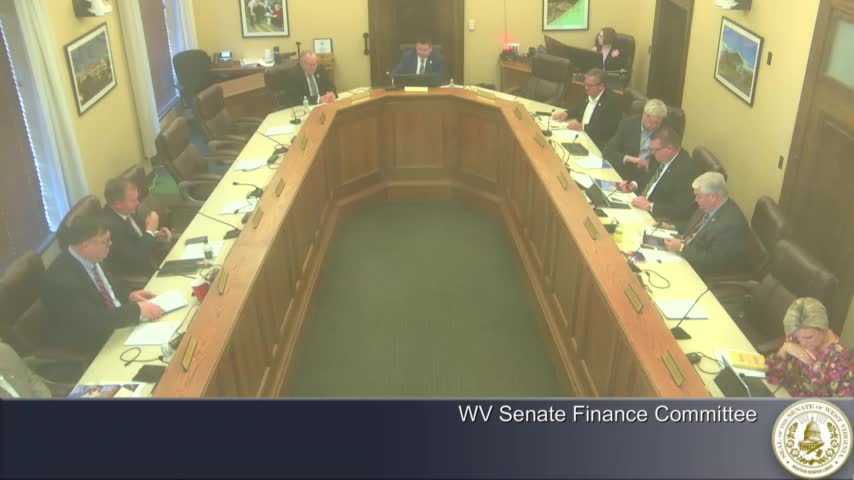
Chief Justice John Wootton told the West Virginia Senate Finance Committee on March 10, 2025, that the Judicial Branch is requesting $173,043,683 for fiscal year 2026 to operate West Virginia’s unified judicial system and support courts across all 55 counties.
Wootton said the request covers the full judicial branch — the Supreme Court of Appeals, the intermediate court of appeals, circuit, family and magistrate courts, and court staff — and emphasized staffing, technology and treatment-court funding as priorities. “Our budget is precisely calculated and designed to only ask for the funds we actually need to operate our court system,” Wootton said.
The budget request appears in the context of the branch’s ongoing modernization work. Wootton announced that, as of March 10, the court has “launched online public access to electronic circuit court records,” allowing the public to search statewide civil and criminal circuit court records back to 1999; searches are free, and documents may carry a small transactional fee. He said attorneys will have expanded access for cases where they are counsel of record.
Why it matters: the requested funding pays for personnel and services that operate courts in every county. Wootton told senators that 84.5% of the judicial budget is for personal services and benefits, 53% pays for lower (circuit, family and magistrate) courts and probation accounts for about 21% of the budget. He said the total increase requested for fiscal year 2026 is just over $6 million and that the judicial branch represents about 3.3% of the state’s general revenue budget.
Key figures and program details Wootton presented include the following, as stated to the committee: the branch’s FY26 request is $173,043,683; the Legislature appropriated $166,316,509 to the Judicial Branch last year; fiscal year 2024 expenditures were roughly $156,000,000 against $154,000,000 in appropriations; for the first six months of the current fiscal year the branch expended $83,800,336 (about 50.4% of appropriations); and the branch closed the current vacancy rate described in the presentation materials (text in the packet). He said the branch carried approximately $24,700,000 in reappropriated funds into the current period.
Wootton described several specific budget drivers: an approximately $1.5 million increase for the employer share of PEIA premiums; a roughly $2 million increase tied to the second half of the 2023 judicial realignment bill (listed in materials as House Bill 3,332); and about $1 million to continue family treatment costs for the coming year. He also said the court is requesting a $266,000 increase targeted at pay scales for court reporters and electronic recording operators, and asked for additional probation officer positions and two administrative positions (one dedicated to support for self-represented litigants).
On family treatment courts, Wootton said these programs have both outcomes and fiscal effects: he reported that 88 percent of children whose parents complete the Family Treatment Court program have not re-entered foster care and that 9.6 percent of program graduates were re-adjudicated for abuse or neglect within two years. He also said 93.1 percent of drug screenings among Family Treatment Court participants returned negative results and that the program has generated about $2,400,000 in net savings from reduced subsidy payments since its inception.
Technology and procurement: Wootton and Keith Hoover, the court’s administrative director, told the committee that the branch renegotiated its e-filing vendor contract and that public online access to circuit court records went live March 10. Hoover described an ongoing request for proposals to unify multiple court systems (magistrate, circuit and family court case management and e-filing) into a single platform; he cautioned that an awarded contract would be a multi-year project and full replacement could take multiple years after an award. The branch reported holding roughly $16,500,000 in unexpended cash in a general judicial fund category and said much of that reappropriated money is being held to help pay upfront costs if a large technology contract is awarded, reducing the need to return to the Legislature for additional funding.
Staffing and recruitment: Wootton and Hoover said the Judicial Branch has focused on recruiting probation officers, circuit court law clerks and court reporters. Hoover explained the branch uses workload formulas to determine probation staffing and that vacant positions are reviewed line-by-line before being included in the budget. The court said it has used targeted appropriations in recent years to raise pay for probation officers and circuit court law clerks to address vacancies.
Pensions and compensation: Committee members asked about judicial compensation and pension proposals. Wootton referenced the 2024 Judicial Compensation Commission report included in the committee packet and said the court supports that report’s purpose and methodology; he provided an informational estimate included in the packet that implementing the commission’s 2024 recommendation would cost about $5,587,290. The court did not take a formal position on a separate Senate bill discussed by members that would temporarily reduce the employer pension contribution to help defray near-term compensation costs.
Committee action and next steps: the presentation generated several senator questions but the committee did not take a formal vote on the Judicial Branch budget during this hearing. The only recorded committee motions in the transcript were approval of the committee minutes (moved by the vice chairman and adopted) and a motion to adjourn (adopted). Wootton and staff said they would respond to any follow-up information requests from the committee and that the branch stands prepared to provide additional details about vacancies, pension accounting, and the timeline and funding plan for the technology procurement.
Ending: The committee paused further action after the presentation; senators indicated the budget and related pension or compensation bills may move through other committees before returning to Finance for funding decisions.