Get Full Government Meeting Transcripts, Videos, & Alerts Forever!
Get email alerts on the Ticket Delivery topic
No spam. Unsubscribe anytime.
Arizona House rejects bill setting 15‑day ticket-delivery requirement for primary sellers
Summary
House Bill 2748, which would have required primary ticket sellers to deliver tickets at least 15 days before an event and to disclose delivery timing on resale platforms, failed on a 21–33 vote March 6, 2025. Sponsors said the change protects consumers and small arts organizations; opponents said it improperly regulates private contracts.
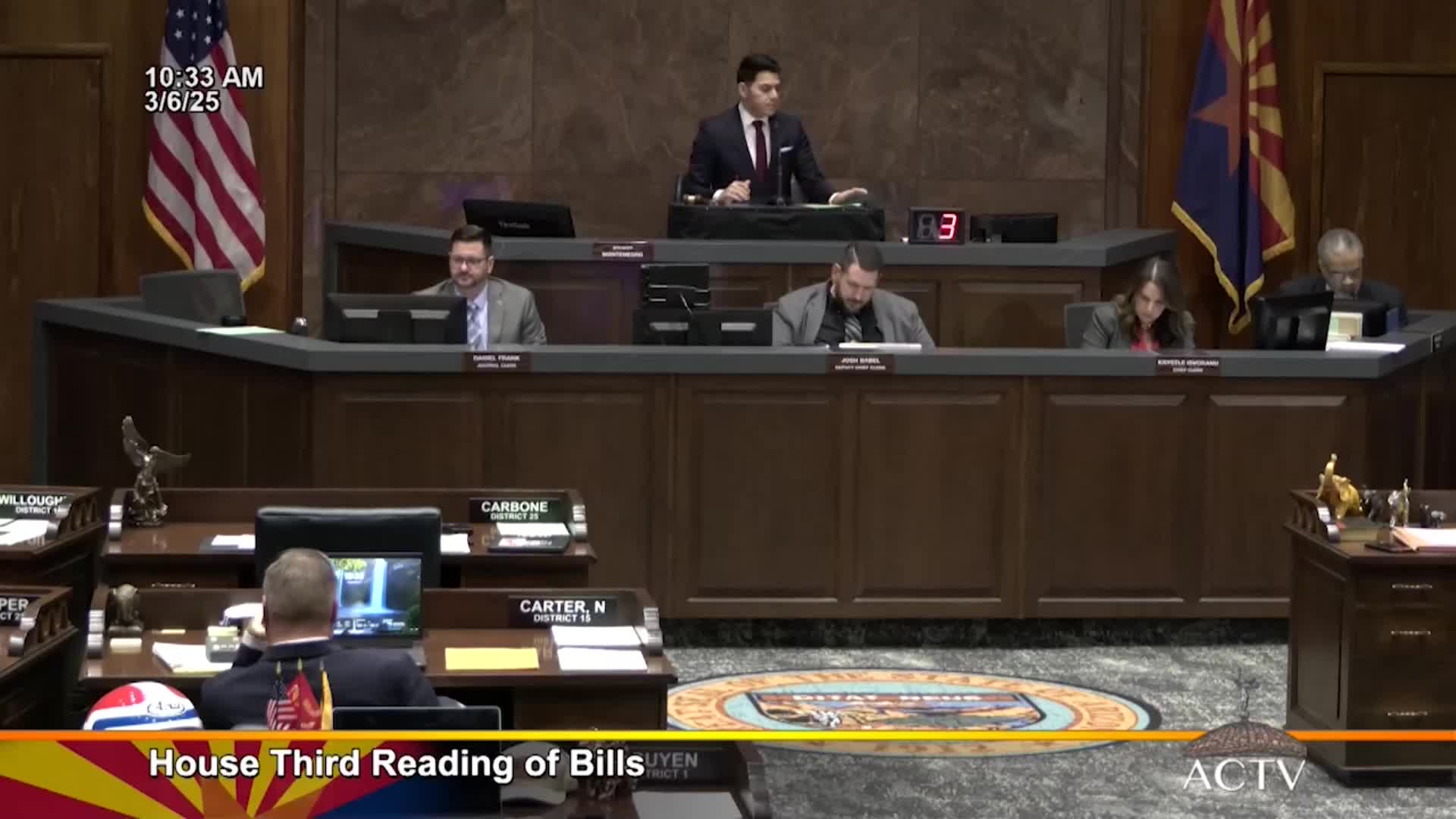
The Arizona House on March 6, 2025 voted down House Bill 2748, legislation that would have required a primary ticket seller to deliver purchased tickets no later than 15 days before an event and require secondary-market sellers to disclose delivery timing.
Sponsor Representative Wenninger described the bill as a consumer‑protection measure intended to reduce last‑minute delivery failures that leave ticket buyers unable to attend or resell tickets. “This bill basically says … you will get your [ticket] 15 before the actual event,” Wenninger said on the floor, adding he had worked with sports teams and arts groups and that amendments had been made to accommodate small theaters and season-ticket arrangements.
Supporters related consumer anecdotes: Representative Biasucci recounted a case in which a resale vendor canceled an order 24 hours before an event after the buyer had already made out‑of‑pocket travel plans. “To say that you are okay with a company telling you 24 hours before the event that we’re not going to fulfill the order is insane,” Biasucci said. Representative Blackman framed the bill as consumer‑protection legislation and said the House has a duty to prevent Arizonans from losing money on purchases that are never delivered.
Opponents argued the bill inappropriately inserts government into private market agreements and that market pressure and consumer choice were preferable remedies. Representative Wilson said he supported the practice in principle but did not believe state law should tell independent sellers how to contract.
On final passage the clerk recorded 21 ayes, 33 nays and 6 not voting; the bill failed. Representative Wenninger subsequently moved to reconsider the House’s action and the motion to reconsider was adopted, returning the bill to third reading for future consideration.