Get Full Government Meeting Transcripts, Videos, & Alerts Forever!
Get email alerts on the Interchange Fees topic
No spam. Unsubscribe anytime.
Arizona House rejects bill to prohibit card processors from charging fees on sales tax
Summary
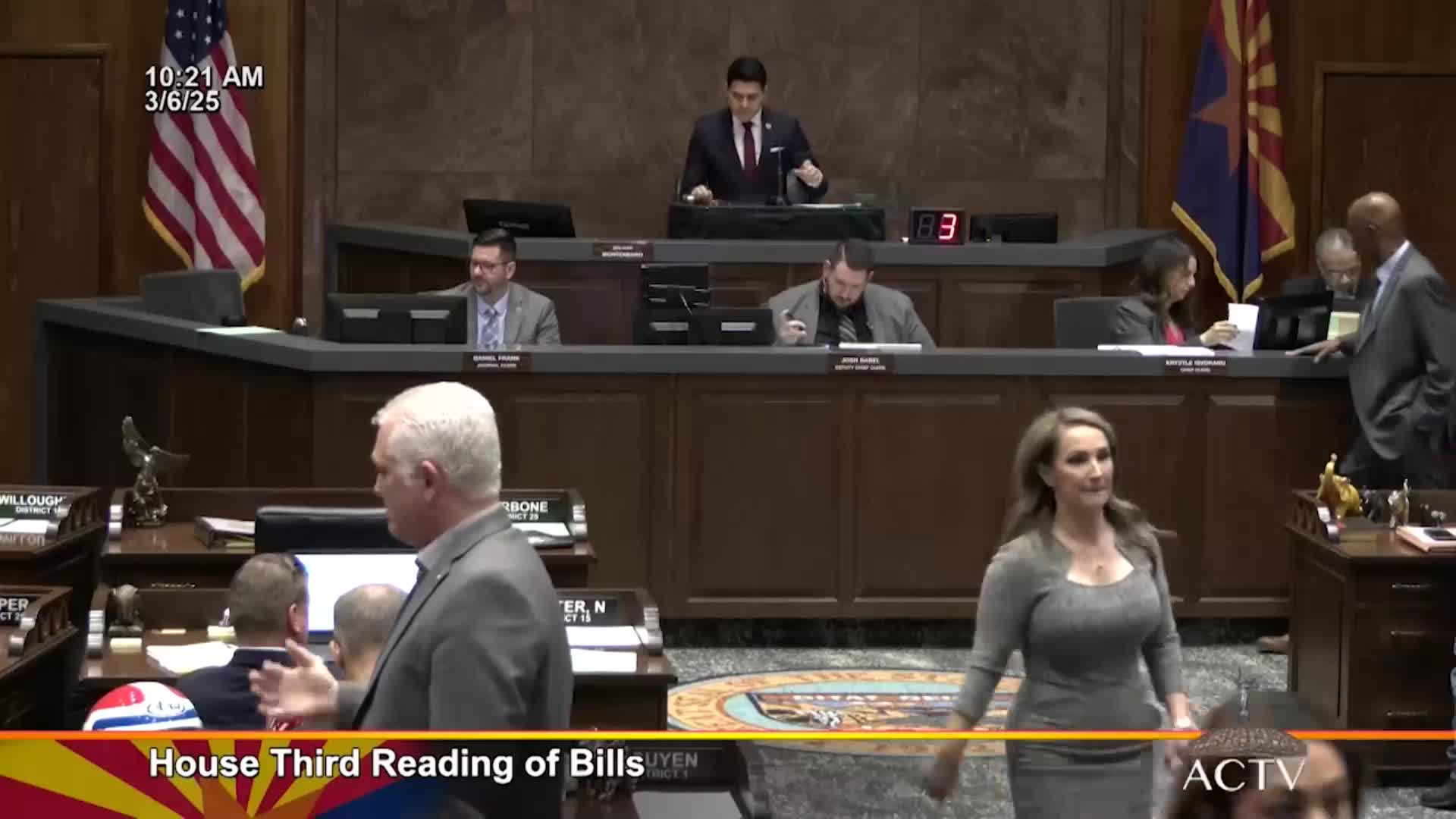
On March 6, 2025, the Arizona House voted 23–31 to defeat HB 2629, which would have barred payment processors from charging interchange or merchant fees on the portion of purchases that represents sales tax. Sponsors said the measure would help small retailers; opponents cited fraud-prevention funding and preferred a national court resolution.
The Arizona House of Representatives on March 6, 2025 failed to pass House Bill 2629, a measure that would have limited credit-card processors from charging interchange or merchant fees on sales tax amounts that retailers collect for the state.
The bill’s sponsor, Representative Wininger, told colleagues the bill aimed to protect local merchants from “hidden” costs imposed by credit-card networks and banks. “I believe this hidden fee is unfair,” Wininger said on the House floor, arguing processors should not be able to collect fees on sales tax that businesses are mandated to collect.
The bill’s defeat came after floor debate that split members on questions of consumer protection, fraud prevention and the proper role of state law. Representative Quontay Cruz, explaining his no vote, said interchange fees help fund fraud-prevention and reimbursement systems that make consumers whole after identity theft. “The fees that we’re talking about … also go to support fraud prevention and to reimburse consumers when there is fraud using their account,” Cruz said. Representative Gress said he preferred to let ongoing litigation resolve the issue nationwide and worried processors would shift costs if the state acted first. Representative Olson said he sympathized with retailers but did not want government to intervene in private contracting between businesses and payment processors.
On the final roll call the clerk recorded 23 ayes, 31 nays and 6 not voting; the House declared that HB 2629 had failed. Later in the session Representative Wenninger moved — and the House agreed — to reconsider the earlier action and again place the bill on the calendar for third reading.
Background and context: the bill was described on the floor as an amendment to Title 44, Chapter 26, Article 1 (electronic transactions), as cited in the bill text. Sponsors framed HB 2629 as targeting interchange fees charged by major card networks, which members repeatedly identified in debate as Visa and Mastercard. Opponents warned that some portion of those fee revenues supports fraud-prevention and consumer reimbursements, and noted pending court cases in other states addressing the same issue.
What’s next: Because the House voted to reconsider its action, HB 2629 may return to the calendar for further consideration; no final engrossed version or effective-date language was adopted on March 6.