Get Full Government Meeting Transcripts, Videos, & Alerts Forever!
Get email alerts on the Recorder Fees topic
No spam. Unsubscribe anytime.
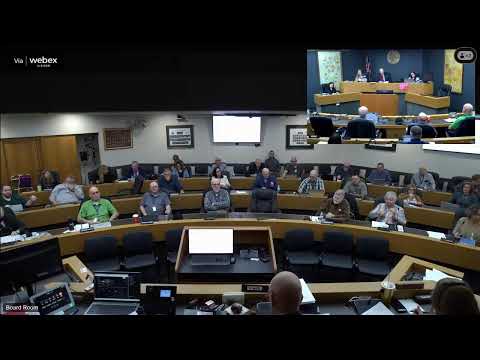
LaSalle County board adopts new recorder fee schedule, sets standard recording fee at $100
Summary
After a lengthy presentation and discussion, the LaSalle County Board approved an ordinance that sets a single standard recording fee of $100 (effective May 9, 2025), reallocating revenue among the county general fund, GIS, and the recorder—s equipment fund based on a Bellwether LLC cost study.
LaSalle County Board on March 10 approved an ordinance revising the county—s predictable fee schedule for the Recorder—s Office, setting a single standard recording fee of $100 and directing that the change take effect May 9, 2025.
The ordinance, proposed by LaSalle County Recorder Karen Miller after a Bellwether LLC cost study, was adopted by roll call vote, 23 ayes to 5 nays. The fee change replaces the county—s previous tiered fees and reallocates each $100 recording: roughly $27 to the county general fund, $47 to GIS, and $6 to the recorder—s equipment fund (the remainder reflects statutorily fixed distributions). The recorder said the Bellwether study recommended $107, but she recommended $100 as a more moderate increase.
Recorder Karen Miller said the change responds to a sustained drop in recording volume and to the need to maintain county GIS and recorder operations. "Documents recorded have dropped significantly since 2021," Miller said during her presentation, citing a fall from 28,191 documents in 2013 to about 14,556 in recent years and a 29 percent decline in general-fund revenue from the recorder—s office between fiscal 2018 and fiscal 2024. She said the county currently has roughly 388,000 scanned documents that require indexing and that GIS services (parcel maintenance, farmland assessment calculations, county redistricting support and emergency mapping) are funded solely by GIS recording fees.
Why it matters: the fee change moves predictable, dedicated revenue to three funds that support county mapping, records technology and general operations. Board members who questioned the proposal pressed for clarity about how much additional revenue the change would generate and whether the county had explored phasing the increase. County Board Member Joe Traeger and others suggested a phased implementation might reduce the burden on people involved in real-estate transactions; Miller said the Bellwether study and the statute—s requirements made a phased increase difficult without a new cost study.
Board members also discussed who ultimately pays recording fees. Miller and other presenters noted recording fees are charged as user fees in real-estate and title transactions (for example, mortgages or deeds) rather than as a property tax. Miller stressed GIS functions touch multiple county departments and are currently funded only by recording fees.
Committees and process: the county—s taxes, elections and GIS committee reviewed the Bellwether cost study on Jan. 27, and the finance committee reviewed it on Feb. 4. The recorder posted the proposed schedule in her office for the statutorily required notice period before the board vote. The ordinance cites Public Act 103-0884 and Illinois statute 55 ILCS 5/3-5018.2 as the statutory basis for adopting predictable fee schedules.
What the ordinance does: it approves the Recorder—s amended predictable fee schedule as presented, making the single standard fee effective 60 days after adoption (May 9, 2025). Miller said the recorder—s office will use the additional equipment fund dollars for planned replacement of PCs and scanners, for back-indexing and for other operations.
Votes at adoption: the roll call was 23 ayes, 5 nays. The record of committee review and the Bellwether report were entered as supporting materials.
Next steps and unresolved items: several board members asked for more comparative data with neighboring counties and suggested staff examine operational efficiencies; Miller said Bellwether has performed similar studies for other counties and that a new study would be required to change course. The board did not direct new follow-up work at the meeting beyond standard committee oversight.
Ending: The ordinance formalizes fee changes intended to stabilize funding for recorder operations and county GIS services amid declining recording volumes; it will take effect May 9, 2025.