Get Full Government Meeting Transcripts, Videos, & Alerts Forever!
Get email alerts on the Technology Security topic
No spam. Unsubscribe anytime.
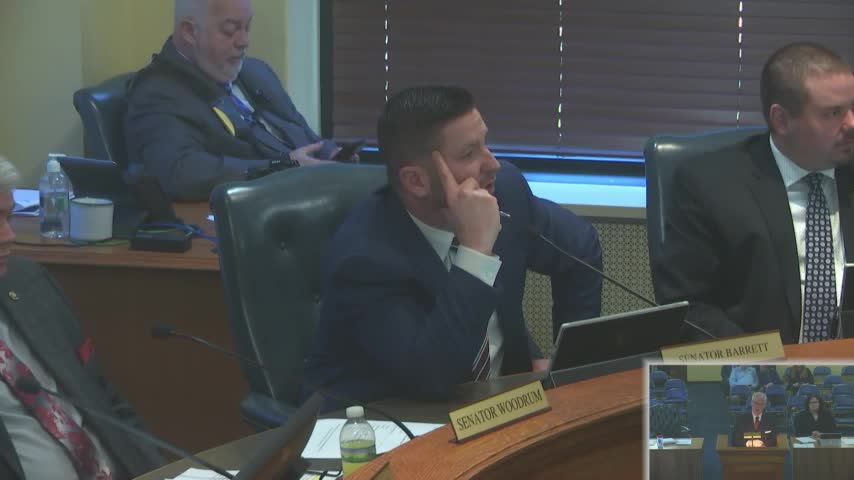
Committee backs bill to bar state devices from apps or AI owned by listed ‘countries of concern’
Summary
Senate Bill 694 would prohibit state‑owned or leased internet‑capable devices from downloading or accessing apps, websites, channels or AI owned by entities in specified foreign 'countries of concern'; the committee reported the bill to the full Senate with referral to Judiciary.
The Senate Committee on Government Organization voted to report Senate Bill 694 to the full Senate with the recommendation that it do pass and to refer the bill first to the Judiciary Committee under its original double committee reference.
Committee counsel explained that SB 694 would create a new article in Chapter 5 of the West Virginia Code, Article 32, requiring state agencies, their employees and contractors to prohibit state‑owned or leased internet‑capable devices (for example computers, laptops or cell phones) from downloading or accessing any app, channel, website or platform owned by an entity in a "foreign country of concern." The bill’s list of countries of concern given in the committee testimony includes the People’s Republic of China, Cuba, Iran, North Korea, Russia and the Maduro regime of Venezuela. Counsel said the prohibition would also cover AI, algorithms and software owned by entities in those countries.
Counsel said the bill contains a waiver process: state officials, employees or contractors could obtain a waiver limited to performance of duties, and waivers would be issued by the Secretary of State. Counsel also said that law enforcement officers, as defined in the code section cited, are excluded from the prohibition. When asked whether public universities are covered, counsel said the universities would not be covered under the bill’s definition of state agency. On enforcement, counsel said agency enforcement would be left to the agencies themselves.
Senator from Summers asked whether prior, narrower language (for example measures aimed at a particular app) became law; counsel said he did not recall whether a prior TikTok‑directed provision ultimately was enacted. Counsel said there is not a current database listing which apps are controlled by which foreign entities and that the Office of Technology was not reached for assistance while drafting the bill.
After no amendments were offered, the vice chair moved to report SB 694 to the full Senate with the recommendation that it do pass, and to refer the bill to the Judiciary Committee as required. The motion passed on a voice vote; no recorded roll‑call tally was given.
The committee’s recommendation moves SB 694 toward a Judiciary Committee review and a later Senate floor consideration.