Get Full Government Meeting Transcripts, Videos, & Alerts Forever!
Get email alerts on the Lobbyist Transparency Hb143 topic
No spam. Unsubscribe anytime.
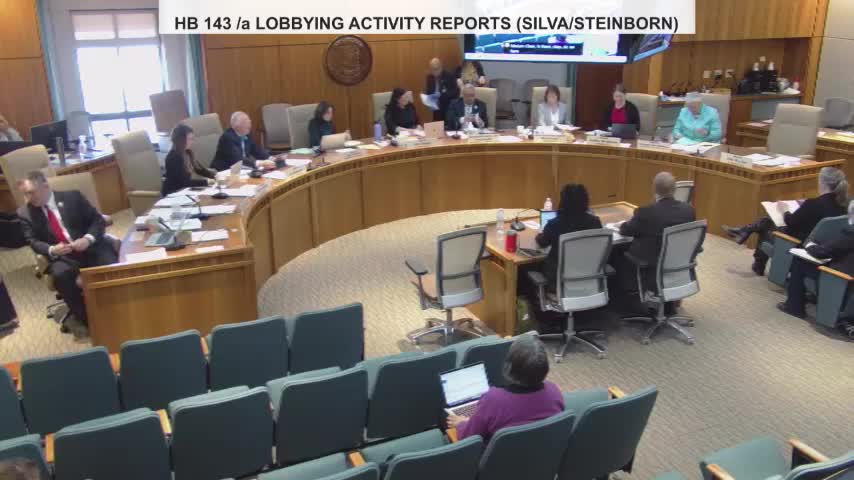
Committee clears House Bill 143 to track lobbyist activity after contentious debate and amendment
Summary
The committee voted to give House Bill 143 a due pass as amended, approving a requirement that registered lobbyists file an activity report naming employers and positions on bills with 48‑hour updates; members debated privacy, enforcement, and an earlier House floor amendment that was removed.
A state Senate committee voted to recommend House Bill 143, a lobbyist‑transparency measure, after lengthy debate and an amendment that removed a controversial House floor provision. Supporters said the bill will give legislators and the public a clearer picture of who is influencing legislation; critics raised privacy concerns for small employers and warned about procedural effects.
Representative (house sponsor) told the committee House Bill 143 would “modernize our state's lobbying reporting system” by requiring registered lobbyists to file an activity report that names their employer and states whether the lobbyist is supporting, opposing or monitoring particular legislation. The proposal requires lobbyists to update that activity report within 48 hours when their position changes; reports will be posted online and to Legislative Council Services' public pages. The bill’s effective date was set for Jan. 1, 2027, to allow agencies time to build reporting systems.
The League of Women Voters (Hannah Burling) and the State Ethics Commission (Amelia Beierleit) testified in support, saying the disclosures would strengthen public oversight without restricting legitimate lobbying. “The disclosures proposed in House Bill 143 are reasonable and necessary to promote accountability while respecting the important contributions lobbyists make,” the State Ethics Commission said.
Committee debate focused on two fault lines: (1) whether the state should require lobbyists to identify employer positions (some committee members warned that listing small businesses’ political positions could chill participation), and (2) a House floor amendment that had language interpreted by some members as imposing a $50 cap on lobbyist‑paid expenses during session. The committee first voted not to adopt an initial set of conflicting changes tied to a different bill (Senate Bill 248 language) and later voted to strike the House floor amendment after members sought clarity on its drafting and effect.
Senator Block and others said they were concerned the bill would require disclosure that could expose small businesses or discourage them from hiring representation. Representative sponsor and Senator Steinborn said the intent is to shed light on who is shaping bills and to “look at the lifespan of a bill,” and noted the bill applies only to compensated lobbyists as defined in statute.
Procedurally, the committee adopted an amendment that removed the House floor amendment. A final motion to give House Bill 143 a “due pass as amended” passed on roll call with six in favor and the recorded votes: Senator Bergman — Yes; Senator Block — Nay; Senator Stefanik — Yes; Senator Stewart — Yes; Senator Jaramillo — Yes; Senator Duhigg — Yes; Senator Townsend — No; and others recorded as excused or absent. The committee chair recorded that the bill received a due pass as amended.
The bill directs the Secretary of State to post lobbyist activity reports online and to coordinate posting with Legislative Council Services. It also includes the requirement that the reporting system be implemented with online filing and delayed implementation until Jan. 1, 2027, to give agencies time to build the system. Supporters said the measure is aimed at improving transparency, while critics urged further protections for small employers and clearer definitions for multi‑member organizations and changing lobbying positions.