Get Full Government Meeting Transcripts, Videos, & Alerts Forever!
Get email alerts on the Above Ground Storage Tanks topic
No spam. Unsubscribe anytime.
Senate committee approves substitute to loosen inspections for small above‑ground storage tanks
Summary
A committee approved a substitute to amend the Above Ground Storage Tank Act to exempt certain small tanks from periodic third‑party inspection, shifting them to self‑inspection and annual reporting; DEP and industry witnesses gave contrasting views on risks to drinking water.
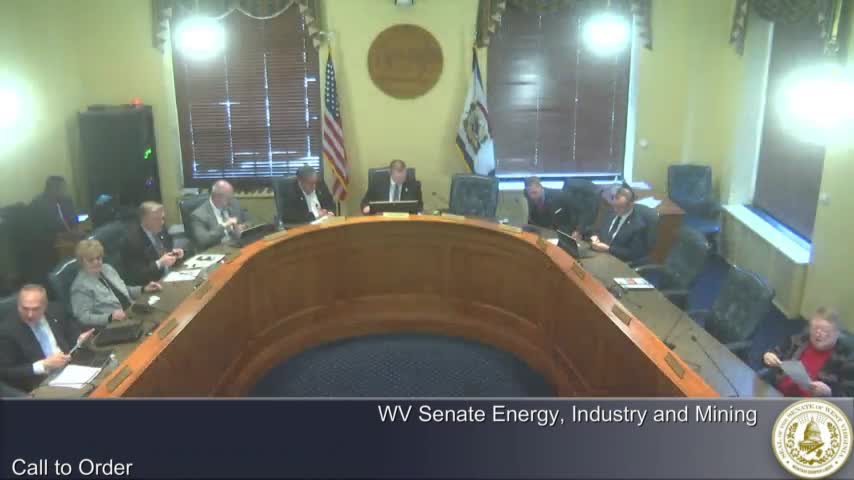
The Senate committee agreed to a committee substitute for Senate Bill 592 that would change inspection and evaluation requirements under West Virginia's Above Ground Storage Tank Act, Chapter 22, Article 30, for certain small tanks.
The substitute would add a new exemption for devices having a capacity of 210 barrels or less located within the boundaries of a permit and not in a defined zone of critical concern, rework definitions of "release" and "leak," reduce third‑party inspection frequency and allow self‑inspection and self‑certification reported to the Department of Environmental Protection (DEP) at least once a year.
Senator from Marion explained the committee substitute and moved that it be reported to the full Senate with a recommendation that it do pass. The committee agreed by voice vote; the chair declared the ayes prevailed and the substitute will be reported to the full Senate with a recommendation for passage.
Scott Mandarola, deputy cabinet secretary for the West Virginia Department of Environmental Protection, told the panel the original 2014 law initially treated all tanks in the state as regulated and that later rules created Level 1 and Level 2 designations tied to zones intended to protect drinking water. "Initially, in 2014, all tanks across the state were considered regulated tanks," Mandarola said. He described the zone of critical concern as a five‑hour travel time defined by the Bureau for Public Health to protect drinking‑water sources and said the bill would remove regulation for hundreds of tanks now inside that zone.
Mandarola described current inspection requirements: Level 1 tanks are inspected by DEP once every three years, with owners required to self‑inspect two of the three years and obtain an outside third‑party inspection once every three years (or use an in‑company certified person who completed a certification course). He said the substitute would eliminate the outside third‑party inspection requirement for some oil and gas and coal industry tanks and rely on self‑inspection. He noted secondary containment is required to hold 72 hours of a release and warned that extending inspection intervals could allow containment to be exceeded if a release goes unaddressed for longer than that interval.
Philip Reel, representing the West Virginia Oil & Natural Gas Association, testified the tanks covered by the substitute are generally small, associated with older, low‑producing vertical wells, and argued the operators typically conduct frequent in‑person checks. "These are tanks associated with very low producing natural gas vertical wells," Reel said. He said many operators perform multiple inspections per month and that subjecting small operators to frequent third‑party certifications can be financially burdensome.
Committee members questioned DEP and industry witnesses about the chemical contents of tanks, possible contaminants and historical release data. Mandarola said many tanks can contain brine, condensate, oil and constituents of petroleum such as benzene, toluene and xylenes; he noted that over the last three years, 38 percent of recorded releases the agency handled were associated with the oil and gas tanks targeted for exemption. Members pressed whether past incidents had affected public water intakes; witnesses said such impacts to public water intakes had not been documented.
The committee record shows the chair put the question on agreeing to the committee substitute and the substitute was adopted by voice vote. Later the motion to report the substitute to the full Senate with a do‑pass recommendation was moved and agreed to by voice vote.
Votes at a glance: committee substitute for Senate Bill 592 — voice votes approving the substitute and to report to the full Senate with recommendation that it do pass; decisions recorded as voice votes, no roll‑call tallies provided in the transcript.
The committee also noted Senate Bill 505 will be laid over to a later date.
The committee hearing included questions from multiple senators (identified in the record by chamber/district labels rather than full names), and two witnesses gave sworn testimony. The substitute now proceeds to the full Senate for further consideration.