Get Full Government Meeting Transcripts, Videos, & Alerts Forever!
Get email alerts on the Kenneds Plant topic
No spam. Unsubscribe anytime.
Residents and advocates warn of harms from proposed Kennedy's gas plant; urge full review
Summary
Residents and environmental groups told a Senate subcommittee that a proposed large gas-fired plant at Kennedy's risks pollution, flooding and community harm. Testimony highlighted missing cost disclosures, differing IRP estimates and the need for full siting review and alternatives analysis.
Residents and environmental advocates told a Senate energy subcommittee that a proposed large gas-fired combined-cycle plant near Kennedy's would threaten public health, local waterways and an already-burdened community.
The testimony matters because the proposed facility would be a large, centralized source of emissions and require new pipeline and transmission work. Witnesses said the site is flood-prone, lies within the ACE Basin and that community members have lived with decades of pollution from earlier fossil-fuel infrastructure.
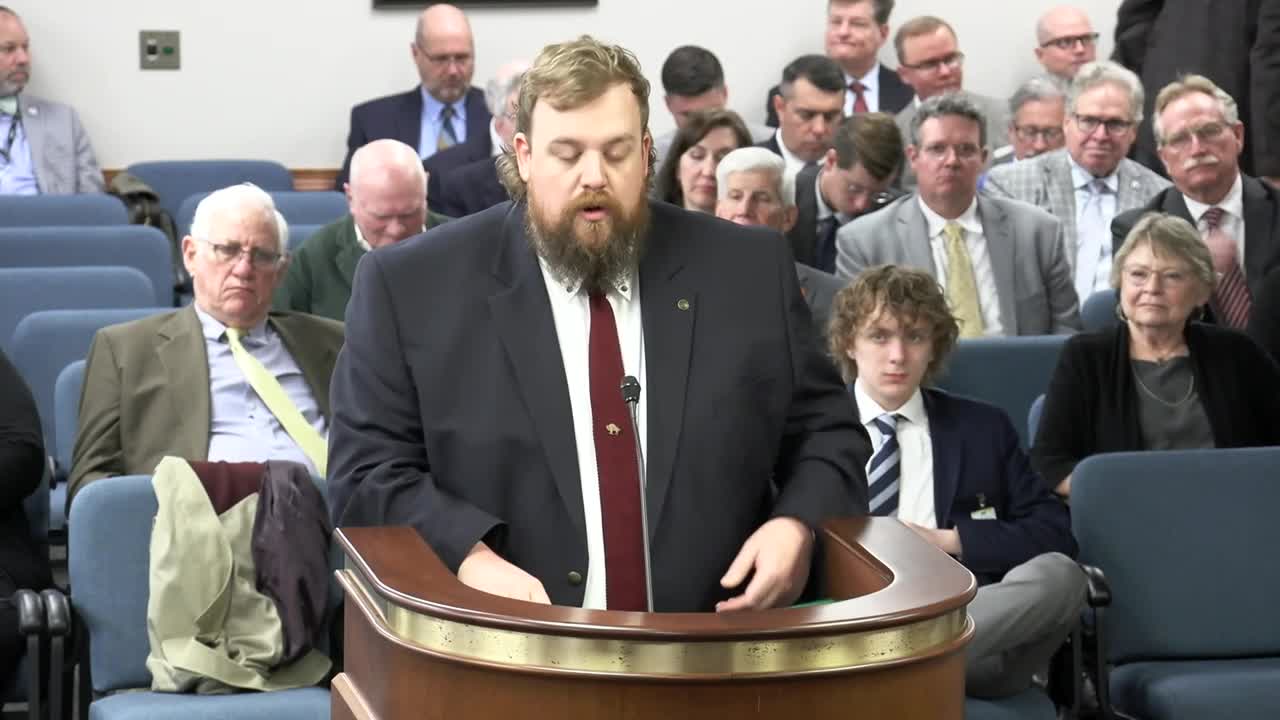
Robbie Maynor, who said he works with the Southern Environmental Law Center and is a resident of Kennedy's, told the panel he lives about two miles upstream from the proposed site. "Kennedy's is a very small rural community located along the Edisto River, which is one of the longest free-flowing blackwater rivers in all of North America," Maynor said. He highlighted a 50-year history of coal-plant impacts, ongoing coal-ash cleanup and the community's repeated exposure to pollution from Interstate 95. "Utilities are asking to build another polluting power plant in this very small, bridled community," he said.
Maynor and other speakers said utilities have not disclosed the full cost to ratepayers of building a "mega" plant at Kennedy's, nor the exact pipeline route or expansion cost to serve it. He emphasized that integrated resource plans (IRPs) are long-range planning documents and do not constitute siting or project approval; he quoted a Public Service Commission order noting that IRP approval "cannot be viewed as tacit approval of the project."
Taylor Allred of the Coastal Conservation League and other witnesses urged caution about concentrating large capacity at one site. Allred said the conservation group favors a more diversified portfolio and suggested limiting a proposed Kennedy's combined-cycle plant to about 600 megawatts rather than the 2,000 megawatts discussed. He cited a Telos Energy transmission-impact analysis that, in one scenario, found Dominion ratepayers could save about $231 million by choosing a smaller plant plus storage instead of a single 2,000-MW facility.
Senators questioned whether smaller, distributed gas capacity plus batteries or more solar and storage could meet demand while reducing transmission upgrades and flood risk. Hamilton Davis, representing solar developers, said the industry expects to participate in a mix of resources and favors competitive procurement of the megawatts identified in utility IRPs rather than a pre-approval of a single site.
Speakers urged that any permit timeline protections avoid automatic approvals if agencies miss deadlines, and recommended starting the review clock only after a complete application is filed. Multiple witnesses asked the legislature to require utilities to evaluate alternatives and fully disclose costs before endorsing a specific project or changing permit or appeals processes.
The subcommittee did not vote on any project approvals. Senators and witnesses agreed to continue review, and committee staff were asked to collect the Telos Energy study and other analyses cited during testimony.