Get Full Government Meeting Transcripts, Videos, & Alerts Forever!
Get email alerts on the Kennedys Gas Plant topic
No spam. Unsubscribe anytime.
Residents, Conservationists Warn of Health, Cost Risks from Proposed Kennedy's Gas Plant
Summary
Residents and conservation groups told a Senate subcommittee that the proposed Kennedy's combined-cycle gas plant could concentrate environmental and financial risks in an already burdened community and that permitting and cost details remain unclear.
Residents, conservation advocates and public-interest groups pressed the Senate Energy Subcommittee to scrutinize plans for a large combined-cycle gas plant near Kennedy's on the Edisto River, saying the project could create concentrated environmental and cost risks for a small, historically marginalized community.
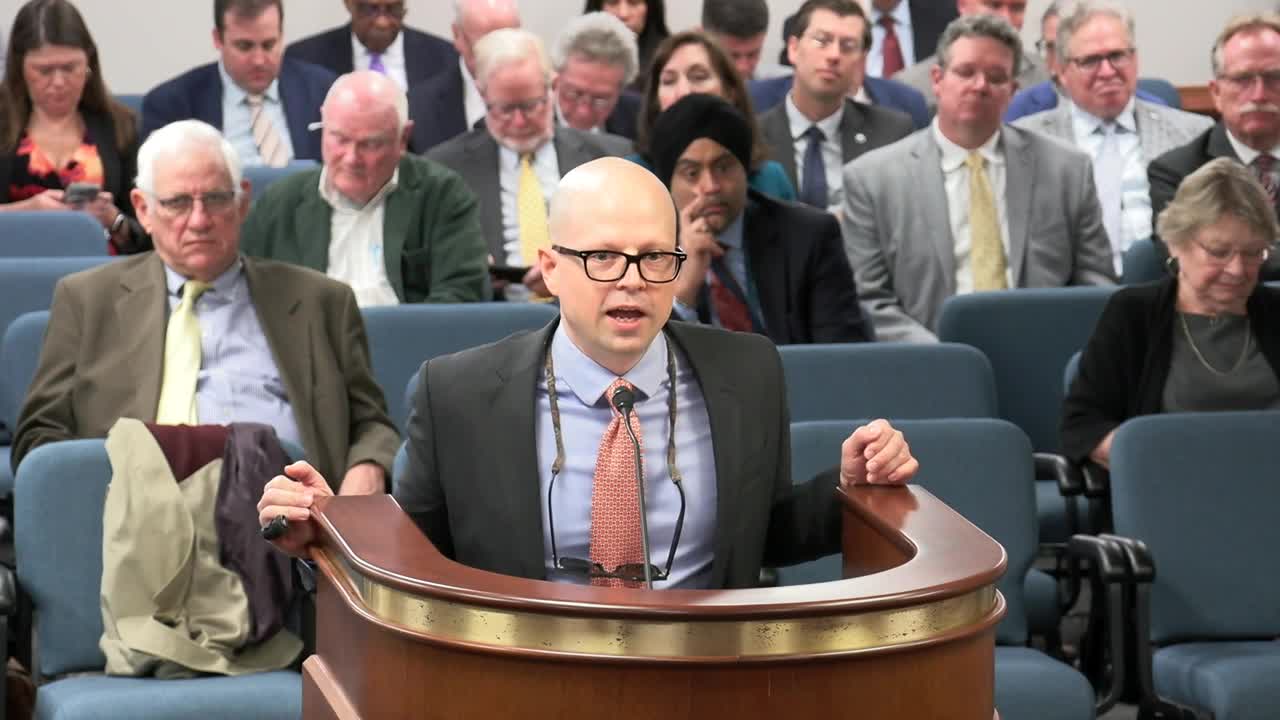
Robbie Maynor of the Southern Environmental Law Center, who identified himself as a Kennedy's resident, said he lives about two miles upstream from the proposed site and described long-term local exposure to pollution from an earlier coal plant and Interstate 95. “Residents in Kennedy's have had to live with pollution from that coal plant for 50 years until it was closed,” Maynor said. He and other witnesses urged the committee not to pre-approve a mega plant at Kennedy's and to require utilities to demonstrate that the site and project are the lowest-cost, best option for ratepayers.
Taylor Allred of the Coastal Conservation League warned against “putting all your eggs in one basket with one gigantic power plant” at the Kennedy's site, citing flooding, the need for extensive transmission upgrades and additional pipeline capacity as specific project risks. Allred recommended limiting a proposed combined-cycle plant at Kennedy's to roughly 600 megawatts rather than the scale discussed by utilities, and pairing smaller thermal capacity with storage and dispersed resources to reduce system risk.
Maynor and others also criticized permitting changes in the bill that would start permit clocks before applications are complete or allow automatic approvals if permitting agencies miss deadlines. “Granting automatic approval if an agency doesn't reach a decision in a certain time frame could unnecessarily jeopardize the health of South Carolinians and our natural resources,” Maynor said, while adding that a 12-month permitting timeline could be reasonable if agencies agree and applications are complete.
Witnesses noted that integrated resource plans (IRPs) are planning documents, not project approvals. Maynor cited the Public Service Commission’s order noting that an IRP “cannot be viewed as tacit approval of the project.” He and others said Dominion and Santee Cooper’s IRPs contain different assumptions on size and cost for the proposed joint project, underscoring the need for a full comparative evaluation before the legislature endorses any specific site.
Conservation testimony also cited an independent study by Telos Energy: witnesses said Telos found that Dominion ratepayers could save $231 million if the Kennedy's project were limited to 600 megawatts and some capacity were provided by battery storage at a retiring coal site. Witnesses said exact transmission and pipeline upgrade costs and the amount that would be charged to ratepayers have not been made public.
The committee did not vote on any authorization during the hearing. Lawmakers signaled they will continue stakeholder briefings and that the Senate will draft bill language for further negotiation.