Get Full Government Meeting Transcripts, Videos, & Alerts Forever!
Get email alerts on the Energy Policy H3309 topic
No spam. Unsubscribe anytime.
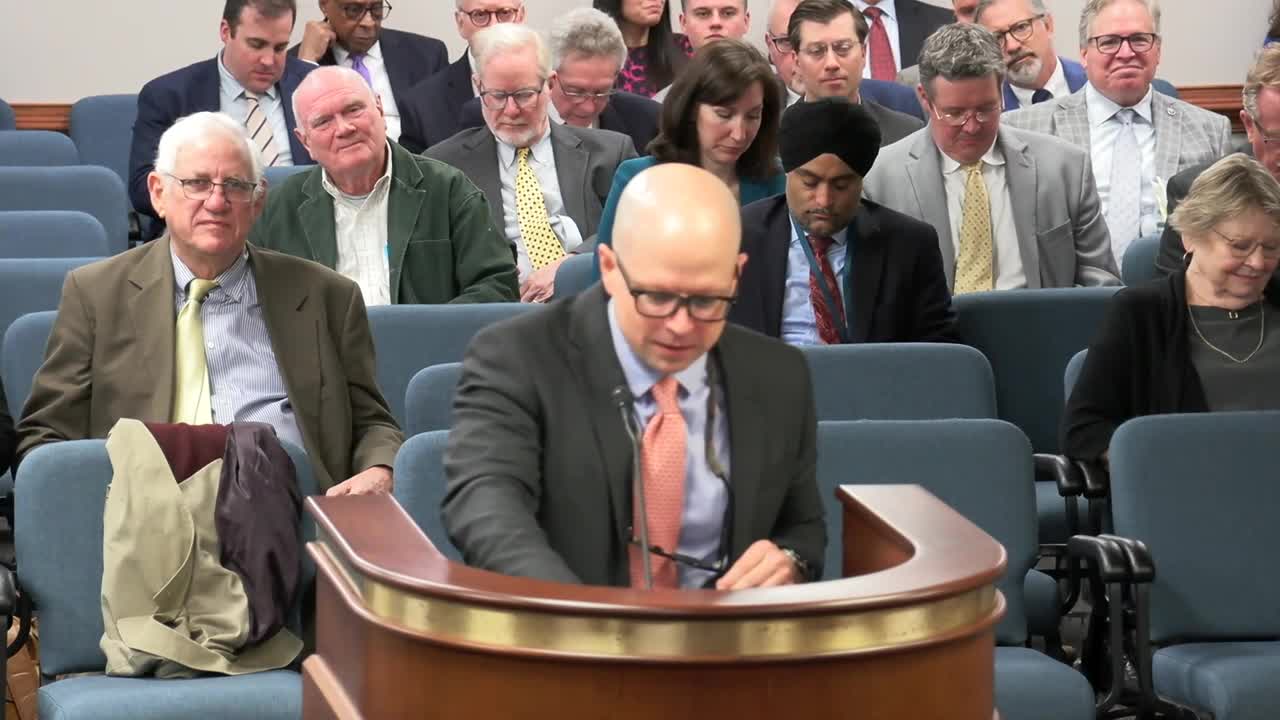
Senate subcommittee hears competing views on H.3309; debate centers on Kennedy's gas plant, rate impacts and solar procurement
Summary
At a Senate energy subcommittee hearing, stakeholders from conservation groups, utilities‑adjacent developers, consumer advocates and residents discussed House Bill 3309 and related energy policy changes, focusing on how the bill could affect ratepayers, the proposed large combined‑cycle plant near Kennedy’s on the Edisto River, and the state’s plans for solar and battery deployment.
At a Senate energy subcommittee hearing, stakeholders from conservation groups, utilities-adjacent developers, consumer advocates and residents discussed House Bill 3309 and related energy policy changes, focusing on how the bill could affect ratepayers, the proposed large combined‑cycle plant near Kennedy’s on the Edisto River, and the state’s plans for solar and battery deployment.
The hearing drew repeated warnings from environmental and community groups that the bill as drafted could increase costs for ordinary customers and weaken protections during siting and permitting. Taylor Allred of the Coastal Conservation League said H.3309 "will increase ratepayers' risk of paying higher bills than necessary and delay the growth in clean energy resources," and urged amendments on resource planning, rate design and energy efficiency to protect everyday customers.
Why it matters: committee members heard competing views on how South Carolina should meet rising demand from data centers and other large customers while retiring coal and avoiding another costly build‑out. The debate touched on four linked topics — a proposed joint plant at Kennedy’s, procurement and competitive processes for renewables, possible changes to siting thresholds and appeals, and whether large new customers should receive discounted economic development rates.
Conservation and community concerns
Robbie Maynor, who identified himself as a Southern Environmental Law Center staffer and a Kennedy’s resident, described local health and environmental impacts in the rural Kennedy’s community and the ACE Basin. Maynor said the utilities have not presented final cost estimates or a definitive site approval for the Kennedy’s proposal and cautioned against declaring a preferred location by statute. He told the subcommittee the integrated resource plans (IRPs) are planning tools, not project approvals, and warned that ‘‘it is vital that the legislature not upend the evaluation process by specifically endorsing a mega facility at Kennedy’s without requiring utilities to evaluate all alternatives and clearly demonstrate that it is truly the best option for South Carolina residents.’’
Taylor Allred also pressed the panel on the risks of concentrating capacity in a single large plant at Kennedy’s, noting site‑specific risks (flooding, pipeline and transmission upgrades, and community health burdens from the former coal plant). He recommended limiting a Kennedy’s combined cycle to nearer 600 megawatts rather than the 2,000‑megawatt scale discussed, and said the Telos Energy analysis the conservation groups commissioned estimates large transmission savings if the site were smaller and paired with battery storage.
Industry and developer perspective
Hamilton Davis, vice president for regulatory affairs at EnergyRe and a board member of the Carolina’s Clean Energy Business Association, told the committee the industry accepts that new gas capacity and possibly nuclear will play roles but urged stronger rules for competitive procurement of renewables and storage tied to approved IRPs. Davis said recent academic work the industry commissioned shows substantial economic benefits from solar and storage and that competitive procurement would make resource selection more transparent and cost‑effective.
Davis described existing procurement and planning tradeoffs: solar paired with storage can be brought online faster than a large centralized plant, but utilities must balance capacity, reliability and cost. He said utilities’ IRPs drive need determinations and that procurement should not be a hard mandate to procure if market conditions change: "what we're proposing is not to require the utilities to procure what's in a past IRP…it's a benchmark, but every IRP cycle will update the assumptions." (Hamilton Davis, Vice President, Regulatory Affairs, EnergyRe)
Consumer and ratepayer concerns
John Ruth of AARP focused on potential rate shifting to residential customers if large new customers receive below‑cost economic development rates. Ruth explained the rate‑setting process and told senators that if some customers pay less than their incremental cost, "somebody else is picking up that difference" — often residential ratepayers — and urged protections such as separate rate classes or incremental‑cost tests for discounted contracts.
Frank Knapp and other consumer advocates reiterated concerns about restoring the Office of Regulatory Staff (ORS) mission changes and opposed provisions they described as anti‑consumer, including broad authority for discounted economic development rates and provisions they said could reduce regulatory oversight.
Market and policy reforms proposed
Multiple witnesses urged Senate consideration of two market reforms: participation in an energy imbalance market (EIM) and fuel‑cost sharing for gas price volatility. Taylor Allred and Eddie Moore of the Southern Alliance for Clean Energy both pointed to studies (Brattle and Daymark were referenced at the hearing) indicating material savings from broader wholesale market participation and argued that fuel‑cost sharing would align utility incentives and limit customer exposure to volatile gas prices.
Siting, appeals and local control
Solar developers and industry representatives warned that H.3309’s proposed changes to the siting act and appeals process could shift land‑use authority from counties to the Public Service Commission (PSC). Developers noted the current PSC trigger for the siting act is 75 megawatts and said a change to treat facilities above 125 acres as subject to state siting would add uncertainty and remove local control. They argued that land‑use decisions are best made locally and that forcing large numbers of solar projects into state siting review would increase cost and delay.
Permitting timelines were debated: community witnesses asked that any statutory permitting clock start only after a complete application is filed and cautioned against automatic approval language that would grant permits if agencies fail to reach a decision in a fixed period.
No final action taken
The subcommittee did not vote on H.3309 or related amendments at this hearing. Members invited additional briefings and written materials (several witnesses offered reports and studies) and signaled continued work on the bill with stakeholder input.
Ending
Committee members said they expect further negotiation and drafting, noting prior work by a special committee and that the Senate will continue to hear stakeholders, utilities and agencies as the bill is revised. Several panelists requested follow‑up meetings with staff and senators to refine procurement language, siting thresholds, and protections for residential ratepayers.