Get Full Government Meeting Transcripts, Videos, & Alerts Forever!
Get email alerts on the Energy Policy topic
No spam. Unsubscribe anytime.
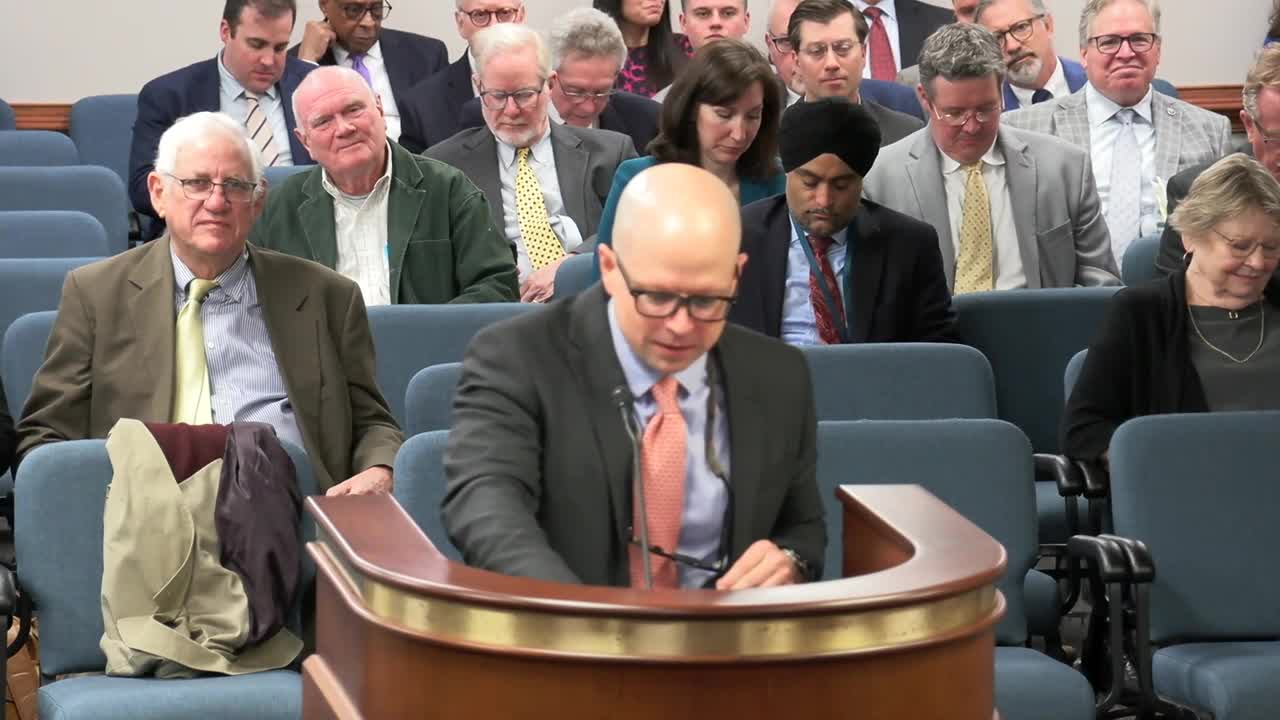
Senate Subcommittee Hears Conflicting Views on H.3309 Energy Bill
Summary
Conservation groups, developers and consumer advocates testified at a Senate subcommittee hearing about House Bill H.3309, clashing over resource planning, rate design, permitting timelines and protections for residential ratepayers.
At a Senate subcommittee hearing, witnesses representing conservation groups, developers and consumer advocates outlined sharply different views of House Bill H.3309, an omnibus energy proposal that would change how the state plans and pays for electric generation, transmission and large-customer contracts.
The dispute centers on how the state should balance rapid load growth from new data centers and other large customers with ratepayer protections, and whether the bill in its current form tilts too far toward utility and developer interests at the expense of consumers and local control. Proponents urged clearer procurement rules and faster deployment of clean resources; critics warned of shifting costs onto residential customers and weakening regulatory safeguards.
Taylor Allred, policy director for the Coastal Conservation League, told the committee that “H.3309 should be amended to include reasonable reforms to energy resource planning, rate design, energy efficiency programs, and business access to clean energy.” Allred recommended stronger load-forecasting practices, multi-value transmission planning and rate reforms that prevent ratepayers from subsidizing large new customers.
Hamilton Davis, vice president for regulatory affairs at EnergyRe and a board member of the Carolinas Clean Energy Business Association, focused his testimony on procurement and siting. He urged statutory authority for competitive procurement tied to utilities’ integrated resource plans and warned against moving routine local land-use decisions into the state siting process. “We need to be going to market to make sure that the resources that are available can compete to provide and meet the need,” Davis said, describing competitive procurement as a way to ensure cost-effective projects are selected.
Consumer and senior advocates raised opposing concerns. John Ruth of AARP said the bill increases the risk that residential customers will absorb costs tied to large economic-development discounts and new utility investments. “Our principal concern really lies with rates and rate shifting onto residential consumers,” Ruth said, warning that special economic-development rates or discounts for large customers can amount to subsidizing those customers with higher bills for others.
Several witnesses, including Eddie Moore of the Southern Alliance for Clean Energy, described the bill as lengthy and heavily tilted toward utility priorities. Moore said the draft contains many utility-written provisions and recommended adding provisions such as energy imbalance market participation and a fuel-cost-sharing mechanism to limit ratepayer exposure to volatile gas prices.
Speakers also noted points of agreement. Multiple witnesses said energy efficiency, storage and renewables must play larger roles in a balanced portfolio and urged clearer, more transparent regulatory processes. Hamilton Davis and others warned that integrated resource plans are dynamic documents and that procurement and permitting mechanisms should allow changes as federal policy and market conditions evolve.
The subcommittee closed by saying it will continue stakeholder briefings and produce a draft bill for further negotiation. The committee indicated further hearings will include utility witnesses and additional interested parties.