Get Full Government Meeting Transcripts, Videos, & Alerts Forever!
Get email alerts on the Public Safety topic
No spam. Unsubscribe anytime.
Senate committee advances bill raising penalties for drivers who lead officers on high-speed pursuits
Summary
Senate Bill 111 would make it a felony when a driver leads law enforcement on a high-speed pursuit, punishable by three to five years and a one-year license suspension; a subcommittee voted to forward the bill as amended.
Senate Bill 111 would make it a felony when a driver "leads law enforcement on a high-speed pursuit," punishable by imprisonment for not less than three years and not more than five years, and would suspend the driver's license for one year from the date of conviction. The Judiciary Subcommittee voted to report the bill favorably as amended.
The amendment, which the committee adopted, tightened the measure's language and removed a prior reference to recordings as an element of the offense. The working amendment defines a high-speed pursuit to include increases in speed or evasive actions taken by a driver to avoid a pursuing law-enforcement vehicle.
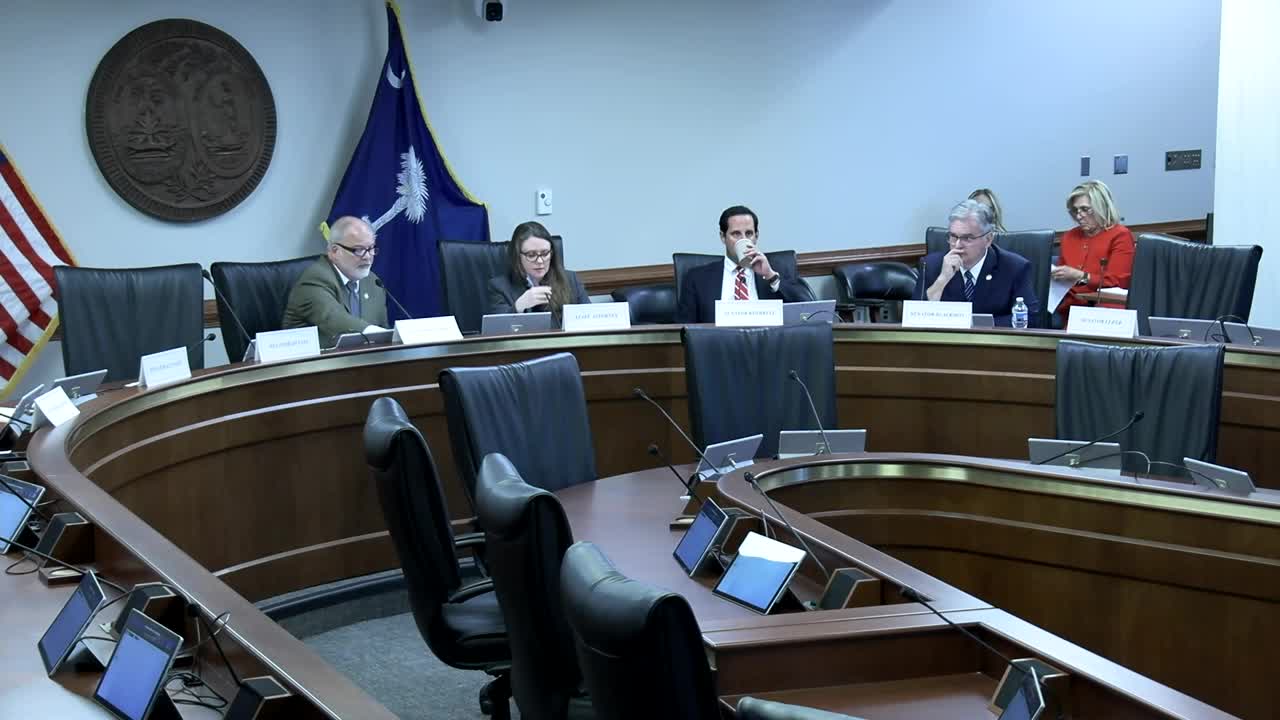
Senator Rex Rice, the bill sponsor, told the panel he has carried variations of the proposal for years and said the change responds to fatal collisions and recurring incidents in the state. "We just need something done to stop these people from running," he said. Kitty Sutton, executive director of the South Carolina Association of Criminal Defense Lawyers, testified against mandatory minimums and said judges should retain sentencing discretion; she said the amendment addressing the definition of a pursuit alleviated some of her concerns. Peter Adamowski, deputy director for government affairs at the South Carolina Department of Motor Vehicles, asked the committee to give DMV 12 months from the date the bill is signed to make necessary coding and testing changes because the agency's system is outdated.
Committee discussion focused on how the amendment interacts with modern recording equipment. A subcommittee member noted that many law-enforcement encounters are recorded via dashboard or body-worn cameras; the amendment was revised to avoid using recording alone as the aggravating factor and to add evasion to the definition so isolated passenger-initiated surges would not automatically trigger the felony enhancement. The panel adopted the amendment and then voted to forward the bill as amended.
The action does not create an immediate change to sentencing practice: any terms and implementation timelines would begin only if the full legislature enacts the bill and the governor signs it. DMV staff warned the committee that administrative lead time will be needed to change licensing and records systems if the bill becomes law.