Get Full Government Meeting Transcripts, Videos, & Alerts Forever!
Get email alerts on the Wildfire Mitigation topic
No spam. Unsubscribe anytime.
Senate adopts bill letting fire districts run private-property vegetative-fuel mitigation programs
Summary
The Colorado Senate approved House Bill 1009, a permissive measure allowing fire protection and metro districts to create programs to remove dangerous vegetative fuels from private property, with limits on fines and safeguards including prohibition on property entry without consent and a ban on drone enforcement.
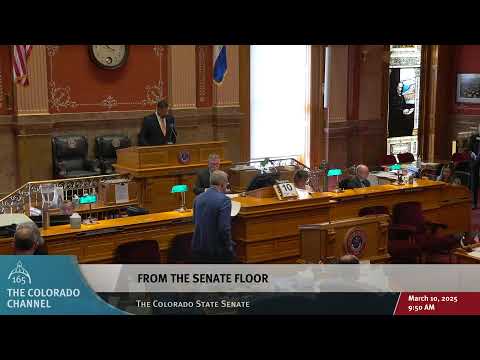
House Bill 1009, a measure authorizing fire protection districts and metro districts that provide fire protection services to create programs to remove dangerous vegetative fuels from private property, was adopted by the Colorado Senate after debate on March 10, 2025.
The bill, as amended in committee, allows districts to establish vegetative fuels programs but includes multiple guardrails. Senator Cutter, sponsor of the committee report, described the measure as “a really simple, permissive program that allows protection districts to create this program to remove dangerous vegetative fuel from private property,” and said it was “one more tool in the toolbox” to help control wildfires.
Senate floor debate focused on the scope of local authority, enforcement costs and whether the measure would expand government. Senator Hendrickson, who spoke in favor, framed the bill as addressing a market failure in communities such as Pueblo West, saying unmanaged vegetation on one property can raise insurance costs and endanger nearby homes. He said the bill restores local flexibility and is not a statewide mandate: if a local government chooses not to act, “literally nothing” changes until that local government exercises the option.
Opponents raised concerns that the bill could be used to expand government duties and funding needs. One speaker identified as the minority leader said the bill “intrudes as government so often does” and warned it could require expanded staffing and funding to assess, issue summonses and collect fines. Senator Frizzell questioned imposing a one-size approach on diverse communities and said local solutions are preferable, citing successful voluntary mitigation and slash-collection programs in Douglas County.
Key amendments adopted in committee and described on the floor include: - Examples and narrow exemptions for public utilities and ditch companies and a requirement that districts obtain written permission from the owner or occupier before accessing property; - Expansion of a waiver section allowing a board to waive fines and clarification that unpaid fines may be collected through county treasurers; - Limiting the total fines that may be levied on a single property to $1,200; - Extending the notice period from 10 days to 14 days and delaying implementation by 30 days to allow additional time for compliance; - A requirement that metro districts providing fire protection coordinate with local governments when developing programs; - A prohibition on district employees entering private property without consent and a ban on using drones to implement the legislation.
Senator Cutter emphasized the bill is permissive rather than mandatory and that it provides a tool where communities need it. Opponents asked for clearer evidence the measure would reduce insurance costs for neighboring properties and warned it could be used to backfill other funding reductions.
The Senate adopted the committee report and later recorded the bill as adopted; the floor record does not include a roll-call tally for the final passage in the excerpted transcript.
Ending: With amendments limiting fines and restricting enforcement methods, the bill now permits—but does not require—local fire and metro districts to adopt vegetative-fuel removal programs. Further details about local implementation and any funding implications will depend on individual local governments that choose to use the authority provided by the law.