Get Full Government Meeting Transcripts, Videos, & Alerts Forever!
Get email alerts on the Opioid Settlement topic
No spam. Unsubscribe anytime.
Board signs agreement to route opioid settlement funds through Southeast Florida Behavioral Health Network; county projects to receive payments over 18 years
Summary
The board authorized the chair to sign a service agreement with Southeast Florida Behavioral Health Network to allocate and manage Florida opioid settlement money for Okeechobee County. The county’s direct city/county allocation is projected at about $1.49 million over 18 years; the county has received $240,676 to date.
The Okeechobee County Board of County Commissioners on Feb. 13 authorized the chair to execute a service agreement with Southeast Florida Behavioral Health Network, Inc. to manage and allocate Florida opioid litigation settlement funds allocated to the county and to the region.
County staff summarized the settlement framework: Florida’s settlement proceeds are structured in several streams. The city/county fund pays directly to each county (Okeechobee’s projected share is approximately $1,493,822.76 over 18 years); a regional fund distributes additional monies to behavioral health networks (Okeechobee is served by the Southeast Florida Behavioral Health Network) which may use funds for capital or programmatic purposes consistent with the statewide allocation agreement. Staff said the county has already received $240,676 during the first two years of the settlement and expects an additional roughly $89,000 in the current budget year.
Miss Deb described reporting and compliance obligations the county will have under the statewide Florida opioid allocation and statewide response agreement: the county must adopt and submit annual expenditure plans, retain documentation of contracts funded by settlement dollars, and provide records and reports to the Department of Children and Families and other state entities as required.
Amanda Busman, who works with the county’s public‑safety and behavioral‑health coordination (Public Safety Coordinating Council), told commissioners the county faces constraints because there are a limited number of local substance‑use providers; much of the regional funding will support provider capacity, treatment positions and equipment used to respond to overdoses. She also referenced an additional “core” allocation that will come to the county and said staff will return with recommended spending plans to the board.
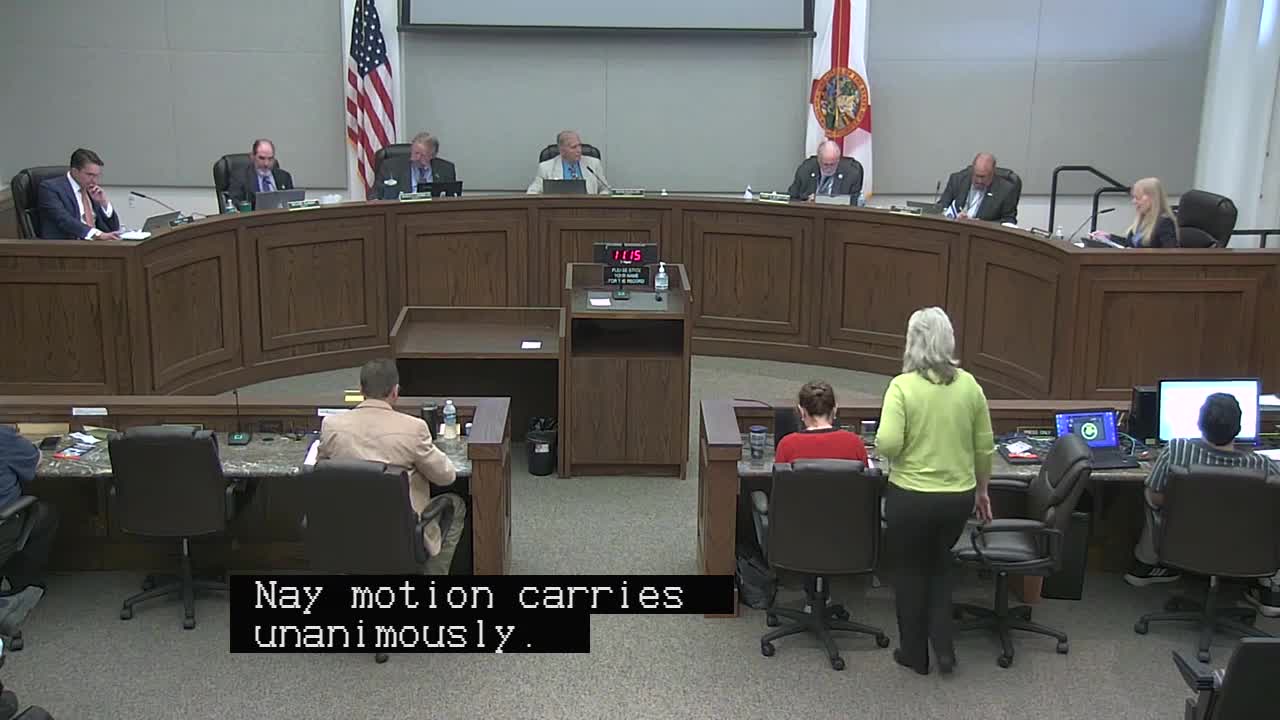
Commissioner Burrows moved to approve the agreement and Commissioner Goodbread seconded; the motion passed unanimously.
Staff said the county will prepare annual plans for expenditure of received funds, work with the behavioral‑health network to recommend uses within the county, and track any required reporting and documentation to the state.