Get Full Government Meeting Transcripts, Videos, & Alerts Forever!
Get email alerts on the Infrastructure Nerf‑task‑order topic
No spam. Unsubscribe anytime.
Water authority approves engineering task order to study NERF alum injection, dewatering and site master plan
Summary
Trustees approved a task order under the existing engineering contract to redesign the NERF alum injection system, study process‑water quality and sludge dewatering alternatives, and develop conceptual master‑plan options; the motion passed by unanimous voice vote.
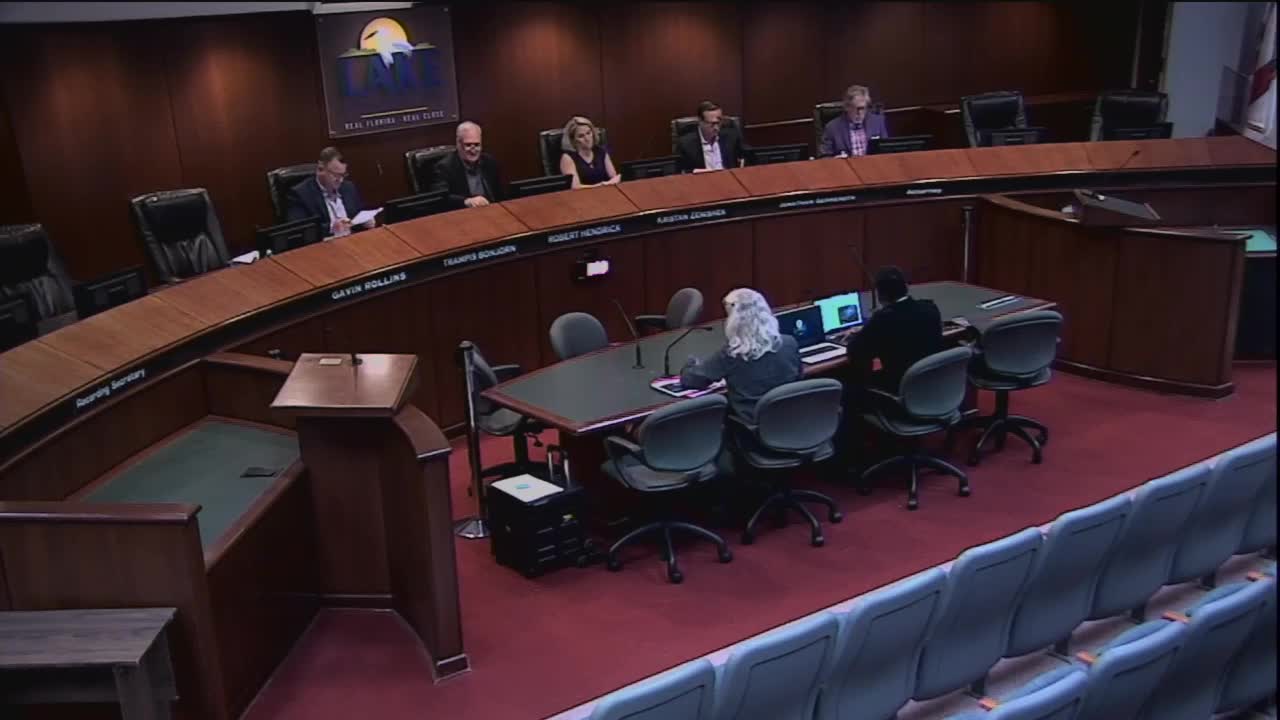
The Lake County Water Authority voted unanimously on Feb. 26, 2025, to approve a multi‑part engineering task order to design improvements at the NERF treatment site, including a redesigned alum injection system, process‑well water quality evaluation, sludge‑dewatering alternatives and a conceptual site master plan.
Scott Shannon of Woodard and Curran and Amanda Boone (project manager) presented the task order, which staff said corresponds to items identified in the DEP grant agreement for NERF improvements. The task order is time‑and‑materials under the authority’s existing contract and covers four principal work areas: alum injection redesign, assessment of process well water quality and additional well placement, evaluation of sludge‑dewatering options and pilot testing, and conceptual master‑plan design for long‑range site use.
Why it matters: staff and consultants said the proposed work aims to improve the facility’s treatment effectiveness and reduce operations and maintenance costs. Consultants told trustees that the existing alum feed — a low‑pressure drip with bubble mixing — can fail to mix at low flows and that a carrier‑water injection system with pressurized nozzles should produce more consistent mixing across flow conditions.
Operations staff described recent equipment problems: Sam Stanley, NERF project manager, said grit and aluminum‑rich sludge can damage centrifuge components and that a hydrocyclone or grit classifier would likely remove only about 30 percent of the problem material. He described a lower‑cost operational change — relocating the sludge pickup toward the center of the tank beneath the mixer — as a way to reduce grit entering the centrifuge, at the expense of requiring periodic tank cleaning.
Consultants said sludge dewatering is both a major capital and energy cost and warrants a broader search for alternative or lower‑energy technologies and pilot testing. Shannon said the task order will identify candidate technologies, evaluate configurations, pilot selected options and then prepare preliminary design documents if needed. He added the task order fee is based on hourly rates and that the effort may vary depending on findings.
The board moved and seconded the recommendation and approved the task order by voice vote. Meeting remarks noted that the task order is an amendment to an existing contract and therefore exempt from competitive bidding; staff said the work responds to material identified in the DEP grant package for the NERF project.
Operational notes discussed at the meeting included an upcoming phosphorus analyzer installation to provide near‑real‑time control of alum dosing. Operations staff said the analyzers are scheduled to start up March 20, 2025, and that real‑time analyzers should allow dosing by measured phosphorus concentration rather than by flow and pH alone.