Get Full Government Meeting Transcripts, Videos, & Alerts Forever!
Get email alerts on the Land Use topic
No spam. Unsubscribe anytime.
Wasilla leaders review comprehensive rewrite of Land Development Code (Title 16); committee moves ordinance toward formal introduction
Summary
Wasilla city officials and planning staff on Monday reviewed a rewrite of Wasilla Municipal Code Title 16 that would repeal and reenact the city’s land development code, changing permitted uses, review and permitting procedures, definitions, and design standards.
Wasilla city officials and planning staff on Monday reviewed a rewrite of Wasilla Municipal Code Title 16 that would repeal and reenact the city’s land development code, changing permitted uses, review and permitting procedures, definitions, and design standards.
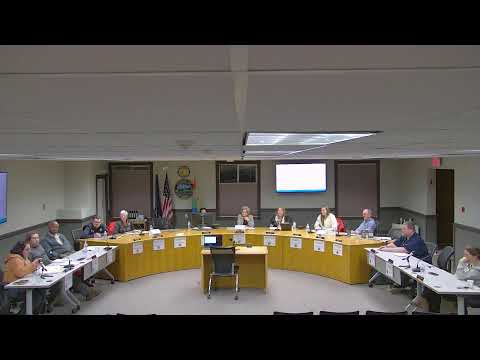
The joint session — which moved into a Committee of the Whole for detailed discussion — was framed by Holly (staff presenter), who said the draft is intended to simplify the code while adding a new chapter (16.72) addressing wireless communications facilities. “When I add things like chapter 16.72, it sort of throws everything off,” Holly said as she described layout and structural changes the city will finalize in the ordinance stage.
Why it matters: The rewrite touches nearly every development rule property owners encounter — from how “family” is defined to short‑term rentals, home occupations, parking and landscaping standards. Staff said the goal is clearer rules to reduce discretionary uncertainty for applicants while preserving council and commission review where necessary.
Key points from discussion
• Scope and structure. Staff described how the draft reorganizes Title 16 into divisions for general provisions, zoning districts, overlay districts (including the Downtown Overlay District), use and development regulations, permits and reviews, and administration and procedures. Holly said the draft reduces duplication and places related rules (for example, water, sewage and drainage) together.
• Communication towers (chapter 16.72). Staff added a 12‑page chapter addressing wireless facilities and proposed holding that chapter for separate review by the planning commission because regulation must track federal (FCC/FAA) limits. Holly said the chapter could be reserved in the ordinance and considered later; council members generally agreed to treat it separately.
• Definitions. The joint body reviewed many definitions. Maureen Graham, the city’s sales‑tax accountant, worked with staff on definitions to align code language and practical application. Council and commission members supported consolidating related definitions (for example, animal types) to make the code easier to search.
• Family and foster care. Council members debated removing numeric caps on household occupants and whether foster care should be treated specially. Holly summarized a compromise draft that defines family to include persons related by blood, marriage or adoption plus up to a specified number of unrelated persons; staff will research state licensing rules for foster homes and report back.
• Hotels, motels and short‑term rentals. The draft groups transient lodging definitions by size (small/large) and sets the short‑term rental threshold at stays under 30 days. Council asked staff to change the hotel/motel threshold from 6 to 5 guest rooms to be consistent with prior practice; Holly said she would make that change and check consistency across the code.
• Downtown Overlay District. Holly said no major rewrite of the Downtown Overlay District was included in this draft; commissioners asked whether the overlay should be suspended or repealed while the comp plan is updated. Staff recommended any repeal be handled deliberately (map and public hearings) and suggested a separate resolution or track for that policy choice.
• Home occupations and “side‑hustle” uses. The council and planners reviewed accessory home‑business limits — hours, signage, floor‑area caps, appointment‑only customer rules and parking. Cindy Wellman, city planner, described a proposed approach that allows certain small home occupations without an administrative permit if they meet strict criteria (e.g., appointment only, no exterior evidence of business, maximum share of floor area). Council members debated whether motor‑vehicle services and automotive sales should be prohibited as home occupations or allowed subject to limits; no final change was adopted and staff will return with refined language in the ordinance draft. Cindy noted some home uses (commercial kitchens, dog grooming, salons) may raise water, waste, or other operational concerns and could be addressed separately.
• Parking and snow storage. Staff added an option for applicants to seek a conditional‑use permit to modify parking and snow storage requirements. The draft also allows, subject to planner approval, alternative parking surfaces (not just concrete).
• Landscaping and trees. Council asked for lower minimum planting heights than the draft’s earlier 6‑foot standard. After discussion staff agreed to confirm typical nursery availability with Public Works and bring a recommended height (staff discussed 2–3 feet) back in the ordinance.
• Nonconforming structures and waterfront setbacks. Council discussed narrow relief options to allow rebuilding of destroyed structures where current setbacks make reconstruction impossible. Holly said the changes are narrowly tailored to allow rebuilding when no other reasonable option exists.
• Appeals, “interested party” and notice. The rewrite tightens appeal and notice timing, requires interested parties to file written position statements to participate in an appeal, and harmonizes record preparation and hearing timetables so the planner can prepare a complete record. Commissioners had recommended a 1,200‑foot notice radius for direct mailed notice; council’s staff briefing used 500 feet as an example. Staff will provide maps and examples showing different radii before the ordinance is introduced.
• Enforcement and fees. Staff proposed a filing‑fee waiver threshold for indigent appellants (defined by the appellant’s tax return showing income at or below Alaska’s 100% poverty level) and said a municipal lien authority would be included to support collection of fines and enforcement when violations are not corrected.
Public comment
John Claprick, who said he does business near Wasilla, urged the council to keep the code “easier on small business,” calling the draft still “too strong” in places and asking for simpler, more permissive rules for downtown expansion. “I highly encourage you to look at Title 16 … to make it easier on small business expanding,” Claprick said.
Direction and next steps
Holly said staff will prepare an ordinance for introduction that reflects tonight’s discussion and the changes flagged for further review. Staff and the clerk will finalize style, page numbering and references before formal introduction. The planning commission will receive the wireless chapter (16.72) for separate review, staff will research foster‑care and state licensing interactions, and Public Works will confirm recommended planting heights for landscaping standards.
Votes at a glance
• Motion to enter Committee of the Whole for discussion of the Title 16 rewrite: moved by Council member Graham; seconded by Council member Crafton; no objection — committee entered. (no public roll‑call vote recorded)
• Motion to exit Committee of the Whole: moved by Commissioner Seals; seconded by Council member Rubio; no objection — committee exited.
Status: The joint body produced direction and edits for staff. No formal ordinance adoption occurred at the meeting; staff will prepare a final ordinance for introduction with the changes discussed and return items flagged for phase‑2 review (for example, Downtown Overlay District and wireless‑facility chapter 16.72) to the council and planning commission for additional hearings.