Get Full Government Meeting Transcripts, Videos, & Alerts Forever!
Get email alerts on the Technology topic
No spam. Unsubscribe anytime.
IT director outlines next-gen 911, jail networking, rising phone-line costs and county cybersecurity services
Summary
IT director Mark Stout briefed commissioners on plans for a YouTube livestream option, an Internet upgrade for next‑gen 911 text-to-911, jail network design, rising copper phone-line costs for sewer sites and free cybersecurity services from federal programs.
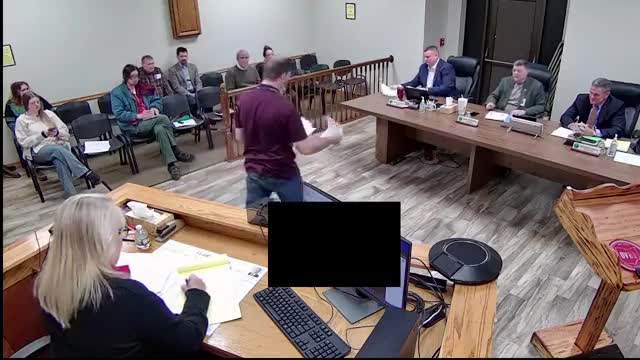
Mark Stout, the county IT director, gave a quarterly technology update at the Feb. 20 Hocking County commissioners meeting covering livestreaming options, next‑generation 911 upgrades, jail networking, phone-line charges and cybersecurity support.
Stout said the county’s YouTube live-streaming quote allows disabling all ads and offers indefinite archiving; commissioners discussed concerns about advertising and whether YouTube or another platform would be more appropriate for official meeting streams. Stout also reported the county signed a contract to upgrade Internet service at the 9‑1‑1 center to support the first stage of next‑generation 911 (text-to-911), and later stages will add the capacity for images and video.
On the jail project, Stout said he is designing the network and preparing equipment quotes; county staff will supply cabling and IT will bid for Internet access and interconnection when the facility nears opening.
Stout described a pressing cost issue for sewer-site phone lines: once lines come off contract, carriers are raising rates—AT&T quoted $350 per month for some lines. He said Frontier is showing similar behavior in its territory. Stout presented a cellular-to-landline adapter option at $59.99 per month on a two‑year contract as a testable alternative and noted a provider can offer month‑to‑month trials so the county can evaluate performance in areas with limited reception.
On cybersecurity, Stout outlined federal/state services the county currently uses: malicious domain blocking and reporting (MDBR), an Albert sensor for network traffic monitoring, Cloudflare in front of the county web server, DHS cyber‑hygiene scans and on‑site defensive testing coordinated through MS‑ISAC and the Center for Internet Security. He told commissioners these services are currently provided at no charge and estimated private implementation could cost $30,000–$40,000 per month. Stout asked commissioners to communicate to congressional representatives the value of these programs due to concerns about potential funding cuts.
Stout also briefed the board on the Office 365 (Microsoft 365) migration planned to begin in March, a countywide upgrade to Windows 11 with an initial order of about 75 new workstations, and early work on AI-use policies as departments begin piloting AI tools. Stout requested permission to attend an SHI spring conference in April; commissioners approved travel.