Get email alerts on the Energy And Utilities topic
No spam. Unsubscribe anytime.
Palmer Energy updates Hocking County on aggregation program; recommends pooling county facilities
Summary
Phil Geiser of Palmer Energy briefed Hocking County commissioners Feb. 27 on the county's electric aggregation and facilities purchasing programs, reporting nearly $1 million in savings last year for Falls and Marion townships and outlining plans to fold county facilities into a statewide purchasing pool when contracts expire.
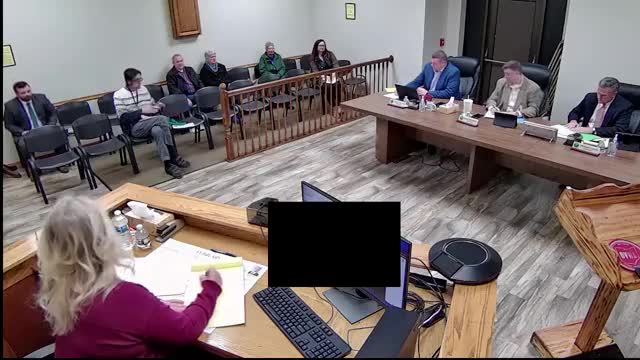
Phil Geiser, an independent energy consultant with Palmer Energy working with the County Commissioners Association of Ohio, told Hocking County commissioners at their Feb. 27 meeting that the county's electric aggregation program has produced substantial savings for participating residents and small businesses and described plans to move the county's facilities purchasing into a large statewide purchasing pool.
Geiser said Hocking County has participated in CCAO programs since 2012, beginning with electric aggregation and later adding facilities purchasing and natural gas meters. He said the aggregation program produced nearly $1 million in savings last year for residents and small businesses in Falls and Marion townships, where the aggregation is in effect, and that the program currently covers a little under 2,000 meters in those townships. He estimated the average residential participant saved about $540 and commercial meters about $400 during the most favorable recent contract period.
Geiser reviewed recent contract history: a fixed generation rate of 4.48 cents per kilowatt-hour from April 2021 to 2023, a later contract at about 6.58 cents, and a current price-to-compare for AEP customers he said was roughly 7.5 cents (the utility's "price to compare" varies). He told commissioners the county's facilities purchasing contract runs through May 2026 and that, moving forward, the county's facilities accounts would be folded into a larger pool that collectively bids about 450,000,000 kilowatt-hours, which Palmer expects will improve pricing and simplify adding or removing meters without multiple addenda.
Geiser explained how the aggregation enrollment works: the county-managed program is an opt-out aggregation. New customers in participating areas who are not already shopping with a third-party supplier receive an opt-out letter when a new contract term begins; if they do not return the opt-out notice they are enrolled. He also said suppliers handle the enrollment confirmations and that there are no separate county invoices for administration because the consultant and supplier fees are included in the offered generation price.
Geiser noted limitations: the county program applies only where an investor-owned, publicly traded utility supplies generation and distribution (for example American Electric Power, AEP). Cooperative distribution territories and municipally owned utilities do not participate in the CCAO aggregation; that is why the program covers some townships but not the entire county.
Commissioners and members of the public asked procedural questions about timing, how new residents are enrolled, and whether the county could expand the ballot-based opt-out aggregation to other townships. Geiser said additional townships must pass an aggregation authorization on the ballot before the commissioners can act as aggregator for those areas. He also said the supplier for the current aggregation is DynaG (which succeeded Energy Harbor on the contracted supply side) and that for county-owned facilities the supplier had been Freepoint under the current independent contract.
Geiser said he would return in a few months with pricing recommendations when the county's aggregation term comes up. Commissioners asked for follow-up information and a recommendation when more current market pricing is available.
No formal action or vote on new contracts or township opt-ins occurred at the Feb. 27 meeting; Geiser's presentation was informational and commissioners requested staff follow-up and a further pricing recommendation before any contract decision.
AI generated
The text on this page is AI generated. Summaries, highlights, analysis, and video transcripts are all produced from the original source material.
AI can make mistakes, so if you spot one, and we will fix it for everyone.
Note: the source content is unaltered by us. Any content source we link to, be it a video, an audio recording, or a document, is presented exactly as its publisher released it. That publisher is usually a government body, sometimes an individual official or another organisation.