Get Full Government Meeting Transcripts, Videos, & Alerts Forever!
Get email alerts on the Housing Chip topic
No spam. Unsubscribe anytime.
HACAP asks Hocking County to sign programmatic agreement with Ohio History Connection for CHIP housing work
Summary
Glenn Crickin of Hocking Athens Perry Community Action asked the commissioners to sign a five‑year programmatic agreement with Ohio History Connection to streamline federally required environmental reviews for Community Housing Impact and Preservation (CHIP) projects that fund home repairs and rehabs in Hocking County.
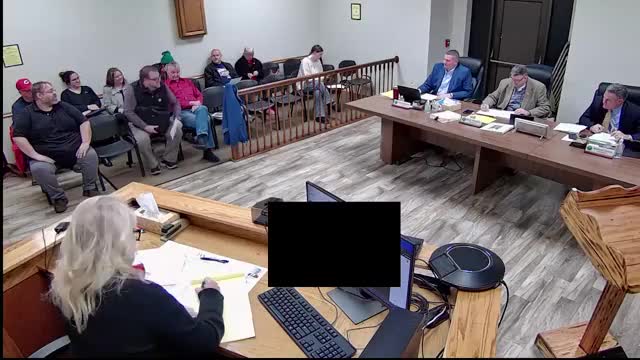
Glenn Crickin, director of housing and community development at Hocking Athens Perry Community Action (HACAP), asked Hocking County commissioners on Feb. 6 to sign a programmatic agreement with the Ohio History Connection that would standardize state consultation during environmental reviews required for CHIP (Community Housing Impact and Preservation) projects.
Crickin explained that CHIP is a multi‑jurisdictional program administered in partnership with Perry County and the city of Logan. The program focuses on owner‑occupied home repair and larger home rehabs; Crickin cited typical assistance ranges of roughly $18,000–$22,000 for repairs and $50,000–$70,000 for rehabs. He said that when CHIP funds assist a household and title transfers within five years, the county receives payback that forms a local revolving loan fund (RLF) that must be spent down on eligible activities under grant rules.
Because CHIP involves federal dollars administered through HUD and state programs, federal environmental review processes apply. Crickin said Ohio History Connection (formerly the State Historic Preservation Office) is one of the agencies the county must consult and that the programmatic agreement defines thresholds and notification procedures so HACAP and the county do not have to contact the agency on every single repair. He described the agreement as a routine, five‑year renewal intended to keep the county in compliance and reduce administrative burden.
Crickin introduced HACAP housing staff (Jeremy Boggs, Sharla, and Leslie Young) and described ongoing grant activity carried out in partnership with Perry County and the city of Logan. During the presentation commissioners asked about potential funding cuts and the consequences for vulnerable households; Crickin said reductions would hit disadvantaged populations and that HACAP maintains a contractor list of preapproved local firms.
After the presentation the commission moved to general business and a motion to approve and sign the programmatic agreement and related contract was made and approved. No county financial liability was reported for signing the agreement; HACAP staff asked the county to sign to permit continued grant‑funded housing activities.