Get Full Government Meeting Transcripts, Videos, & Alerts Forever!
Get email alerts on the Solid Waste topic
No spam. Unsubscribe anytime.
White County solid-waste committee approves annual progress report, eyes upgrades to convenience centers and recycling
Summary
The White County Solid Waste Committee approved the county's Annual Progress Report and discussed plans to update aging convenience centers, increase local recycling capture and comply with the state's diversion reporting requirement.
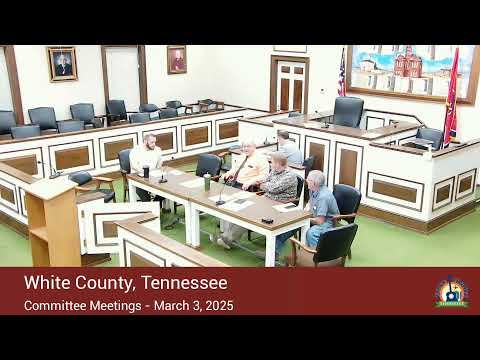
The White County Solid Waste Committee on Monday approved the county's Annual Progress Report (APR) and discussed next steps to upgrade convenience centers and expand recycling services.
Lisa Luck, the consultant who has prepared White County's APR for roughly a decade, told the committee the report is a statutory requirement and that the state collects the reports to track disposal, recycling and organic-waste diversion.
"The most important thing in this report, is that we are required to submit it every single year by law," Lisa Luck said. She also introduced Lily Hall, who Luck said will take over preparing the county's APRs beginning March 31.
The report includes routine operational details such as convenience-center hours and recycling tonnages, but Luck told members the planning sections are the most consequential. She said counties must update their 10-year solid-waste plans annually and must show diversion of at least 25% of managed waste.
Luck told the committee White County recently moved past one major issue: the county no longer needs to operate the landfill itself. With that work completed, the committee discussion shifted to replacing aging convenience centers, installing an additional convenience center near the landfill for resident convenience, and improving recycling infrastructure so recyclable material captured locally does not have to be hauled to a neighboring county for processing.
Committee members asked for clarity about recycling reporting and about how businesses should report diverted material. Luck said businesses that recycle should contact her or Lily Hall so the tonnages can be included in the APR.
The committee voted to approve the APR. The motion was made and seconded on the record; members indicated assent by voice and the chair declared the motion carried.
Public comment at the meeting raised operational concerns from convenience-center workers and residents, including a resident's report that workers were told they would receive raises and a resident's concern that the county had restricted public access to wood bins. Resident Connie Davis said she had been told workers "have been guaranteed a substantial raise," and also asserted that prohibiting people from removing material from wood bins would accelerate landfill fill. County staff replied that employee pay decisions are outside the committee's authority and that restrictions on public access to bins were driven by liability concerns.
The committee scheduled its next meeting for April 7 at 5 p.m.
Why it matters: The APR documents compliance with state solid-waste reporting and sets priorities for physical investments and recycling programs that affect operating costs and landfill lifespan. Upgrading convenience centers and capturing recyclables locally could alter revenue and hauling costs and affect how quickly the landfill capacity is used.