Get Full Government Meeting Transcripts, Videos, & Alerts Forever!
Get email alerts on the K 12 School Funding topic
No spam. Unsubscribe anytime.
Residents urge county to act as District 70 schools face funding, classification and scholarship questions
Summary
At a Pueblo County town hall residents and commissioners discussed proposed District 70 elementary school closures, the county’s role in state K–12 funding changes and how marijuana tax scholarship money from Ballot 1B is being allocated locally.
At a Pueblo County town hall Tuesday evening, residents from Avondale and other rural areas urged the Board of County Commissioners to press state leaders and review local scholarship and school-funding arrangements as District 70 faces possible elementary school closures.
The question matters because closure proposals would affect small communities that residents say rely on local schools as community hubs. Gloria Duran of Avondale told the commissioners that the closure of her town’s school would “impact not just our children, but the very fabric of our community.” Commissioner Paul McGeeter noted the county has limited authority over K–12 funding decisions and urged residents to contact state legislators, adding, “As county commissioners, we don't have any control over that, but I will tell you as a strong believer in strong schools for our community, I really urge you to get a hold of our legislators and our governor who are making these decisions.”
Why this matters: speakers described District 70 as one of the county’s lowest-funded non‑online districts and said recent changes to the state funding formula, which now uses current head counts rather than a five‑year average, increase the risk that small rural schools will lose funding and close. Several residents asked the county to help compile testimony and evidence to present to state budget decision‑makers.
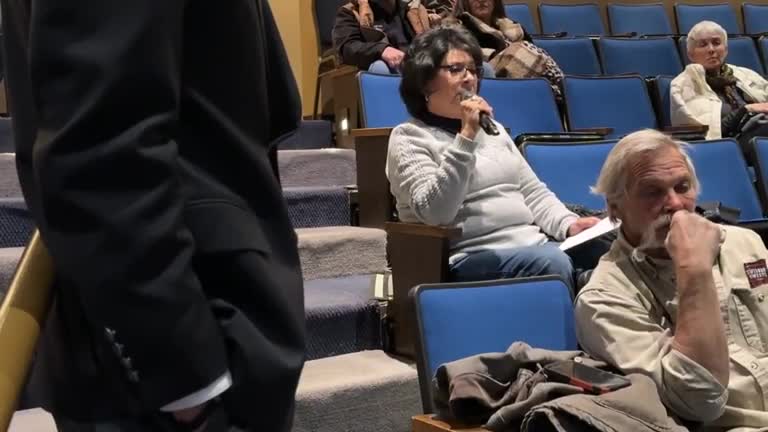
Details of local concerns and scholarship money Residents and speakers traced part of the funding conversation back to Ballot 1B, a 2013 marijuana‑tax ballot measure. One attendee (self‑identified at the mic) described how the county used some of those funds to match grant opportunities — mentioning a Colorado Opportunity Scholarship Initiative award that at one point required a match — and asked the commissioners to review whether the original Ballot 1B intent and subsequent local decisions still serve Pueblo County students. That commenter said the initial Ballot 1B language directed funds for scholarships primarily to local public students attending local institutions, but that distribution now is split among multiple entities, and that the pot of money has shrunk over time.
Commissioners and staff responses Commissioner Miles Lucero said he wants scholarship money to reach “public kids” and to support a range of post‑secondary and vocational paths. He recommended the county produce clear reports showing which Ballot 1B projects were completed and how funds were spent. Commissioner McGeeter said the board will likely hold public work sessions to revisit program language and distribution models because “there's a fraction of the amount of money that there once was.”
Requested county actions and next steps Speakers asked the commissioners to: - Clarify whether District 70 communities such as Avondale are being classified as rural or urban in state funding calculations; advocates said Avondale and similar communities should be classified as rural. - Compile testimony, photographic evidence and a consolidated record to send to state legislators (including members of the Joint Budget Committee) voicing community impacts. - Reexamine how Ballot 1B scholarship funds are allocated locally, including whether a single intermediary or a distributed model best serves students.
Commissioner McGeeter and other commissioners said they will collect community testimony and engage state legislators, and that county staff will coordinate information and possible public sessions. No formal county action or vote occurred at the town hall.
The county asked residents to provide contact information on the sign‑in sheets and promised to follow up when staff can compile materials to present to state decision makers.