Get email alerts on the Procurement And Contracts topic
No spam. Unsubscribe anytime.
Purchasing director outlines procurement rules, card program and contract thresholds
Summary
Purchasing Director Terrence Wright briefed the board on procurement card usage, purchase order volumes, solicitation types, exemptions including piggybacking, and board reporting requirements; members asked about renewals, vendor management and sub‑contractor payments.
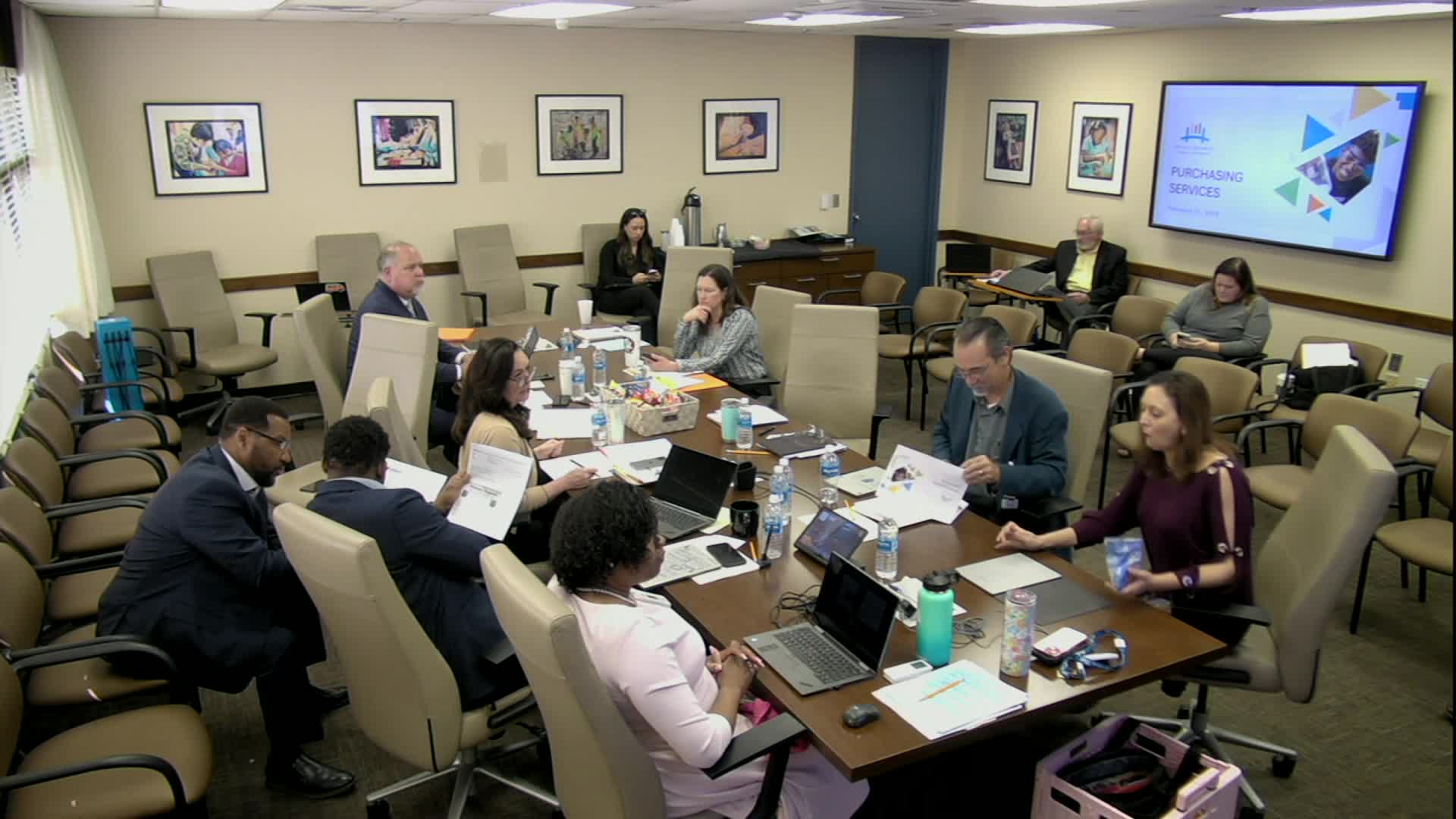
Purchasing Director Terrence Wright told the school board that his office processes thousands of transactions each year and enforces statutory and board policy controls for contracts and purchases.
Wright said the district issued 471 procurement cards in calendar year 2024 with about 23,000 transactions and $6,371,000 in transaction volume; the average card transaction was roughly $300. The district processed 8,529 purchase orders in fiscal 2023–24 totaling about $418 million with an average PO value of about $49,318, Wright said — figures that the office uses to select appropriate procurement methods.
Wright summarized thresholds and practices: purchases under $1,000 can be processed directly; purchases from $1,000 to $5,000 require quotes; purchases above $50,000 generally require formal solicitation (invitation to bid, invitation to negotiate, request for proposals) or an authorized exemption such as sole source, technology/educational services, or piggybacking off another governmental contract. Wright said the district uses a solicitation platform (Manstar) and follows statutory posting and bid‑protest procedures, and that procurements above $50,000 appear either as agenda items for board approval or on the monthly purchase report.
Board members asked about contract renewals and visibility into upcoming expirations. Wright and staff said renewal authority can be delegated to the superintendent when the contract language permits that delegation, but renewal language and any delegation appear in the agenda item’s recommendation text. He offered to return with a follow‑up presentation showing contract timelines, payment flows and best practices other districts use for vendor and subcontractor oversight.
The board also asked about piggybacking (using another governmental entity’s competitively awarded contract). Wright explained Florida statute allows such use if the district is charged the same price and advised that piggybacking can cover other government entities beyond school districts. Wright said the purchasing office enforces separation of duties (supervisor approval plus business‑services review) for procurement‑card transactions and elevates very large POs for supervisory checks before release.
Ending: Wright said the office will provide a deeper follow‑up that will include contract renewal schedules, examples of standard contract language, and an end‑to‑end payment timeline to clarify when vendors and subcontractors receive payment.
AI generated
The text on this page is AI generated. Summaries, highlights, analysis, and video transcripts are all produced from the original source material.
AI can make mistakes, so if you spot one, and we will fix it for everyone.
Note: the source content is unaltered by us. Any content source we link to, be it a video, an audio recording, or a document, is presented exactly as its publisher released it. That publisher is usually a government body, sometimes an individual official or another organisation.