Get Full Government Meeting Transcripts, Videos, & Alerts Forever!
Get email alerts on the School Food Services Rfp topic
No spam. Unsubscribe anytime.
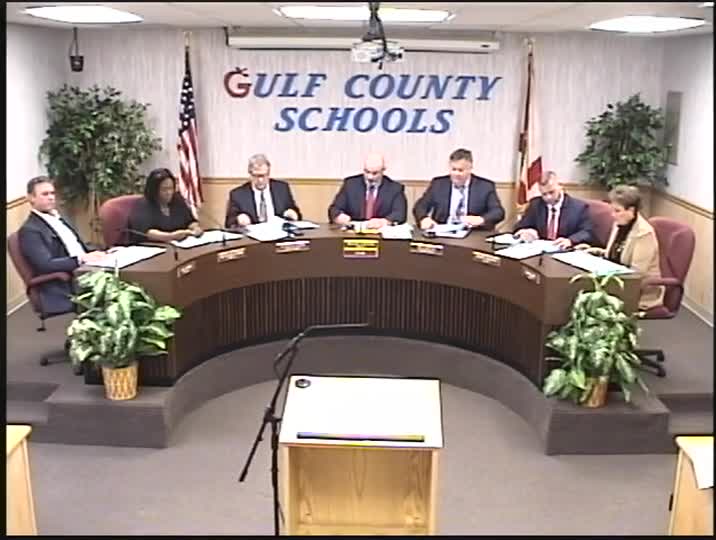
Gulf County School Board OKs RFP to explore outsourcing school meals; staff express concern about benefits
Summary
The Gulf County School Board voted to authorize advertising a request for proposals (RFP) to solicit bids for school food services, prompting public comment from cafeteria staff worried about retirement and benefits and a vendor presentation on potential cost savings and guarantees.
The Gulf County School Board on Jan. 14 voted to authorize advertising a request for proposals for school food services, beginning a process that could lead to privatizing parts or all of the district’s cafeteria operations.
Board members said the vote authorizes staff to draft and advertise the RFP; it does not bind the district to sign a contract. The motion passed unanimously in a voice vote with five members present.
The decision comes after more than an hour of public comments and a presentation from a food-service vendor who described results in other Florida districts and answered questions about employee benefits, capital costs and participation rates.
Why it matters: Food service is the largest recurring program deficit flagged by auditors, district leaders said, and the RFP is intended to gather options that could reduce the district’s annual subsidy while maintaining meal quality and worker protections. Cafeteria staff told the board that many rely on retirement and benefits and asked the board to protect long-serving employees.
During public comment, one cafeteria worker, identified in the record as Ruthie, told the board that cafeteria positions are often low-paid but depend on retirement and benefits. "These ladies depend on those benefits and the retirement," Ruthie said, urging the board to consider employees’ livelihoods when weighing contracts.
Ron Brown, the vendor representative who presented to the board, described partnerships in other Florida districts and outlined typical contract features: a deficit guarantee capped to the district’s prior-year shortfall, menu changes emphasizing scratch cooking, and optional capital investments tailored to existing kitchen equipment. Brown said some districts see a large first-year participation increase followed by smaller annual gains. "All we are doing is just looking at our options," Brown said, stressing that advertising an RFP does not mean a contract will be signed.
Board members pressed for specifics. Staff said drafting and advertising an RFP would take roughly 60 to 90 days before proposals return to the board for review and that the district would see any full contract only after separate board approval. District staff also noted the school system participates in the USDA Community Eligibility Provision (CEP), which provides free meals to all students in the district for the current five-year cycle; a la carte purchases would still be charged to student accounts under USDA rules.
District staff and the vendor discussed employee protections. Brown and board members said some employees who transition to a contractor may find improved benefits or other financial advantages, but board members repeatedly emphasized advocacy for existing staff and acknowledged that outcomes could differ by individual years of service and pension vesting.
Board members also noted possible capital costs for renovating kitchens and that those renovation costs would be the district’s responsibility; the vendor said it will tailor menus to existing equipment to limit initial expenses and may recommend reinvestment later if the program becomes more financially robust.
Votes at a glance: the board voted 5-0 to authorize advertising an RFP for school food services (permission to start the procurement); earlier in the meeting the board also approved consent items (minutes, budget matters, personnel recommendations) and approved using a central electronic bidding service for procurement outreach. All three motions passed by voice vote with no recorded dissent.
What’s next: Staff will draft the RFP and return proposals to the board after the advertising period. Any contract award would require a separate board vote. The district indicated it is not obligated to accept any proposal and may decide to remain with current in-house operations.