Get Full Government Meeting Transcripts, Videos, & Alerts Forever!
Get email alerts on the Healthcare topic
No spam. Unsubscribe anytime.
Owensboro Health leaders present 2025 community report, warn of financial pressure from reimbursement trends
Summary
Owensboro Health board chair Gavin Roberts and presenter Mark Marsh briefed the Daviess County Fiscal Court on system growth, workforce, new services and fiscal pressures tied to rising costs and uncertain Medicare/Medicaid reimbursement.
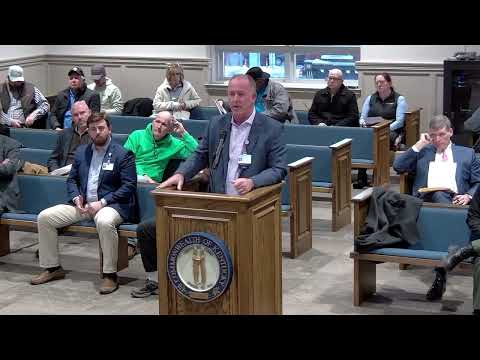
Gavin Roberts, chair of the board at Owensboro Health, and Mark Marsh, an Owensboro Health presenter, told the Daviess County Fiscal Court on Feb. 20 that the system has expanded services and personnel while facing mounting cost pressures and reimbursement uncertainty.
Roberts said Owensboro Health’s footprint now spans about 17 counties and roughly 600,000 people, and that the health system is the largest employer west of Louisville with roughly 5,800 team members. Mark Marsh said the system recruited about 63 physicians in the last two years and reported an 88 percent physician retention rate.
The presentation outlined clinical growth — new specialists in neurosciences and radiation oncology, expanded primary-care access (an increase of about 30,000 primary-care visits over two years) and investments in technology and an innovation/education center planned to open later this year. Marsh said the hospital is pursuing a federal “age friendly” recognition for elder care and noted it is an early adopter of those practices.
Why it matters: Owensboro Health is a major regional employer and health provider; the court heard that trends in payer mix and rising operating costs could affect local access. Marsh warned that since costs have risen about 20 percent since the COVID-19 pandemic while reimbursement has not kept pace, the financial position of many hospitals remains “fragile.” He said 76 percent of Owensboro Health’s payers are Medicare or Medicaid and that shifts in those programs could force difficult choices.
The court’s members pressed Marsh on planning for potential changes in federal and state reimbursement. Commissioner Tonder asked how Owensboro Health plans given uncertainty in Medicare and Medicaid. Marsh said there is no exact answer but described ongoing cost-control efforts, nationwide coordination with other large systems, and discussions with federal representatives. Marsh added the health system has about 162 days of cash on hand at the stated $2.4 million daily operating cost level he referenced.
The presentation included community impact figures: Marsh said the 63 physicians recruited over two years generate a notional positive economic impact per industry studies and that payroll (salaries, wages and benefits) for the health system was about a half-billion dollars for the past year. He also described community grants distributed through the Owensboro Health foundation (about $750,000 anticipated for the year) and workforce education programs that have reached thousands of local students.
Court members asked operational questions: Commissioner Conner sought assurance that obstetric services remain available; Marsh replied that the hospital will not turn away anyone needing delivery, though he prefers established prenatal relationships. Marsh noted ER visits are up and said system leaders are monitoring access and developing clinics to preserve emergency capacity for true emergencies.
"This is your hospital," Marsh said, emphasizing local ties and arguing the system aims to keep care close to home.
The court did not take formal action on the presentation. The exchange concluded with thanks to Owensboro Health staff and an acknowledgement from court members about the system’s local significance.