Get Full Government Meeting Transcripts, Videos, & Alerts Forever!
Get email alerts on the Campus Safety topic
No spam. Unsubscribe anytime.
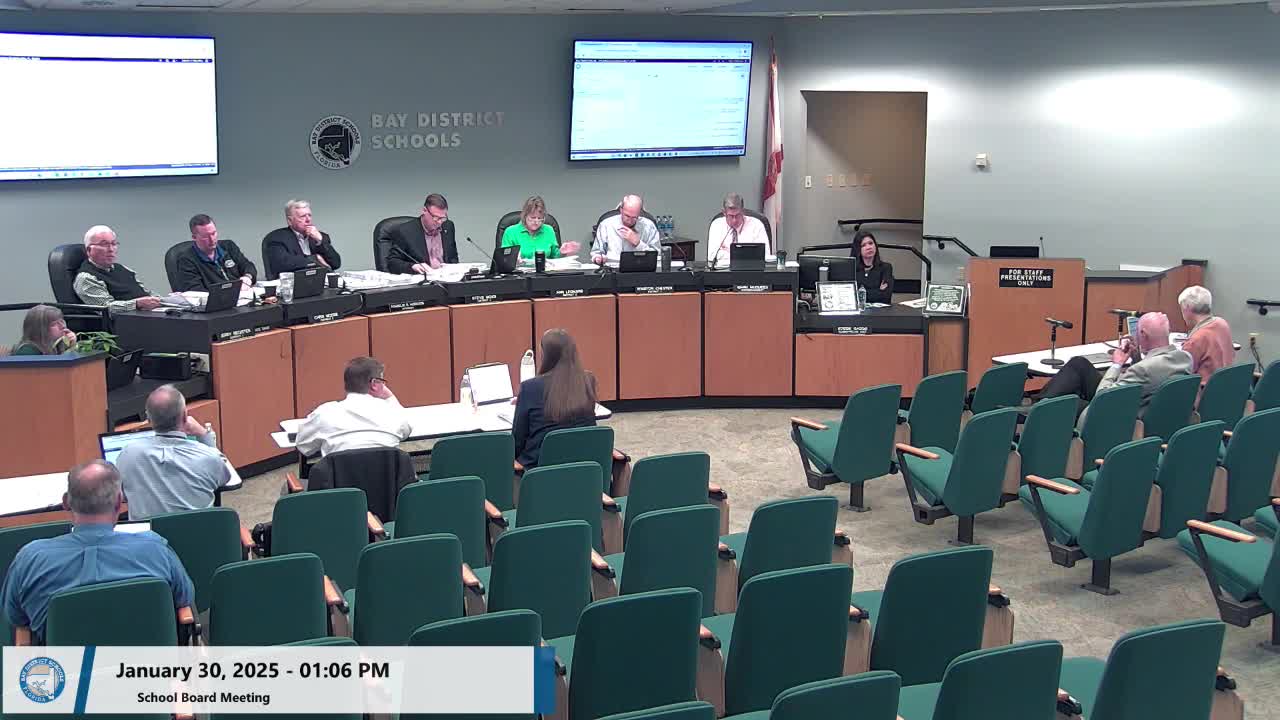
Board reviews updated weapons, drones and campus‑safety language; ROTC and service‑animal exceptions discussed
Summary
Board members reviewed proposed updates to property and safety policies, clarifying when weapons are prohibited on district property, prescribing district authorization for drone operations, and describing service‑animal rules.
Board members reviewed proposed changes to property and safety policies that would clarify when weapons are prohibited on district property, outline narrow exceptions, and add rules for unmanned aircraft and service animals.
Staff said the updated weapons policy was drafted to align with state statute language that allows districts to ban firearms and weapons on school property, including certain vehicle situations. Staff referenced specific statute language used in the draft and told the board the policy is intended to eliminate confusion about whether a concealed firearm kept in a vehicle on school grounds is permitted. The draft also widens other prohibited items when displayed in a threatening or reckless manner, such as box cutters and pocket knives.
The board discussed exceptions for instructional programs and recognized campus activities. Members asked whether Junior ROTC drill teams and other instructional programs that use inert or simulated rifles and swords would be covered. Staff said the superintendent may approve case‑by‑case exceptions for instructional or performance use and that they would reinstate language to make that explicit.
Unmanned aircraft systems (drones) were also discussed. Staff recommended that any drone operations on school property require district authorization and compliance with Federal Aviation Administration rules; graduation‑style operations that use contracted, certified drone operators would be permitted with prior approval.
Service animals and miniature horses were addressed in the draft. Staff reminded the board that federal guidance limits the questions staff may ask about a handler’s disability and that districts may ask only what work or task a service animal is trained to perform. Board members raised practical questions about allergies, animal bites, and liability; staff said those matters would be handled by risk management and typical ADA accommodation planning (for example, a 504 plan) when appropriate.
Several trustees asked for minor clarifications: add the district’s name to text copied from Neola templates, restore explicit instructional exceptions for ROTC or supervised, curriculum‑based weapon handling, and clarify that the superintendent retains authority to allow exceptions in narrowly defined circumstances. Staff agreed to return with language clarifying those points and to consult the district attorney on statutory cross‑references cited in the draft.