Get Full Government Meeting Transcripts, Videos, & Alerts Forever!
Get email alerts on the Booster Clubs topic
No spam. Unsubscribe anytime.
Board considers tighter rules for booster clubs and outside support groups, including insurance and recordkeeping
Summary
Staff proposed a new policy requiring booster clubs and outside support organizations to carry general liability insurance, maintain accounting records for up to seven years, and make financial records available for district review; the board discussed limits on employee and board‑member roles and when to withdraw district recognition.
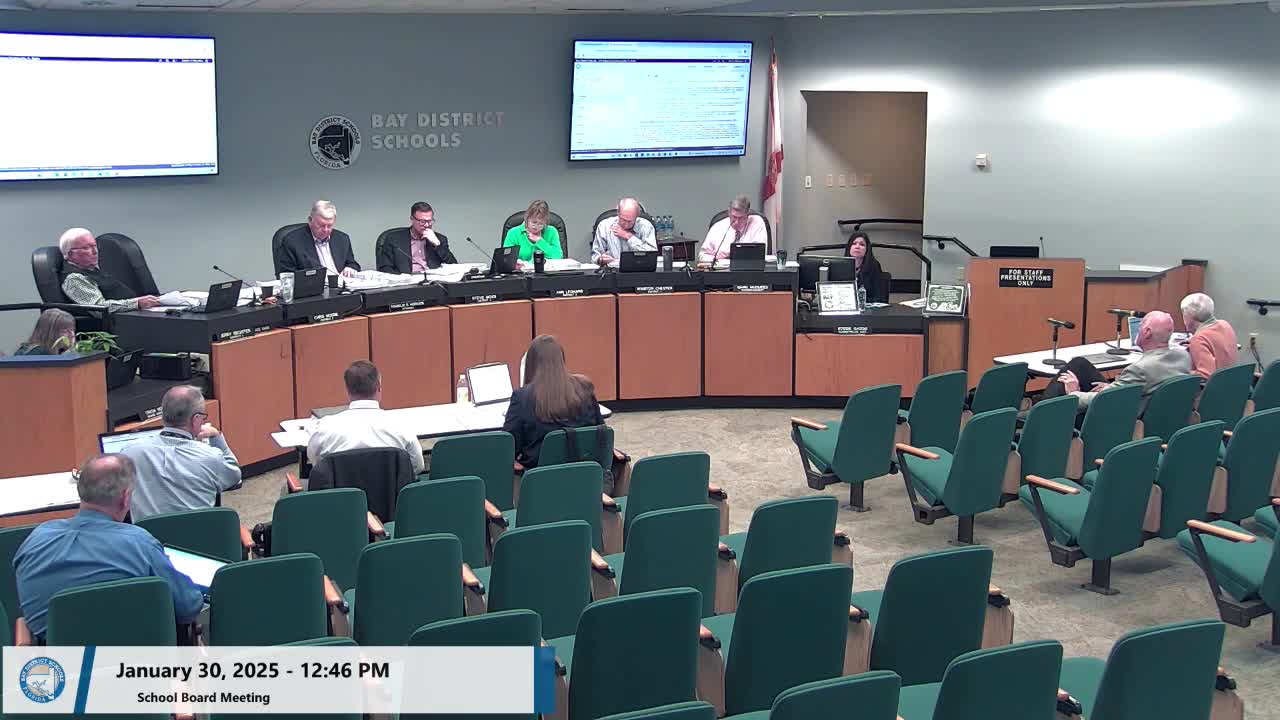
Board members reviewed a draft policy that would formalize oversight of booster clubs and other outside support organizations that raise funds using school names or facilities.
The draft requires each recognized outside group to maintain general liability insurance, keep financial records and tax documentation, and make those records available to school or district officials on request. Staff recommended seven years of record retention for accounting and tax records to support audits or compliance checks.
Staff explained the policy is intended to protect students and the district, ensure donated funds are used for school purposes, and reduce liability exposure when outside groups perform work on school property. "Funds collected shall be expended to benefit students," staff noted; the draft also allows the district to withdraw consent for organizations that violate policy.
The board discussed several recurring issues: whether employees or board members should serve as officers of booster organizations, how principals should review booster bank statements and budgets, and whether the district should perform routine audits or rely on complaint‑driven reviews. Staff said principals are expected to have oversight and that financial review beyond a complaint is typically a staff or audit office function.
Members voiced concerns about some fundraising practices. Several board members raised examples of third‑party online fundraising platforms and vendor‑run campaigns that collect payments on a family’s behalf; trustees asked for clarity on whether those commercial fundraising models comply with district rules. The board also discussed a longstanding question about raffles and games of chance at school events; staff said raffle permissibility depends on state law and recommended that the district attorney provide definitive language.
The draft includes a prohibition on district employees serving as officers of a booster group seeking official board recognition; board members requested a small edit to make the restriction explicitly include school board members where appropriate. Staff also noted the district’s primary enforcement tool is withdrawing recognition and the right to require organizations to stop using school marks and facilities if they fail to meet policy requirements.
Board members asked staff to return with edits to: (1) clarify the required retention period (staff agreed to add seven years in the financial requirements), (2) state whether board members may serve as officers in all circumstances, and (3) include more explicit procedures for principal oversight and escalation to district audit or purchasing when impropriety is alleged.