Get Full Government Meeting Transcripts, Videos, & Alerts Forever!
Get email alerts on the Governance topic
No spam. Unsubscribe anytime.
Board debates virtual participation, chair-removal rule and public-comment limits during bylaws review
Summary
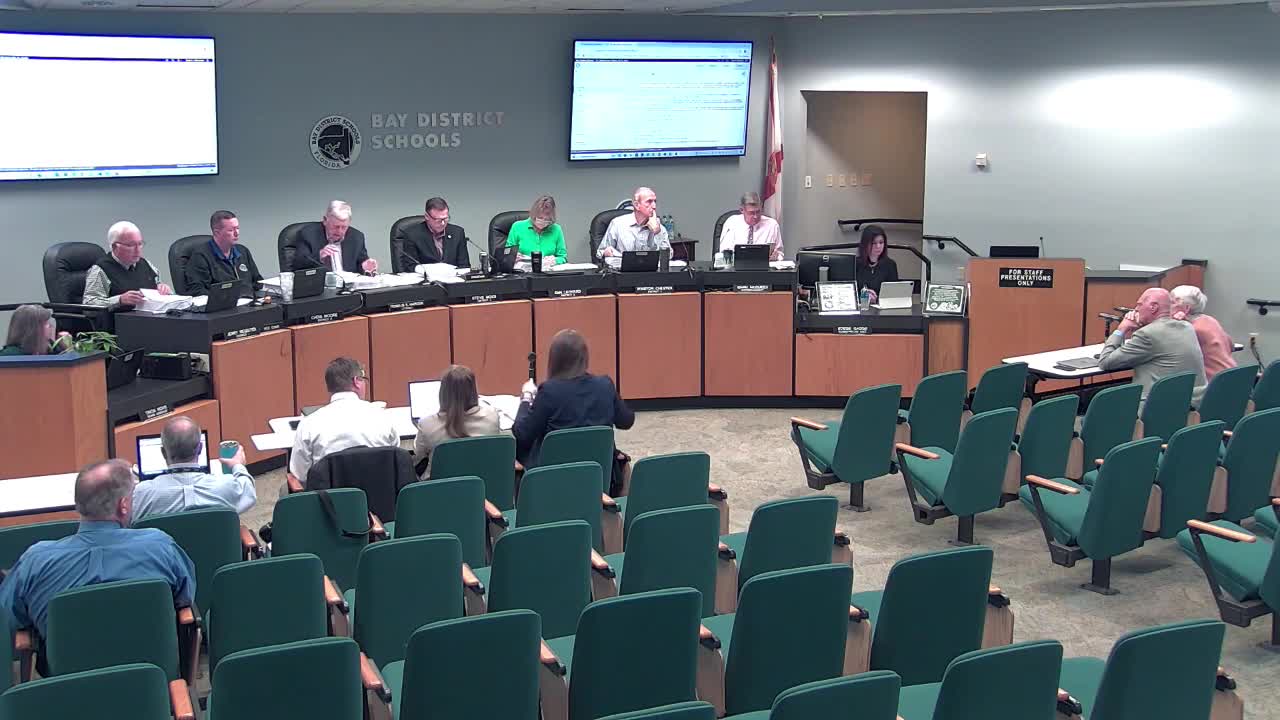
Board members and legal/consultant staff discussed a proposed virtual participation rule, a provision for removing the chair by supermajority, and limits on public comment time during a bylaws workshop.
Board members considered several governance changes during a bylaws segment of the workshop, including rules for virtual participation, a procedure to remove the board chair and time limits on public comment.
The draft virtual-participation rule (referred to in the meeting as policy 0165) would allow a board member to attend meetings remotely "at the discretion of the board" when the member is unable to attend in person because of schedule, district absence, or physical restrictions. Staff explained the draft reserves to the members present the power to approve remote participation: a majority of physically present board members would need to approve a remote appearance.
On removal of the chair, consultants and staff proposed a supermajority threshold. The draft policy 0152 would allow removal of the chair by four of five board members (every member except the chair), rather than a simple majority. One board member argued the higher threshold was appropriate because removing a chair should be an "extraordinary" step. "It has to be everybody but the chairman," a consultant said while explaining the proposed 4-of-5 rule.
The board also discussed public-comment limits. A draft provision (policy 0169) would limit public comment during the designated portion of the meeting to 30 minutes unless extended by a board vote; speakers who signed up but were not heard during the 30 minutes could address the board at the end of the meeting. Board members debated the balance between open access and meeting efficiency, with some urging consistency so the chair is impartial when enforcing time limits.
Staff and legal counsel said these governance provisions would be folded into the bylaws and the policy manual; they also noted that remote participation rules enacted during emergency orders (for example, pandemic-related measures) have largely been rescinded and local rules now govern. No formal vote was taken at the workshop; staff said they will incorporate the board's feedback into revised drafts.