Get Full Government Meeting Transcripts, Videos, & Alerts Forever!
Get email alerts on the Library Digital Access Grant topic
No spam. Unsubscribe anytime.
Digital-access library grant draws partisan debate; committee fails to approve $2.5 million federal grant
Summary
A JFAC vote on a $2.5 million federal "Digital Access for All Idahoans" library grant drew extended debate about diversity, equity and inclusion language and ultimately failed in committee after closely split votes on substitute and original motions.
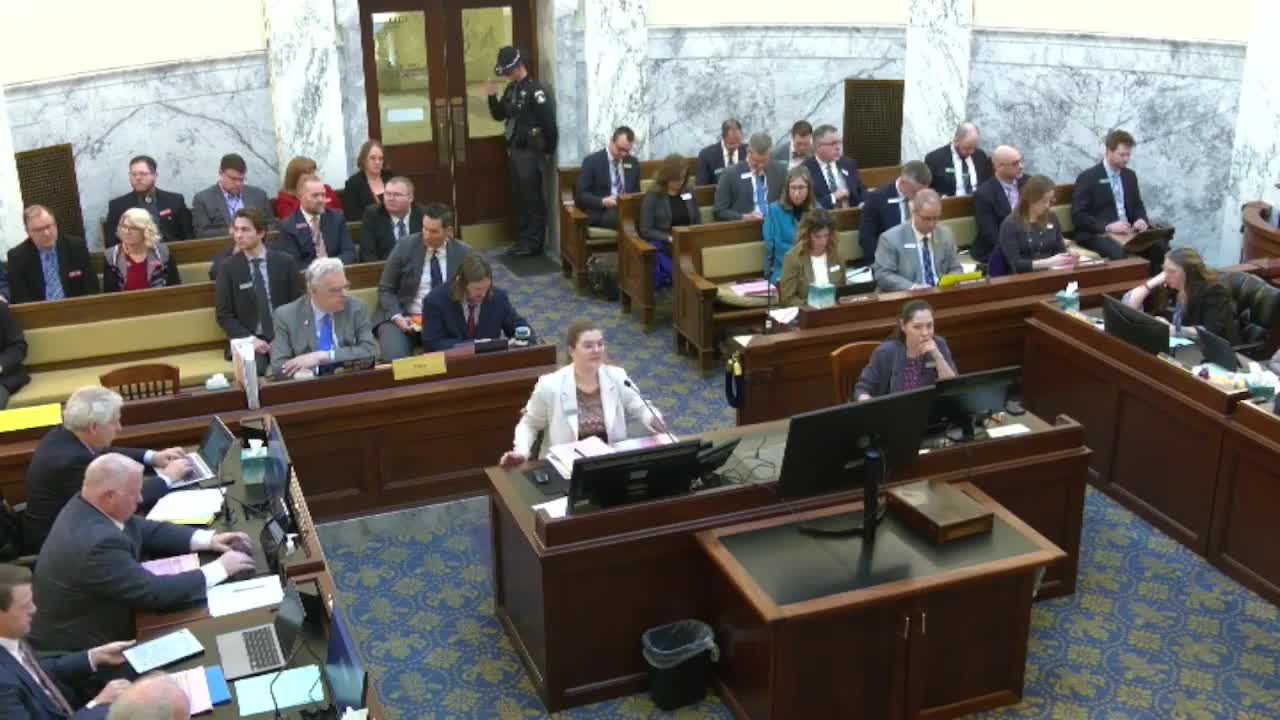
A proposed $2.5 million federal grant for a "Digital Access for All Idahoans" program and related enhancements prompted extended debate on March 7, and committee members ultimately failed to approve the funding.
Brooke Dupree, a budget and policy analyst with the Legislative Services Office, presented the Idaho Commission for Libraries budget, which included a $2,500,000 enhancement for a digital-access grant and two smaller enhancements for broadband reimbursement and federal subgrants. Senator Cook initially moved the larger package, which combined $2,540,000 in federal funds and $42,400 in general fund for FY 2026.
Senator Carlson offered a substitute motion to strip the $2,500,000 digital-access grant (described in committee as enhancement 51) and pass only $82,400 in smaller items. Carlson said his research showed the grant included DEI-related language; he argued the legislature had “taken a stand against DEI programs.” Senator Cook and others described the grant differently, saying local libraries would use funds for training seniors, large-print books, devices, and cybersecurity support. "This money is for digital training for our seniors... it's used for cyber security," Cook said.
Senator Wintrow asked for the federal notice or law driving the funding; staff identified the source as the Digital Equity Act. Several senators cautioned against rejecting funds that local libraries had already planned to use, while others argued about federal priorities and fiscal responsibility.
The substitute motion (to reduce funding and remove the $2.5 million grant) passed in the Senate 6–4 but did not achieve a House majority (5–5); the combined committee tally was 11 ayes, 9 nays, so the substitute failed because it did not carry in the House. The original motion to approve the full package later received the same committee tally (11 ayes, 9 nays) and likewise failed. Committee members then engaged in a procedural dispute about how failed motions should be handled between House and Senate advisers; co-chairs said failed items would be brought back to JFAC for reconsideration rather than being sent to the chamber where they initially failed.
No funding for the $2.5 million digital-access grant was approved by JFAC during the March 7 session; staff said the funds originate under the federal Digital Equity Act.