Get Full Government Meeting Transcripts, Videos, & Alerts Forever!
Get email alerts on the Food Access topic
No spam. Unsubscribe anytime.
Morrison County SNAP‑Ed educator outlines farm‑to‑school, farmers‑market and food‑access work
Summary
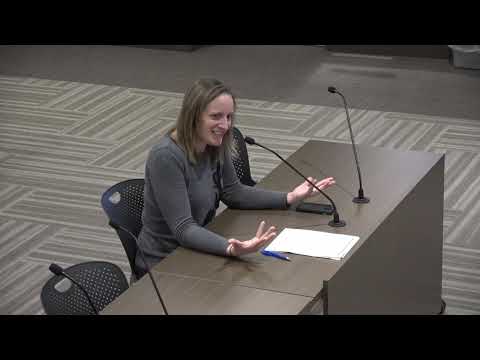
Samantha Baron, Morrison County SNAP‑Ed educator, told the county board she is focusing on schools and food access this year, describing farm‑to‑school meetings, a token program for children, a planned seniors’ voucher outreach and support for an upcoming statewide food‑shelf survey.
Samantha Baron, SNAP‑Ed educator with the Morrison County Extension office, briefed the Morrison County Board of Commissioners on the office’s school and food‑access work and ongoing programs.
Baron said the Extension is concentrating on two main areas this year: “the schools and food access,” and outlined farm‑to‑school planning, direct education in classrooms and outreach to help residents use existing food resources.
Baron said she has taught nine “go wild” classes so far this year and that the Extension’s farm‑to‑school planning group held its first meeting in early February. She described plans to work with the new local foods educator to record short virtual farm tours for classrooms and to build school connections with local producers, citing Brenda Rudolph of Raising a Farmer as a possible partner.
The educator told the board the Extension intends to expand a number of small, school‑focused activities already in place: teen cooking classes scheduled at the high school beginning in March; an annual “apple crunch” and other local meal events; and an effort to spread programs that have worked in Little Falls to Phelps, Royalton, Upsala and other district schools in Morrison County.
Baron said the Extension helped convene a Morrison County food‑access committee in November to identify gaps, and that the first, simplest step the group has taken is improving marketing and outreach for existing services. “A lot of people just don't know about the current resources,” she said, describing an updated food‑resource brochure that the committee is distributing to get information into as many public locations as possible.
Baron described token and voucher programs at the Little Falls farmers market aimed at increasing produce purchases: the existing POP program that gives $2 tokens to children and a new “POP Plus” approach for seniors, which the Extension plans to promote with partner organizations. She also said she will help the senior center and farmers market educate seniors about the Farmers Market Nutrition Program (FMNP), which she said provides about $30 in vouchers for eligible seniors.
The educator said she will assist with an upcoming statewide food‑shelf survey that collects data from food‑shelf managers and shoppers; the survey is scheduled to be distributed in April as part of a three‑year cycle, she said, and she expects the results to inform state reports and future funding.
Commissioners offered praise and asked about nutrition risks from market disruptions. Commissioner Blaine asked whether the SNAP‑Ed program has a local hedge against egg price spikes — a question prompted by recent avian‑influenza coverage and higher egg prices. Baron said she was not aware of a direct local subsidy but that education about alternative low‑cost protein sources (beans, etc.) is part of the SNAP‑Ed curriculum. Commissioner Wincher and others commended the Extension’s collaborations and rising 4‑H enrollment statistics.
Baron said the Extension will continue to develop farm‑to‑school programming over the coming year, expand marketing of existing food resources, support farmers‑market outreach and help collect data for the state food‑shelf survey.