Get Full Government Meeting Transcripts, Videos, & Alerts Forever!
Get email alerts on the Drainage Improvement topic
No spam. Unsubscribe anytime.
Nicollet County drainage authority moves forward with improvement petition for County Ditch 38A after preliminary engineer report and DNR advisory
Summary
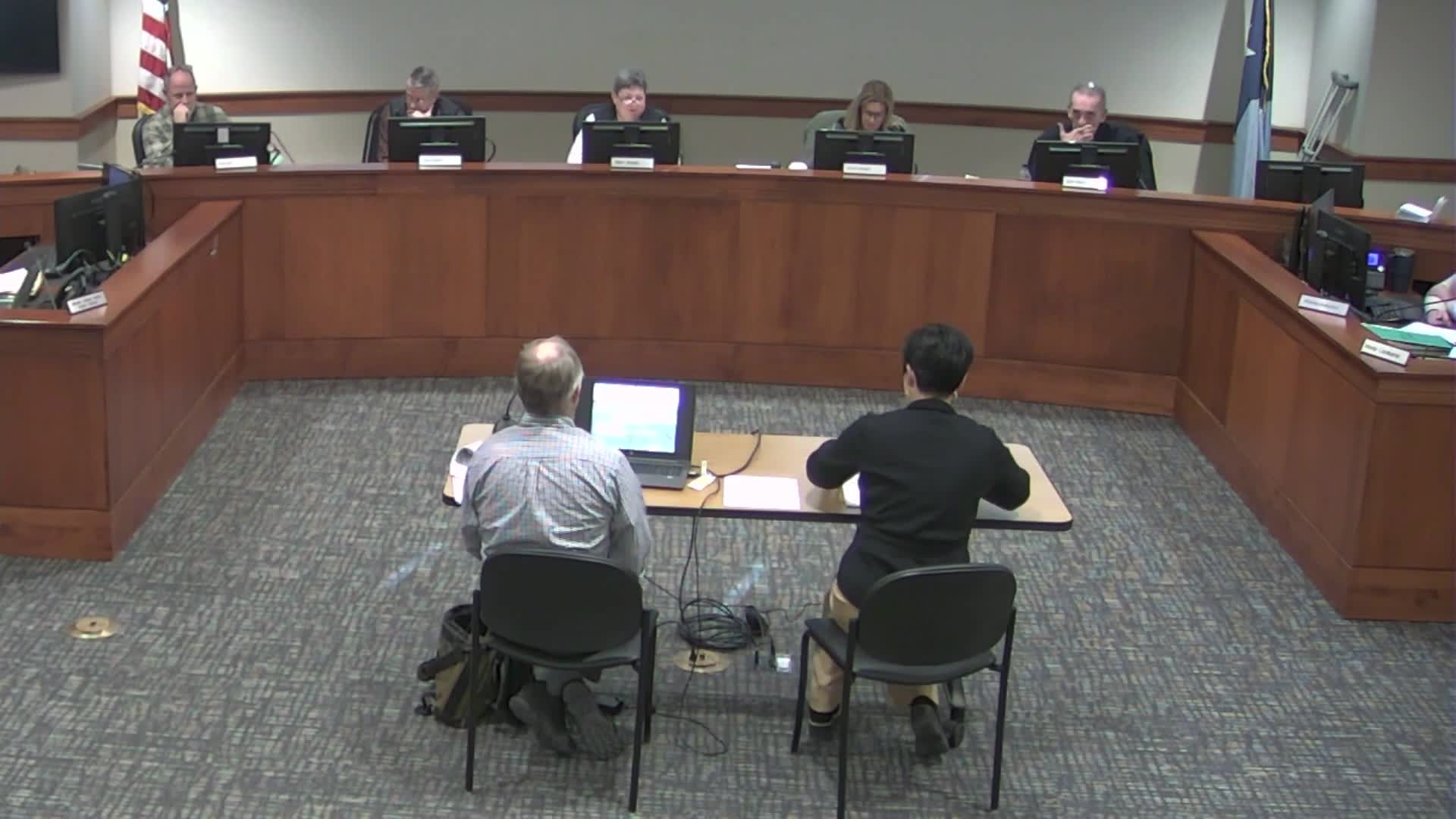
The Nicollet County Drainage Authority voted on Feb. 2025 to proceed with an improvement petition for two tile segments of County Ditch 38A after hearing the preliminary engineer's report from Houston Engineering and an advisory letter from the Minnesota Department of Natural Resources (DNR).
The Nicollet County Drainage Authority voted on Feb. 2025 to proceed with an improvement petition for two tile segments of County Ditch 38A after hearing the preliminary engineer's report from Houston Engineering and an advisory letter from the Minnesota Department of Natural Resources (DNR).
The petition covers two portions of tile on CD 38A — Branch 4 (with a lateral B) and Branch 1 Lateral D (including Spur 1) — located in Cortland Township southwest of Swan Lake. Chris Otterness, the project engineer from Houston Engineering, told the authority the drainage area for the two segments is about 425 acres and that the existing tile is old, damaged and “past its functional life.” He said the proposal would replace broken concrete and other deteriorated tile with new dual-wall polyethylene pipe, increase sized segments in places (up to 24 inches) and offset new lines approximately 10–15 feet from existing tile to avoid constructability issues.
Otterness said the preferred design aims to achieve a 0.5-inch drainage coefficient, the National Resources Conservation Service (NRCS) guideline commonly used for corn and soybean ground, so that fields will drain more quickly following typical rain events. “We do recommend continuing with the proceedings to improve these two,” Otterness told the board after summarizing feasibility, environmental review and estimated costs.
Why it matters: Petitioners and local landowners said better drainage is necessary to reduce crop flooding and repeated replanting. County staff and the engineer said the existing system’s condition causes maintenance problems and sediment delivery downstream.
Key technical and cost details: Houston Engineering estimated construction costs at about $643,000 (including a 20% contingency), additional legal, engineering, administrative and viewing costs of roughly $184,000, and a total preliminary project estimate of about $827,512. Separately, Otterness said the cost to replace the system at existing sizes (a repair-only scenario) would be roughly $739,000; he recommended the viewers consider that separable repair cost during benefit calculations.
DNR concerns and engineer response: The Minnesota DNR’s advisory letter (dated Feb. 6, 2025) flagged several items for the county to address in the final engineer’s report, including calculated downstream flow increases (the letter noted a 9% increase at one location for certain recurrence intervals), questions about flow-data sources, the absence of hydrographs and potential overtopping of a downstream field crossing at high recurrence intervals. The DNR asked what mitigation measures would address increased flows and recommended additional discussion of best management practices (BMPs) to reduce volume and improve water quality.
Otterness responded point-by-point at the hearing. He said the calculated increases correspond to small changes in ditch water-surface elevation (on the order of hundredths of a foot) and increases in velocities that are “inconsequential” for the reaches examined. He also said the outlet reaches examined are stable, that project-related changes are unlikely to alter public waters in a way that would require a DNR public waters work permit, and that the project should yield a water-quality benefit by eliminating tile failures that currently transport sediment downstream. He acknowledged the county will prepare a Minnesota Pollution Control Agency construction stormwater permit and a pollution prevention plan and said the project team would explore voluntary BMPs and alternative intakes with willing landowners.
Public testimony and petitioner position: Dean Zimmerli, attorney for the petitioners, urged the board to move the petition to the next step (appointment of viewers and preparation of a final engineer’s report), saying feasibility, necessity and public/private benefits were met by the preliminary work. Area landowner John Lokey testified that repeated crop replanting and sediment movement make improved drainage important for timely field operations.
Board action: After discussion, the drainage authority voted to: 1) find the petition properly filed and the preliminary engineer’s report sufficient to proceed; 2) direct staff to prepare formal findings; 3) appoint Houston Engineering to prepare the final engineer’s report; and 4) appoint the Barons Group (viewers) to prepare a viewer’s benefit report. Roll call recorded unanimous affirmative votes from the authority members present.
Next steps: The county will commission the final engineer’s report and the viewers’ benefit calculation; the DNR will receive the final materials for advisory review as required. Bidding and contractor selection will occur later; Otterness cautioned final costs could change after bids are received.
Ending: The drainage authority closed the public hearing and scheduled the next procedural steps to advance the improvement petition.