Get Full Government Meeting Transcripts, Videos, & Alerts Forever!
Get email alerts on the Zoning Ordinance topic
No spam. Unsubscribe anytime.
Cook County panel approves broad zoning amendments, keeps strict path for tiny homes to qualify as permanent dwellings
Summary
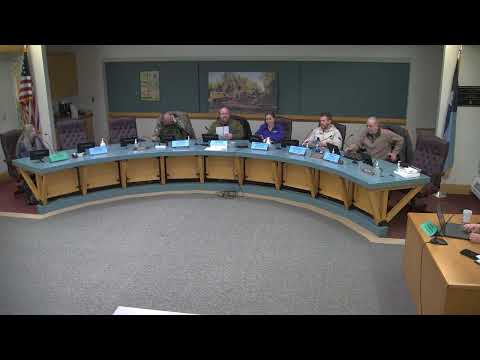
The Cook County Planning Commission on Feb. 12 approved a set of zoning ordinance amendments clarifying when wheeled units qualify as RVs versus permanent dwellings, adjusted accessory-structure rules in rural FAR zone districts, added bluff-figure illustrations, and codified solar-permitting practice.
The Cook County Planning Commission on Feb. 12 approved a set of proposed changes to the county zoning ordinance that clarify when small structures brought in on wheels qualify as temporary recreational vehicles and when they must be treated as permanent dwellings requiring a land-use permit.
The package consolidated several staff-proposed edits covering bluff definitions, accessory-structure rules in the FAR (forest and agricultural) zone districts, recreational vehicles (RVs), tiny homes and park models, and standards for rooftop and ground-mounted solar arrays. Commissioners approved the overall amendments after a contested vote over proposed language for tiny homes; the commission voted to retain language that makes clear the permitting path and to add an explicit clause linking tiny-home standards to vacation-rental eligibility.
Why it matters: the changes affect how property owners can use small, wheeled housing units and larger accessory buildings in Cook County's rural zone districts. They also aim to reduce ambiguity for staff and landowners by codifying policies that had been applied informally for years.
Staff framed the edits as housekeeping and clarifying changes. Neva, a Land Services staff member, told commissioners she had drafted visual figures for bluff and bluff-impact zones and said the diagrams would "really help convey to landowners when we're trying to explain what a bluff is." She also described how staff had been issuing permits for tiny homes and park-model units for more than a decade and proposed codifying that practice so that units intended as permanent or vacation-rental dwellings take the land-use-permit route.
Key changes and commission discussion
- Bluff definitions and figures: Staff proposed adding figures and language to clarify bluff and bluff-impact-zone definitions and to incorporate a Lake Superior ordinary high-water (OHW) elevation. The Minnesota Department of Natural Resources (DNR) suggested adding Lake Superior's OHW elevation of 601.5 feet and other clarifying text. Commissioners agreed to add the figures to the ordinance but deferred adopting the DNR's full suggested wording pending additional staff review and potential edits to the DNR text.
- Accessory structures in FAR zones: Staff proposed relaxing some conditional-use requirements in the FAR-1, FAR-2 and FAR-3 zone districts. In FAR-3 (5-acre minimum lots along road corridors), the proposal that won support would allow accessory structures up to 3,000 square feet in total on a parcel without triggering a conditional-use permit; accessory structures above 3,000 square feet or certain multiple-structure scenarios would still require conditional-use review. Commissioners debated whether to limit by individual structure or by cumulative square footage and agreed the intent should be clear that the 3,000-square-foot threshold applies to total accessory building area in FAR-3 before a conditional-use permit is required.
- Recreational vehicles, tiny homes and park models: Staff proposed defining tiny homes and park models and clarifying two permitting routes: (1) an RV permit (administrative, renewable; staff described an initial two-year permit, with renewals of up to three years) for units used seasonally or temporarily, and (2) a land-use permit (LUP) that treats the unit as a permanent dwelling if it is placed in a permanent, conforming location and meets septic/waste requirements and other conditions.
The commission debated whether to keep or remove an explicit list of physical modifications (wheels removed, skirting installed, tow hitch removed/covered) that staff had used in the past to determine when a wheeled unit should be considered a permanent structure. One motion to remove those requirements failed. A later motion to "leave M as is with added N as is" (M being the proposed language on tiny homes/park models and N clarifying that structures used as sleeping quarters require a land-use permit) passed after a roll call, leaving in place the staff route that links vacation-rental eligibility to the LUP pathway.
Commissioners emphasized the practical concerns behind the distinction: the LUP triggers environmental-health review of septic and waste handling, which staff and several commissioners said is important when a unit is to be used as a permanent or long-term dwelling.
- Solar panels and other clarifications: The package codified long-standing staff practice that roof-mounted residential solar does not require a land-use permit, while commercial rooftop arrays and ground-mounted arrays over 160 square feet do. The commission accepted that change with no objections.
Votes at a glance
- Motion to delete the specific physical-modification requirements for tiny homes (wheels removed, skirting, hitch covered): motion failed.
- Motion to leave the tiny-home (M) language as drafted and add the clarifying clause (N) that structures intended for human habitation and sleeping quarters require a land-use permit: motion carried (mover: Courtney Quaife; seconder: Sheila Weeban; outcome: approved by majority).
Actions and next steps
- The commission asked staff to prepare follow-up language on several points: (1) refinement of the DNR wording on Lake Superior OHW elevation and an asterisk clarifying that 601.5 feet applies only to Lake Superior; (2) possible later revisions on lot-coverage or impervious-surface limits in non-shoreland areas; and (3) formation of a small subcommittee to work with staff on accessory-structure language and practical application (volunteers included two commissioners who offered to serve).
- Staff said it will coordinate with environmental-health staff (septic) and the county assessor to provide information for future meetings so the commission can weigh administrative, tax and health implications.
What commissioners said
- "These figures I think will really help convey to landowners when we're trying to explain what a bluff is," Neva said when presenting the maps and proposed blowup illustrations.
- Commissioner Anne Sullivan (District 4) reminded the commission that "this group is an advisory board only" and that recommendations will go to the Board of Commissioners for final action.
- Commissioner Paul Stucker urged clarity about OHW language, saying it "should say OHW for Lake Superior because many inland lakes do not have an established OHW."
Why the distinction matters
Commissioners and staff said the main reason to preserve the LUP pathway for tiny homes and park models is to ensure septic/waste handling is reviewed when a unit becomes a long-term dwelling and to preserve the county's ability to control vacation-rental eligibility. Staff repeatedly framed the package as codifying longstanding practices to reduce confusion for landowners and staff.
Ending
Staff will incorporate the edits the commission approved, do additional word‑shopping with the DNR on the Lake Superior OHW language, and return revised ordinance language to the commission at a future meeting. Commissioners signaled willingness to work in a small subcommittee on accessory‑structure language before further public notice.