Get Full Government Meeting Transcripts, Videos, & Alerts Forever!
Get email alerts on the Child Support topic
No spam. Unsubscribe anytime.
Carlton County child‑support official: Cook County collects $81.36 of every $100; online payments, safety changes coming
Summary
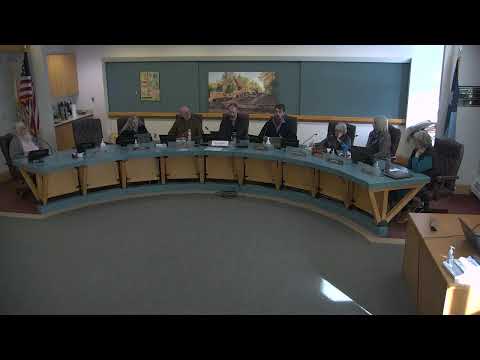
At the Feb. 18 Cook County Public Health and Human Services Board meeting, Dan Blinsky, supervisor of child support for Carlton County, told board members Carlton County’s child‑support team has helped Cook County collect 81.36% of current support owed — about $81.36 for every $100 charged — and that the office ranks fourth of 87 counties on that metric.
At the Feb. 18 Cook County Public Health and Human Services Board meeting, Dan Blinsky, supervisor of child support for Carlton County, told board members Carlton County’s child‑support team has helped Cook County collect 81.36% of current support owed — about $81.36 for every $100 charged — and that the office ranks fourth of 87 counties on that metric.
Blinsky said the collections rate represents a 7.97% rise since 2020 and a roughly 16.5% increase since 2015, the year after Carlton assumed the county’s child‑support work. "For every hundred dollars we charge, we get $81.36 collected," he said, and credited staffing changes, employer income‑withholding efforts and faster client contact for part of the improvement.
Why it matters: stronger collections increase money available to families and can reduce arrears. Blinsky said the office is also focused on related measures: paternity establishment (reported at 90.41%, just above the 90% state goal) and orders established (about 87.5% of open cases, above the state's 80% target). He cautioned those measures are calculated year‑to‑year and can vary as cases close or move between jurisdictions.
Blinsky described several operational and policy changes that will affect local parents: iPay online payments for child support (e‑check, debit/credit cards and e‑wallets) are expected to go live in early March, he said; e‑checks would be free and card/e‑wallet payments would carry a small fee he described as about 2.95%. He said the interim state child‑support director told him the March timeline is still tentative.
Blinsky also summarized federally funded grants and policy shifts. A Minnesota Child Support Division grant to "advance equity in child support" is adding more race and ethnicity fields and seeking to identify barriers faced by historically underserved populations, he said. A continuing "safe access for victims of economic security" grant will let staff accept custodial parents’ statements of feeling unsafe as sufficient evidence to stop child‑support enforcement in some cases. "I'm not gonna question why you feel unsafe or not or what happened to you or give me the details of what exactly happened. I'm gonna trust you," he said, describing the practical effect of the change.
On enforcement tools, Blinsky said state statute governing driver’s license suspension for nonpayment has been revised to add multiple reasons that can delay or prevent suspension — for example, incarceration, pending Social Security claims or short‑term inability to pay — and that case coding will allow for periodic review (one month, three months, six months) before suspension is re‑considered. He framed the shift as a move toward a "kinder and gentler" approach to child support, intended to avoid creating barriers to employment.
Blinsky noted a small interstate caseload for Cook County — about 15 cases — where two staff were reassigned to focus on cross‑state collection and produced nearly a 10% increase in collections for that caseload in the past year.
Board members asked whether domestic violence is sometimes tied to child‑support enforcement. Blinsky cited a Texas study he had seen showing roughly 30% of child‑support cases involved individuals with a history of domestic violence, and said the new evidence‑trust policy aims to limit retaliation risk for custodial parents.
Board members also asked about demographic trends and lower birth rates as a potential driver of shrinking caseloads statewide; Blinsky said he does not track all local demographic shifts and noted he focuses on operational performance.
The presentation was delivered during the board’s staff‑report portion and drew questions from several commissioners, but no formal action was taken on the matters Blinsky described.
Ending: Blinsky and board members characterized the changes as incremental and data‑driven; he said more time is needed to measure the effect of staff reorganizations and new state programs.