
Senate raises FAIR plan limits, restructures board after wildfire‑driven insurance disruptions
Get AI-powered insights, summaries, and transcripts
Subscribe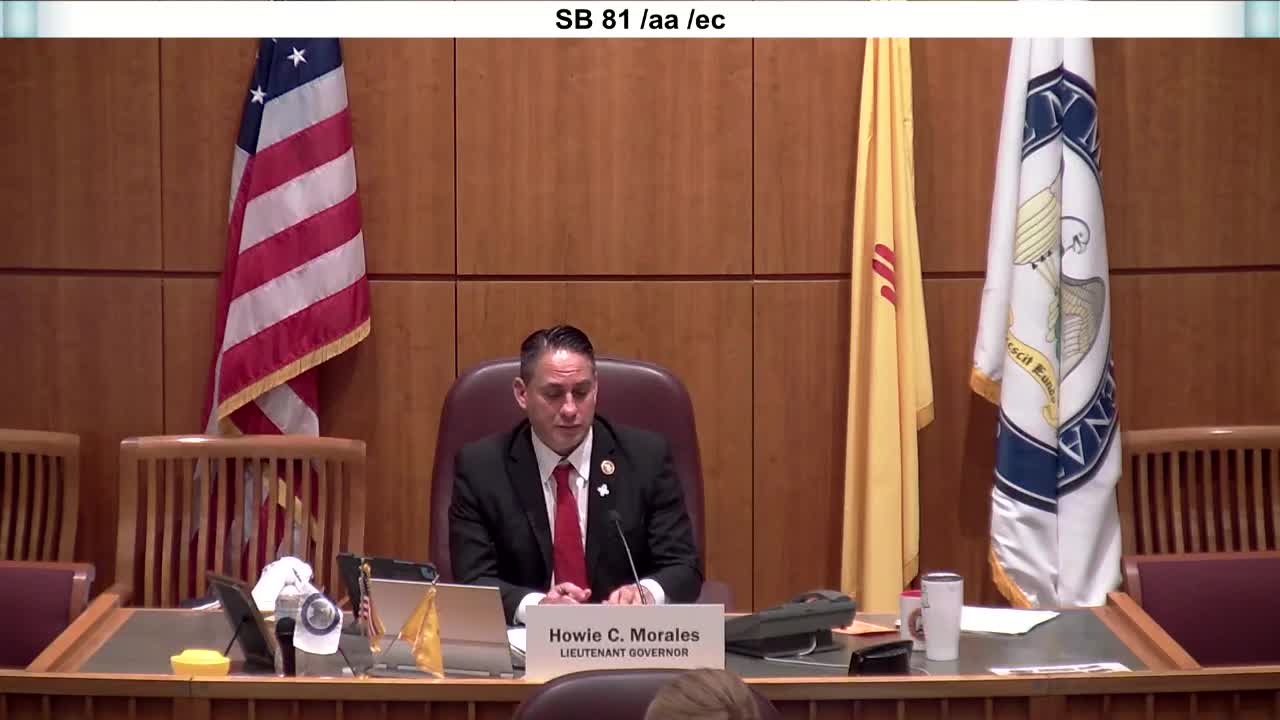
Summary
Senate Bill 81 was amended and passed with an emergency clause to raise FAIR plan residential limits to $750,000 (commercial $2,000,000) and to change board appointment rules aimed at making the insurance pool more actuarially sound after wildfire‑related cancellations and coverage gaps. Vote: 34–1.
Senate Bill 81, carried by Majority Leader Senator Peter Wirth with Senator Ramos as cosponsor, passed the Senate with an emergency clause after floor amendment adjustments to coverage limits and board composition.
Sponsors described the bill as reform to the FAIR plan (a default insurer used when homeowners or businesses cannot obtain private insurance). Wirth told senators that the plan, created in 1969, had residential limits that are no longer adequate and that recent cancellations — including a notice of cancellation for a Santa Fe property citing a wildfire risk — demonstrate the problem. Wirth and cosponsor Ramos said the amendment lowers the originally proposed $1,000,000 residential cap to $750,000 and lowers commercial coverage from $5,000,000 to $2,000,000 after negotiation with the superintendent of insurance. The floor amendment also reconstituted the FAIR board to 11 members with a mix of insurer and consumer/technical appointees and clarified the board elects its chair rather than the superintendent selecting the chair.
Superintendent of Insurance Alice Kane and an actuary participated as expert witnesses during floor discussion. Senate debate referenced roughly 8,000 New Mexicans currently on the FAIR plan and a recent $10,000,000 assessment the FAIR board had to levy after a large claim. Senators discussed mitigation measures (home hardening) that policyholders must undertake after enrollment and the board’s responsibility to propose actuarially sound rates; sponsors emphasized the goal was an actuarially solvent pool rather than a subsidy.
Senator Block cast the lone recorded negative vote; the floor tally recorded 34 in favor, 1 opposed. The sponsor moved immediate passage with an emergency clause. The floor transcript records that the superintendent had provisionally approved the $750,000 residential rate through 06/20/2025. The bill passed the Senate as amended.