Get AI Briefings, Transcripts & Alerts on Local & National Government Meetings — Forever.
Committee tables bill to raise maximum sentence for fentanyl trafficking to 30 years after split testimony
Loading...
Summary
Representative Elaine Cenacortez, sponsor of House Bill 274, told the House Consumer and Public Affairs Committee the bill would raise the maximum sentence for fentanyl trafficking from nine to 30 years and is intended as a sentencing tool for prosecutors.
Representative Elaine Cenacortez, sponsor of House Bill 274 (trafficking fentanyl as a first‑degree felony), outlined the proposal and turned to law‑enforcement experts for technical detail. "I hope that we can all agree on 3 fundamental premises. Number 1, drug addicts in so many respects are victims," Cenacortez told the committee. The bill would increase the statutory maximum for fentanyl trafficking from nine years to 30 years; sponsors described the change as a sentencing tool for prosecutors rather than a change to how cases are charged or tried.
The bill’s principal supporters framed the measure as a response to rising fentanyl seizures and overdose deaths. Commander Ibarra of the Lee County Drug Task Force described the supply chain he attributed to China and Mexico and provided seizure figures: "In 02/2023, we got approximately 80,000 pills" and "in 02/2024, we got about 74,000" pills. He said about "70 to 80 percent" of significant trafficking cases involved firearms. Marcus Montoya, the president of the New Mexico District Attorneys Association, endorsed the proposal: "I do stand in support of this."
Opponents warned the change would widen incarceration and fail to address underlying addiction. Courtney Montoya of the ACLU of New Mexico said, "The ACLU is in strong opposition of HB 274," arguing that life sentences fuel mass incarceration and divert resources from treatment. Diane McConach, a mother who shared family experience with addiction, urged rejection: "Criminalizing people and incarcerating people for life for this devastating medical condition is beyond the pale." The Law Office of the Public Defender, represented by Ricky Lee Chavez, also opposed the bill and noted that life terms are traditionally reserved for murder and the most serious offenses.
Committee members pressed witnesses on how the bill would be applied in practice. Sponsor Cenacortez and law‑enforcement witnesses emphasized that the bill targets traffickers—defined in testimony as individuals with large quantities, packaging for distribution, evidence of sales, and often firearms—and not casual users. Law‑enforcement testimony described scenarios of exploitation, including an account of a young woman the task force said was groomed into heavy daily fentanyl use and trafficking by an older partner.
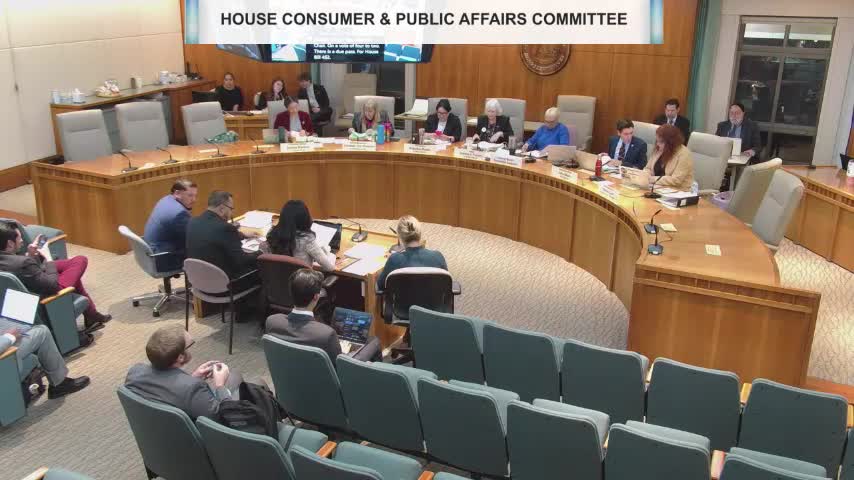
After public testimony and extended questioning, a motion to table the bill passed on a roll call. The committee recorded four votes in favor of tabling and two opposed; the roll showed Representative Romero, Representative Thompson, the vice chair, and the chair voting to table, and Representatives Block and Ward voting against tabling. The committee announced the bill "tabled" at the hearing’s conclusion.
What happened next: The committee did not advance the bill; tabling preserves the measure without immediate passage and allows sponsors or members to pursue amendments or return the measure at a future hearing.
Why it matters: Supporters said stronger penalties provide prosecutors discretion to seek longer sentences for repeat and high‑volume traffickers and could deter activity or encourage cooperation with law enforcement. Opponents said the policy would expand incarceration and urged investment in treatment and prevention instead. Both sides cited data about rising seizures and fentanyl‑related overdoses when framing their positions.
Votes and formal action
- Action: Motion to table House Bill 274 (trafficking fentanyl as a first‑degree felony) - Outcome: Tabled - Vote tally (recorded): yes—Representative Romero, Representative Thompson, Vice Chair (name recorded in committee roll), Chair (name recorded in committee roll); no—Representative Block, Representative Ward
Speakers quoted in this article appear in the speaker list below and are quoted verbatim from the committee transcript.