Get Full Government Meeting Transcripts, Videos, & Alerts Forever!
Get email alerts on the School Funding topic
No spam. Unsubscribe anytime.
Joint finance committee reviews public school support budget as attendance-driven funding drops support units
Summary
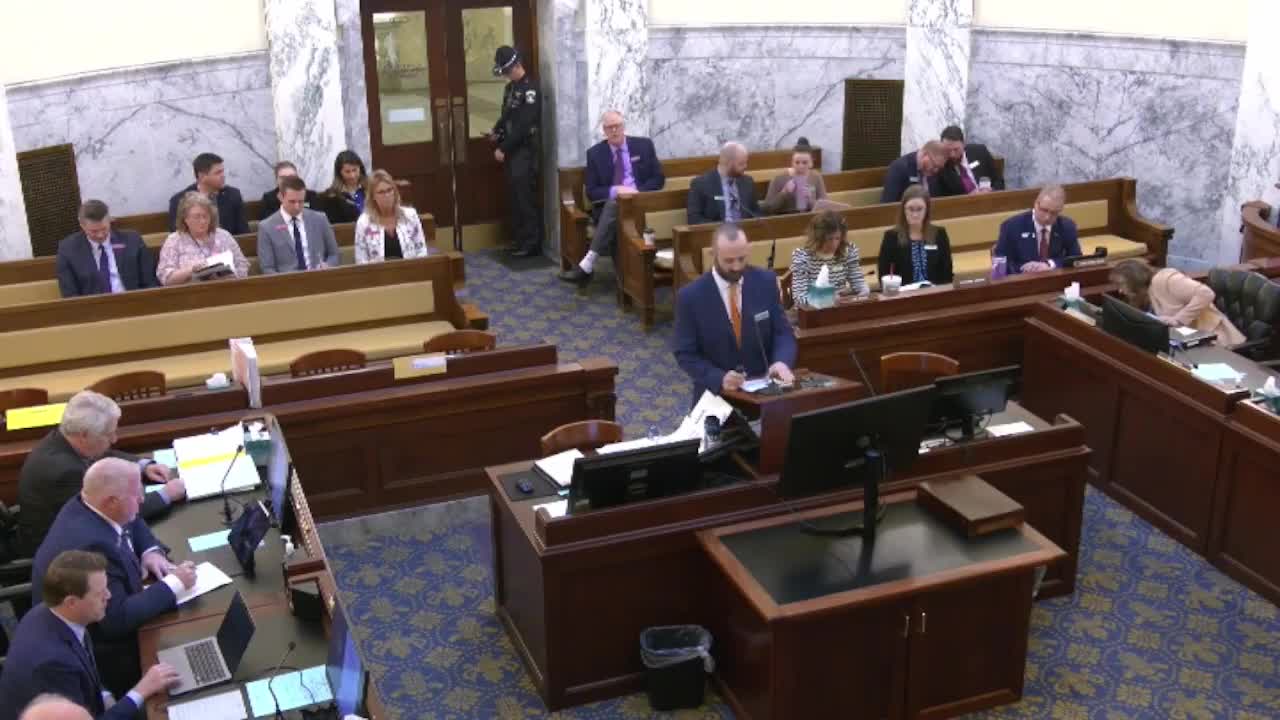
Boise — Lawmakers on the Joint Finance‑Appropriations Committee heard a high‑level briefing on the public school support budget on March 4, when Jared Tetrault of the Legislative Services Office told members the shift back to attendance‑based counting after the COVID period reduced state‑funded support units by roughly 200 for the coming year.
Boise — Lawmakers on the Joint Finance‑Appropriations Committee heard a high‑level briefing on the public school support budget on March 4, when Jared Tetrault of the Legislative Services Office told members the shift back to attendance‑based counting after the COVID period reduced state‑funded support units by roughly 200 for the coming year.
That reduction in support units, Tetrault said, explains much of the year‑over‑year movement in the teachers and student support budget lines even when total dollars have not fallen proportionally. "For every support unit the state will fund 1.55 full time equivalent positions," he said, describing how the state allocates staff allowance funding to districts and charters.
The presentation framed why the change matters to the budget. The state general fund portion of public schools is shown in the committee materials at roughly $2.7 billion for the current year, with dedicated funds and federal grants supplementing that total. Tetrault told the committee the Public Education Stabilization Fund (PSIF) is used to reconcile appropriations and distributions and noted the committee previously repurposed roughly $105 million of one‑time monies into discretionary spending rather than depositing them to PSIF.
Key context: Idaho funding formulas and statutory language in Idaho Code Title 33 determine how many dollars flow to which programs, Tetrault said. The committee materials break the public school support appropriation into divisions — teachers, student support, facilities, central services, Idaho Digital Learning Academy (IDLA) and special programs such as services for the deaf and blind — and show how formulas, career ladder placements and population forecast adjustments drive the budget.
Education officials and staff emphasized major cost drivers. Tetrault and department staff said the career ladder, salary and benefits for administrators and classified staff, discretionary funds, federal funds and transportation are leading drivers. "Some of the biggest cost drivers are gonna be salary based apportionment for administrators, classified staff, advanced opportunities, federal funds, and transportation," Tetrault said.
Superintendent Debbie Critchfield told the committee she remains concerned about districts that used one‑time federal ARPA/ESSER funds for ongoing personnel costs and said the State Department of Education advised districts the federal funding period was ending. "Around 80% of the districts did use those in some form for some type of salary or personnel," Critchfield said, describing the mix of local decisions and state guidance.
Committee members pressed for details the analysts did not have on hand. Senators and representatives asked whether the state tracks how many district employees are not covered by the state health plan and how school‑level staffing is treated when funding is allocated by support unit rather than by actual employee headcount. Tetrault said the state does not have an immediate count for all staff outside the state plan and that some of that information is self‑reported by districts; he offered to provide follow‑up data to the committee.
Members also discussed facilities funding and the House Bill 292 school district facilities fund, which Tetrault said is now on budget and that House Bill 374 would make it a continuous appropriation if enacted. He said the large one‑time facility appropriation (the $1 billion program enacted previously) was distributed on a per‑student basis and districts had to submit 10‑year plans if they accepted lump‑sum payments.
Legislators asked about several requested statutory changes and bills that the analysts flagged as relevant to the committee: changes to the weighted student funding formula, the transportation funding formula (a hearing was scheduled the next day) and a special needs student fund with a hearing in House Education. Tetrault told the panel the committee may act on those items if the bills are approved by their germane committees.
Other items discussed included:
- Discretionary funds: Tetrault reiterated that discretionary dollars are locally controlled and based on a best 28‑week support unit measure; districts decide how those funds are spent.
- Career ladder and CEC adjustments: Last session the committee approved a 1% maintenance cost‑of‑living adjustment (CEC) and later a 2% additional CEC; the current package before the committee reflected differences tied to health insurance and a proposed 5% CEC in another bill.
- Transportation: Tetrault cited the pupil transportation formula and allowances in Idaho Code and a requested $7.7 million adjustment in the governor’s request tied to prior‑year actual expenditures.
- Professional development and literacy funding: Superintendent Critchfield said the department requested moving some professional development dollars into a discretionary bucket to give districts more local control while proposing targeted statewide coaching dollars for K‑3 literacy and phonics if legislation authorizes it.
What happens next: Committee members were told the committee will consider these budget lines as part of the larger appropriation process and may need to reconcile statutory formula changes if bills (for example, those that would change per‑student or per‑enrollment allocations) move through the Legislature.
Ending: Committee staff committed to follow‑up with more detailed district‑level breakdowns on facility distributions, counts of employees on the state health plan where available, and other clarifications requested by members.
Sources: Presentation by Jared Tetrault, Legislative Services Office Budget and Policy Analysis Division; remarks by Superintendent Debbie Critchfield; committee Q&A on March 4 at the Joint Finance‑Appropriations Committee meeting.