Get Full Government Meeting Transcripts, Videos, & Alerts Forever!
Get email alerts on the Employee Health Center topic
No spam. Unsubscribe anytime.
School board reviews Care ATC proposal for employee health center as current contract nears end
Summary
At a workshop, Highlands County School Board members heard a recommendation to replace the district's existing employee clinic with Care ATC, a vendor proposing expanded primary and occupational health services, a multi‑phase implementation and higher first-year costs that proponents said could be offset by lower plan claims over time.
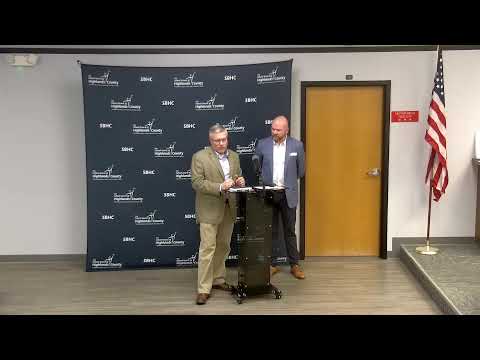
At a workshop of the School Board of Highlands County, district staff and representatives of Care ATC presented a proposal to operate the district's employee health center as the district's current clinic contract approaches its 2025 expiration. Andrew Lethbridge, deputy superintendent, told the board the district opened its current clinic in February 2019 and that the current contract runs through the end of 2025. He said the district went out to bid and two vendors met bid qualifications; the insurance committee interviewed both and is recommending Care ATC.
The recommendation matters to employees and the district's health plan because Care ATC's proposal includes expanded services, a multi‑year staffing plan and higher initial costs. Care ATC proposed a conservative Year 1 staffing model of 1.5 nurse practitioners and 2.5 medical assistants, with potential to add services such as X-ray, mental health, registered dietitians and physical therapy in later years. Mitch, Care ATC's vice president of operations for the East, described a three‑phase implementation (discovery, planning, transition) and a three‑year growth strategy that starts small and scales services if utilization rises.
Care ATC officials said Year 1 on‑site costs would be roughly $1.2 million under the proposal, including ongoing labor fees and estimated pass‑throughs; they itemized a separate implementation line that includes an estimated $93,000 buildout for X‑ray equipment that the district would not be required to purchase in Year 1. Andrew Lethbridge and Care ATC staff both cautioned that the figure is an estimate and that the district's current total clinic and pass‑through costs are roughly $800,000 per year under the existing contract.
Care ATC described operational features intended to increase utilization and reduce downstream claims. The vendor said a typical engaged patient returns about four times a year, that one provider can handle about 3,500 visits annually, and that the company uses data tools including a personal health assessment and a proprietary CareHub to identify and manage high‑risk employees. Carol, Care ATC's vice president of business development, cited the company's benchmarks across its book of business, saying Care ATC has seen, on average, a 25% reduction in prescription spend, a 45% reduction in specialty care use, a 10% drop in high‑cost claimants, a 36% increase in primary care visits and a 26% improvement in care compliance; she framed those as historical, aggregate results from the vendor's clients rather than guaranteed outcomes for Highlands.
District staff and board members pressed Care ATC on practical details. Tammy Mortensen, the district's risk manager, described a problem with the current arrangement: "when that physician sends the medication to the local pharmacy, the local pharmacy won't take an out of state doctor prescribing it," referring to telemedicine prescriptions from an out‑of‑state provider used by the current vendor. Care ATC said the district could pursue a model that includes an on‑site physician (for example a 0.5 FTE physician) to allow local prescribing of certain controlled or specialist medications, but acknowledged that adding an on‑site physician would increase cost.
Board members and staff discussed site, access and governance options. Care ATC and district staff said the clinic could be located in district‑owned space with a significant retrofit, in leased medical space, or by repurposing part of an existing School Board complex; the district's facilities director and others had conducted an initial site walk. Care ATC said a standard single‑provider clinic needs roughly 1,700 square feet; the specific district wing discussed was about 3,600 square feet and could accommodate expansion or shared use with other public entities.
Several board members raised partnering with the county, law enforcement or other public employers to spread start‑up and staffing costs and to increase service volume so more services (for example an on‑site X‑ray or additional providers) would be viable. Care ATC explained that in Florida public entities can "piggyback" existing public contracts via interlocal agreements, which can streamline adding other public organizations without a separate RFP. District staff said they have not yet approached the county or other public partners and that discussions would be premature before the board decides a direction.
Staff emphasized that the workshop was informational and that no formal action was taken. Insurance committee members said they checked references; Jean Federico, who contacted classroom teachers and support staff at referenced sites, reported that "Care ATC had'an overwhelming majority of satisfied people" who praised availability, continuity of providers and appointment access. Board members requested more detail on hours of operation, rollout timing, recruitment plans, and how the vendor's reporting would demonstrate cost offsets to the health plan.
Next steps described in the workshop were further due diligence, continued conversations about potential partnerships with county or other public employers and detailed contract and budget work if the board directs staff to negotiate. The insurance committee presented Care ATC as the committee's recommendation for a future contract; the board did not vote and made no binding commitment at the workshop.