Get Full Government Meeting Transcripts, Videos, & Alerts Forever!
Get email alerts on the Education Funding topic
No spam. Unsubscribe anytime.
Legislative analysts brief JFAC on Public Education Stabilization Fund balance and cap
Summary
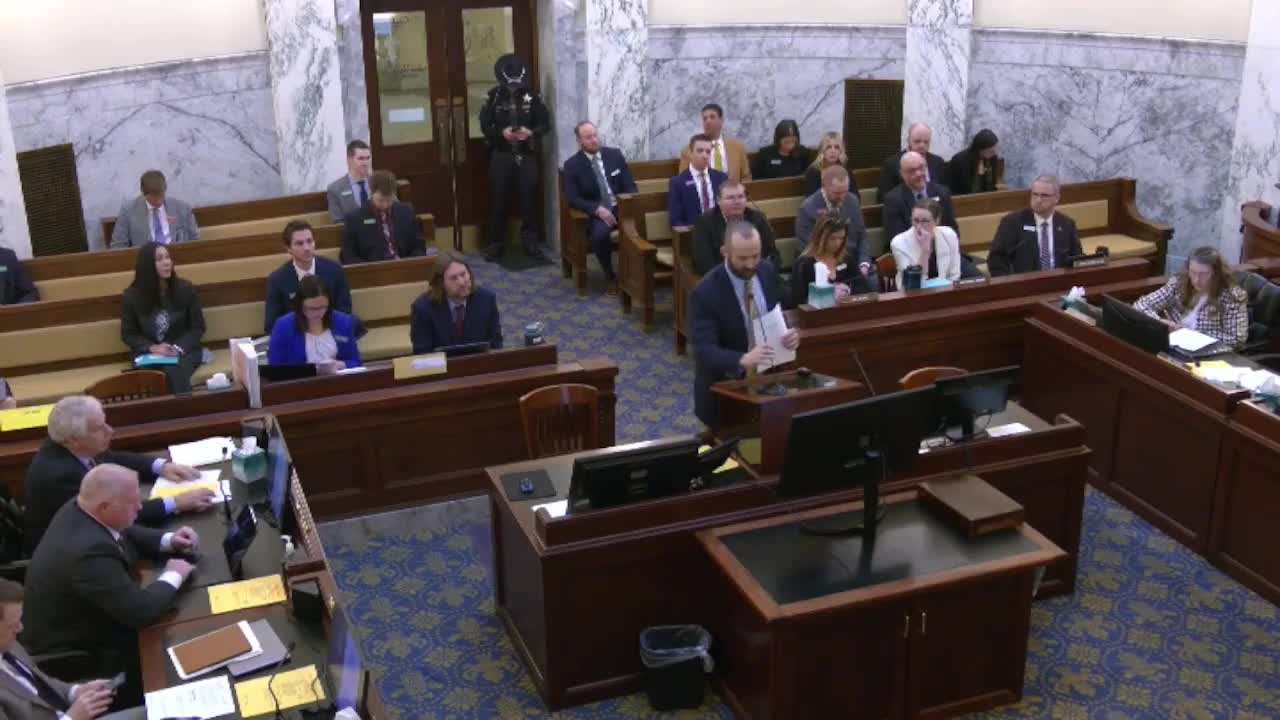
Jared Tedrow, deputy division manager in the Budget Policy Analysis Division of the Legislative Services Office, told the Joint Finance-Appropriations Committee the Public Education Stabilization Fund (PSIF) serves as a safety net for public school support program appropriations and currently holds a balance well below the statutory cap.
Jared Tedrow, deputy division manager in the Budget Policy Analysis Division of the Legislative Services Office, told the Joint Finance-Appropriations Committee the Public Education Stabilization Fund (PSIF) serves as a safety net for public school support program appropriations and currently holds a balance well below the statutory cap.
“Public Education Stabilization Fund or PSIF is, it acts as a safety net for the public school support program appropriations,” Tedrow said during a presentation to JFAC. He said the fund had a cash balance of $250,800,000 as of July 1, 2024, and is producing interest income each month.
The presentation outlined why the fund exists and how it has been used. The fund’s cap was raised in recent legislation to 15 percent of state funds appropriated to public schools; Tedrow said 15 percent of current state funds directed at K‑12 is about $440,390,000, leaving a variance of roughly $189,600,000 before the fund would hit the cap. He also noted the governor has recommended a $50 million transfer into the fund on July 1, 2026.
Tedrow walked the committee through the fund’s history, including initial legislative investments and periods in which withdrawals occurred to stabilize school appropriations during economic downturns. He said from 2015 to 2021 the fund experienced withdrawals tied to growth in support units and appropriations, while more recent legislative action increased deposits and raised the cap. He described the 2023–24 position as having no deposits or withdrawals because of appropriation language directing funds to be distributed to schools.
Tedrow provided the committee with a high-level projection of how much more could be deposited if current conditions hold. “With a current cash balance of $250,880,000 that leaves a gap or a variance of $189,600,000 that could go in before it reaches that full cap,” he said.
The presentation included references to recent legislation that changed how excess dollars are handled when the PSIF reaches its cap; Tedrow said those dollars previously went to the bond levy fund but now would go to the school district facilities fund established in House Bill 292. He also cited what he described as a statutory requirement for committee review of the fund.
No formal motion or vote followed the presentation; the item was presented as an informational fund review to satisfy the committee’s review responsibilities.
Committee members asked for clarification on the numbers and timing; Tedrow answered procedural and historical questions but no policy change was proposed at the meeting.
The committee moved on to other agenda items after the briefing.