Get Full Government Meeting Transcripts, Videos, & Alerts Forever!
Get email alerts on the Sheriffs Retirement Funding topic
No spam. Unsubscribe anytime.
Missouri committee hears plans to shore up sheriff retirement fund; jail per-diem and paper-service fee among options
Summary
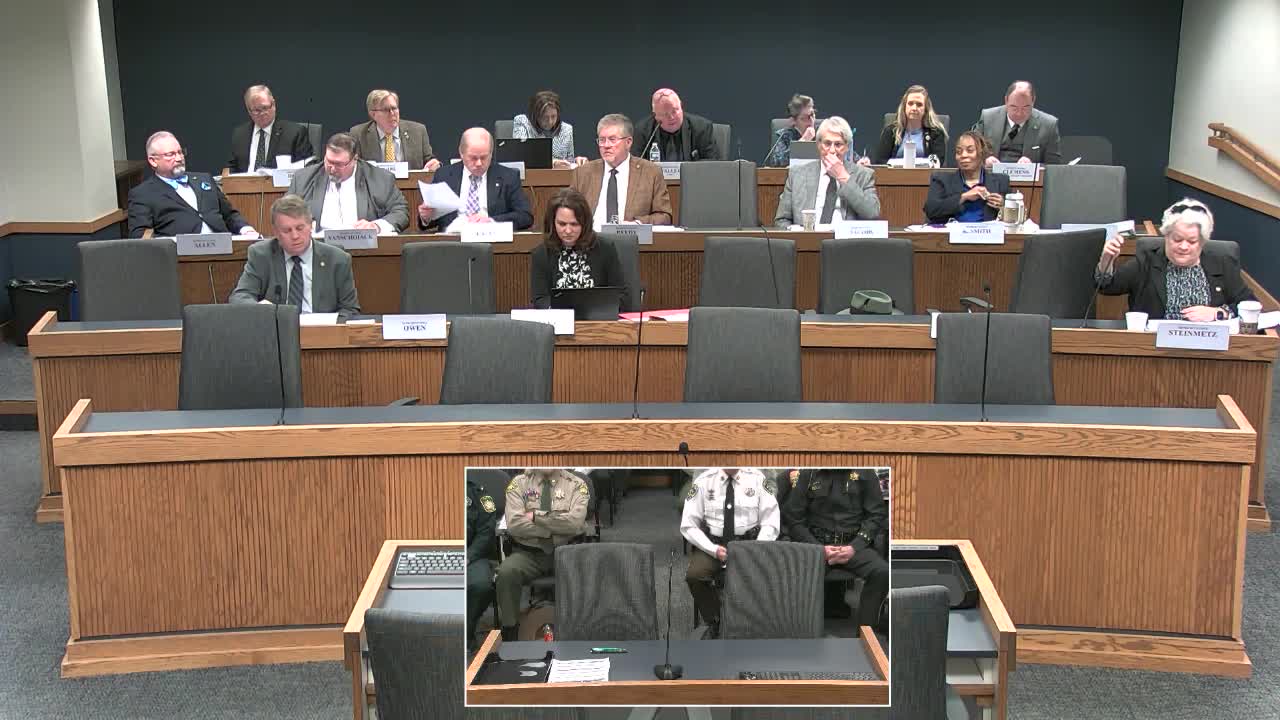
House Bill 558, a measure to stabilize the Missouri Sheriff’s Retirement System, drew a lengthy public hearing before the House Committee on Pensions. Committee members and witnesses discussed routing a $2 increase in jail per‑diem, redirecting an existing $5 paper‑service fee, and a 2% county employer contribution to shore up the fund.
House Bill 558, a measure to stabilize the Missouri Sheriff’s Retirement System, drew a lengthy public hearing before the House Committee on Pensions on the morning of the committee session. The bill was described in committee materials as sponsored by Representative Hollis; Representative Hovis gave the committee’s opening overview and outlined possible statutory funding changes now that a constitutional amendment (Amendment 6) failed at the ballot box.
Committee members, the system’s executive director and dozens of sheriffs and county officials discussed three primary revenue ideas: a $2 redirect of the state jail per diem reimbursement, use of an already‑existing $5 paper‑service fee, and a statutory 2% county employer contribution. Sheriff offices have also agreed to a 5% employee contribution, which the system began collecting in 2024.
Why it matters: The retirement system’s longstanding primary funding source was declared unconstitutional by the Missouri Supreme Court in 2021. Melissa Lortz, executive director of the Missouri Sheriff’s Retirement System, told the committee the system has received $2.5 million in state aid the past two years and that the governor again requested $2.5 million in his budget. Lortz said the system needs roughly $4 million annually to move toward actuarial stability. “This is estimated to bring in roughly 3 to 3 and a half maybe 4,000,000,” she said of the per‑diem proposal, and warned, “we are projected to be bankrupt in roughly 9 years.”
Proposed revenue pieces described in the hearing:
- Jail per diem: Committee discussion focused on directing an additional $2 of the state jail per‑diem reimbursement into the retirement fund. Per‑diem payments reimburse counties for housing state prisoners; the committee heard the daily reimbursement has trailed actual county costs for years. Witnesses estimated an increase of $2 per day would generate roughly $3.7–4.0 million in the system, depending on the number of prisoner days in a year. Several speakers noted per‑diem levels fluctuate with appropriations and prisoner counts.
- $5 paper‑service fee: The bill would redirect a $5 portion of existing fees for serving civil and criminal papers into the retirement system. Melissa Lortz said that fee has already been tested in the courts and provides a more predictable revenue stream than paper‑service volume alone.
- County 2% employer contribution: The draft language discussed would require counties to contribute up to 2% of sheriff payroll to the retirement system. Committee members and county officials cautioned this could be a difficult mandate for some small counties and stressed local budget differences.
Estimates, actuarial context and risks: Lortz said the fund’s most recent actuarial valuation showed about 72% funding and that the system was roughly $14 million underfunded. She told the committee the actuary projected that with an annual $4 million funding increase beginning in 2026 the funded ratio could rise from about 72% to roughly 82% over five years. Lortz and other witnesses warned that absent a new sustainable revenue source the system could face cuts to benefits, including the $350 supplemental medical benefit retirees currently receive, or more drastic prorating of benefits in future years.
Stakeholders and public testimony: Multiple current and former sheriffs testified in favor of statutory fixes and described difficulties recruiting or retaining qualified candidates when retirement benefits are uncertain. Sheriff Chris DeGase of Douglas County and Sheriff Steve Pelton of Franklin County (who also identified himself as president of the Missouri Sheriffs Association) both described hiring and retention problems and urged timely legislative action. County commissioners’ representatives and the County Commissioners Association asked to be kept at the table and warned that counties vary widely in fiscal capacity.
Committee process and next steps: Committee members asked for more precise revenue projections for each funding option. Representative Steinhoff requested itemized estimates showing how much each proposed change would produce so members could model combinations (e.g., $2 per diem + $5 fee + 2% county). Committee leaders said they would continue meetings with stakeholders; one member urged moving the bill quickly to executive session next week, while the chair said he would consult committee leadership and the ranking member before scheduling committee action.
Ending: No vote or formal committee action on HB 558 occurred at the hearing. Committee staff and the bill sponsor said they will continue refining statutory language, collect updated actuarial estimates and work with county groups and sheriffs so members can consider amendments before any committee vote.