Get Full Government Meeting Transcripts, Videos, & Alerts Forever!
Get email alerts on the Mutual Aid Emergency Vehicles topic
No spam. Unsubscribe anytime.
Missouri House passes mutual-aid bill that allows some unmarked emergency vehicles to follow without lights and sirens; debate centers on safety and liability
Summary
House Bill 225, passed March 5, 2025, creates a framework for out-of-state mutual aid and includes a provision allowing certain emergency vehicles to operate without lights and sirens on state and federal highways. The measure passed amid sharp floor debate about safety, precedent and liability after past fatal incidents were cited by opponents.
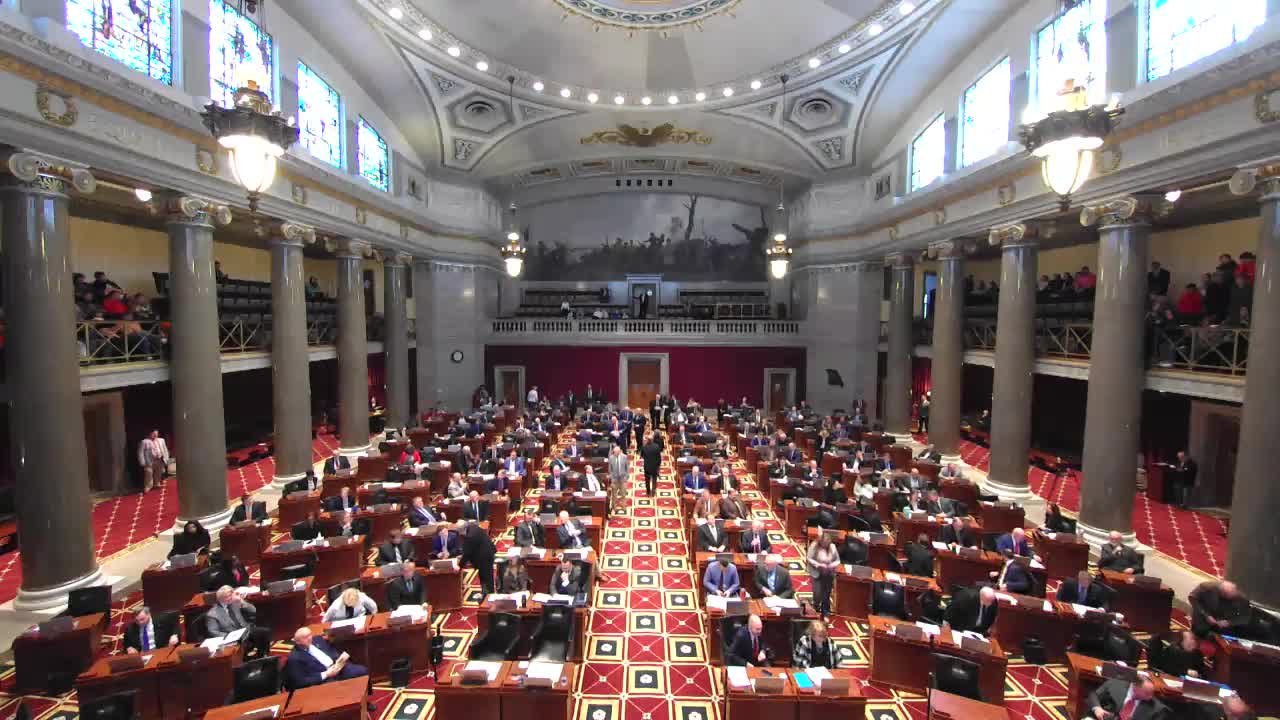
JEFFERSON CITY, Mo. — The Missouri House on March 5 passed House Bill 225, a measure that sets out a framework for out-of-state mutual aid for law enforcement and alters rules governing use of lights and sirens by certain emergency vehicles on state and federal highways.
The bill’s sponsor, the Gentleman from Warren, Representative (government), described the measure as a way to assemble additional law-enforcement assets for major events and emergencies. "All this does is provide framework," the sponsor said on the floor. The motion to third-read and pass HB 225 carried, and the bill was approved by the House vote recorded on the day.
The debate focused on two linked questions: whether a state statute is needed to facilitate cross-jurisdictional mutual aid for events such as the FIFA World Cup and similar large-scale operations, and whether allowing unmarked or otherwise nontraditional emergency-vehicle responses without lights and sirens would increase risk for civilians.
Supporters said the mutual-aid language would standardize arrangements for out-of-state assistance and for special-event staffing, and they emphasized statutory safeguards that leave officers liable for reckless conduct. The bill’s floor discussion included a recitation of statutory language intended to preserve liability: "the foregoing provisions shall not relieve the driver of an authorized emergency vehicle from the duty to drive with due regard for the safety of all persons, nor shall such provisions protect the driver from the consequences of his reckless disregard for the safety of others," quoted by the bill handler (Representative, government).
Opponents cited fatal local incidents and statistics to argue the exemption presented a serious safety risk. The Lady from Saint Louis District 73, Representative (government), recounted a 2019 collision involving a Saint Louis County police SUV that she tied to similar policies and said, "This actually happened," when describing the death of a 12-year-old child hit during an incident involving a vehicle using emergency-response tactics. The Lady from Jackson (District 25), Representative (government), cited Kansas City police-chase data on the floor, saying, "Over the past 5 years, 320 people have been injured in Kansas City through these police chases. And 9 individuals have been killed."
Other lawmakers and former law-enforcement members described operational scenarios where officers use unmarked vehicles and delayed activation of lights and sirens to avoid alerting suspects or to safely position for intervention. A representative with a long law-enforcement career said the bill would allow tactical options that in some circumstances can prevent greater harm.
Liability and local practice
Several members stressed that the bill, as drafted, keeps legal liability on the individual officer for reckless conduct and that municipalities retain civil-liability protections under existing doctrines. Critics pointed to the risk that individuals — particularly pedestrians and children — could be harmed if emergency vehicles operate without visible signals in populated neighborhoods, and urged that mutual-aid agreements be handled locally rather than by statutory directive.
Vote and next steps
The House approved HB 225 on third reading. The bill sponsor urged passage to ensure a statutory framework is in place for large events and mutual aid; several members asked the Senate to consider a "clean" mutual-aid version without the lights-and-sirens language.
Ending
Supporters called the bill a practical framework for mutual aid and tactical response; opponents warned of repeat tragedies and signaled they will press for amendments or alternative approaches in the Senate.