Get Full Government Meeting Transcripts, Videos, & Alerts Forever!
Get email alerts on the Utilities Bonds Rates topic
No spam. Unsubscribe anytime.
Council debate over utility bonds turns to residential moratorium as council seeks alternatives
Summary
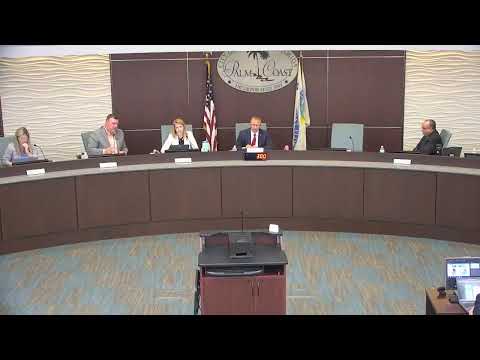
City officials and council members spent an extended portion of the workshop debating a proposed utility‑rate increase, associated bond financings to expand water and wastewater capacity, and whether the city should impose a temporary moratorium on new residential approvals while infrastructure is addressed.
City officials and council members spent an extended portion of the workshop debating a proposed utility‑rate increase, associated bond financing to fund water and wastewater improvements, and whether the city should impose a temporary moratorium on new residential approvals while infrastructure is addressed.
Why it matters: the council was presented with a multi‑year capital improvement plan and proposed bond financings to expand water and wastewater capacity. Several council members said the financing plan places disproportionate cost burdens on current residents and urged alternatives to the full bond package; one council member said they will oppose the bond vote unless the council first adopts a residential building moratorium.
Key statements and figures: city finance staff provided the city’s outstanding utility debt figure and background on prior purchases. A staff member stated the city’s total outstanding long‑term debt related to utilities is "$155,289,991. That's principal and interest that's in our long term debt." (meeting excerpt). Another staff speaker recounted that the city acquired the water/wastewater system in 2003 after an earlier 1999 sale price of $25,000,000 and subsequent capital work.
Council positions and options discussed - Moratorium: Councilman Miller said he will "be a no vote unless we put in a building moratorium on residential housing," arguing the city cannot keep approving new residential units it cannot support with existing water/wastewater capacity. Other council members expressed concern about unintended consequences and asked staff for more detail on moratorium design, scope and legal risk. - Alternative finance/CIP scaling: Several council members urged staff to revisit the CIP to identify lower‑cost phasing and to pursue additional state or grant funding before advancing the full bond package to the second reading. One council member urged using the state’s interest in the westward expansion to press for funding at higher levels. - Impact fees and cost shares: Staff and council discussed the expected funding mix; staff noted that impact fees and new development would fund a portion of the work but that the bonds carry a large share of the near‑term cost. Council members asked staff to provide updated numbers and scenarios showing smaller bond packages and different mixes of impact fees, bonds and grants.
Process and next steps: council members asked staff for detailed alternatives and prioritized CIP options to evaluate before the utility ordinance second reading. Staff was asked to return with a refined CIP, prioritization of projects and an analysis of the legal and economic impacts of a potential moratorium; council members suggested the item be discussed again during workshops so the body can consider detailed consequences before taking a final vote.
Ending: The council did not adopt a moratorium during the workshop. Members agreed to continue the discussion and to ask staff for more detailed alternatives and sequencing options ahead of the scheduled second reading of the utility ordinance in two weeks.