Get Full Government Meeting Transcripts, Videos, & Alerts Forever!
Get email alerts on the Transit topic
No spam. Unsubscribe anytime.
Franklin Transit projects 10% ridership increase as pandemic-era federal funds wind down
Summary
TMA Group and city staff presented the Franklin Transit Authority budget, reporting rising demand for Transit on Demand service, vehicle purchases to address pandemic-era shortages and the depletion of CARES/ARPA funds that will increase the city's subsidy requirement.
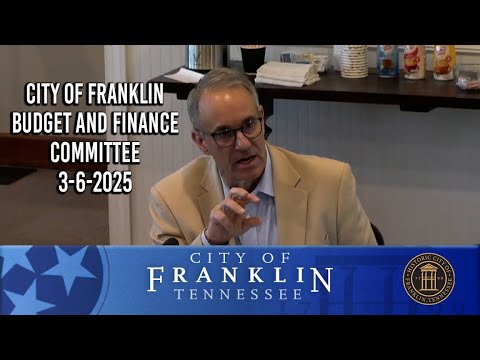
The Franklin Transit Authority expects ridership to rise about 10% from the prior year and estimated roughly 92,400 passenger trips in the coming fiscal year, a TMA Group presenter said during the Budget & Finance Committee meeting for Franklin City.
The transit presenter, identified in the meeting as a TMA Group representative (Debbie), told the committee the largest growth was on the Transit on Demand (TOD) prearranged curb-to-curb service and that TMA had increased capacity after previously turning riders away. “Franklin Transit ridership is trending up and we are estimating at least a 10% increase in ridership system wide,” Debbie said.
The transit presentation covered organization, revenues, expenses, and service highlights. The authority operates fixed-route service six days a week plus TOD within Franklin, including Cool Springs, and the contract operator (TMA) is the employer of transit staff. The Franklin Transit Board is working with consultants on a citywide transit vision plan; the budget includes set-aside planning funds with a 10% city match for consultants, the presenter said.
Why it matters: federal pandemic relief funds that supported local transit are nearly exhausted, meaning the city’s subsidy must rise. “These funds at the end of this fiscal year, June 30, will be depleted,” the TMA representative said of CARES Act and American Rescue Plan Act funding secured through the Federal Transit Administration. Because those pandemic-era funds were 100% federal, the department expects the city contribution to increase for the coming year.
Key budget figures presented included total transit revenues of $4,207,068 and total transit expenses of about $4,000,003.38; the requested city subsidy was shown on the committee slides as $1,000,004.61 (operations request $1,394,203; planning $12,500; capital $55,042). The presentation noted TMA had procured four vehicles recently to address pandemic-related delivery delays.
Committee members and staff also described internal city support for transit: a part-time contract compliance analyst (Christiana Dunn) reviews grant invoices, the traffic operations center staff (Adam Mosher and Abby McCurray) provide operational support, and planning staff (Tia Holden) assists with agenda materials. Staff noted that TMA secured roughly 62% of the transit fund revenue from federal and state grants for the upcoming year.
Questions from the committee addressed the still-pending micro-transit project; the presenter said those funds remain with Franklin Transit and will be expended only if the Franklin Transit Authority endorses the consultant recommendations from the transit vision plan. The presenter also described a successful partnership with Williamson County high schools using TOD service for students with special needs.
The committee did not take a formal vote on the transit budget during the presentation; staff said the transit authority and city will continue to refine budget items as the overall fiscal process proceeds.
TMA’s presentation and staff comments left committee members focused on two operational issues going forward: (1) the near-term fiscal impact of depleted pandemic grants on city subsidy needs and (2) coordinating the transit vision plan with the micro-transit funding set aside in the transit fund.