Get Full Government Meeting Transcripts, Videos, & Alerts Forever!
Get email alerts on the Firearms Policy topic
No spam. Unsubscribe anytime.
Committee debate over proposed ban on 'gas‑operated' semiautomatics exposes sharp differences; roll call begins without final disposition in transcript
Summary
Senators debated a proposal to regulate firearms defined by a 'gas‑operated' semiautomatic mechanism and to restrict magazines to 10 rounds; the hearing focused on technical exclusions, constitutional risk and enforcement questions.
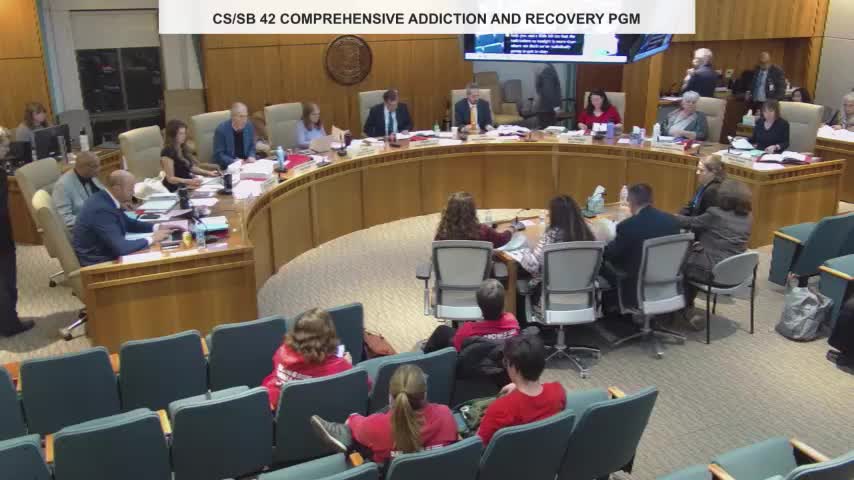
Senators took up a lengthy hearing on Senate Bill 279, which would define and regulate certain semiautomatic firearms on the basis of an engineering characteristic the bill calls “gas‑operated semiautomatic firearms,” restrict the sale of high‑capacity magazines (more than 10 rounds) and create a certification process administered by the attorney general to list models exempted from the ban.
Sponsor Senator O’Malley introduced the bill and the committee heard technical and constitutional questions from members. Deputy General Counsel to the governor Kyle Duffy and a firearms subject‑matter expert (Mister Lickenbrock) briefed the committee on the technical drafting and exclusions. Mr. Duffy explained that the draft lists many exceptions — for example, recoil‑operated handguns (about 90% of modern pistols) and blowback‑operated pistols under eight inches would be excluded; the committee sub also treats certain fixed‑magazine rifles as exempt (California‑compliant 10‑round fixed magazines were cited as an example).
Several senators challenged whether the bill would sweep in common sport and hunting firearms. Senator Maestas asked whether common models used for hunting and sport would be included; committee technical staff and the expert said many traditional firearms (for example, historically used rifles with fixed low‑capacity magazines) would be exempt, but members remained skeptical and asked whether popular models such as certain shotguns or older rifles could nonetheless be captured by the definitions.
Senator Brantley, among others, raised constitutional concerns and referenced the Heller and Bruen Supreme Court decisions during debate, arguing that courts require careful consideration of whether commonly used firearms could be banned. The sponsor and counsel responded that courts in several circuits have upheld analogous limits in litigation over large‑capacity magazines and that the bill’s drafting follows those precedents; counsel also said the attorney general would consult with the Department of Public Safety and publish a certified list of models covered or exempted under statutory criteria.
Committee members asked about grandfathering and compliance: counsel said existing owners may be grandfathered and could instead file certification with an FFL (federally licensed dealer) rather than with the attorney general; staff said high‑capacity magazines would be prohibited going forward but owners in possession at the effective date could be grandfathered.
At the meeting’s close the committee took a roll call on a motion (Senator Stewart moved a do‑not‑pass on SB279 and a do‑pass on the committee substitute). The transcript records many individual roll‑call responses but the excerpt ends before the chair read a final, binding disposition for the committee in the provided text.