Get Full Government Meeting Transcripts, Videos, & Alerts Forever!
Get email alerts on the Child Welfare topic
No spam. Unsubscribe anytime.
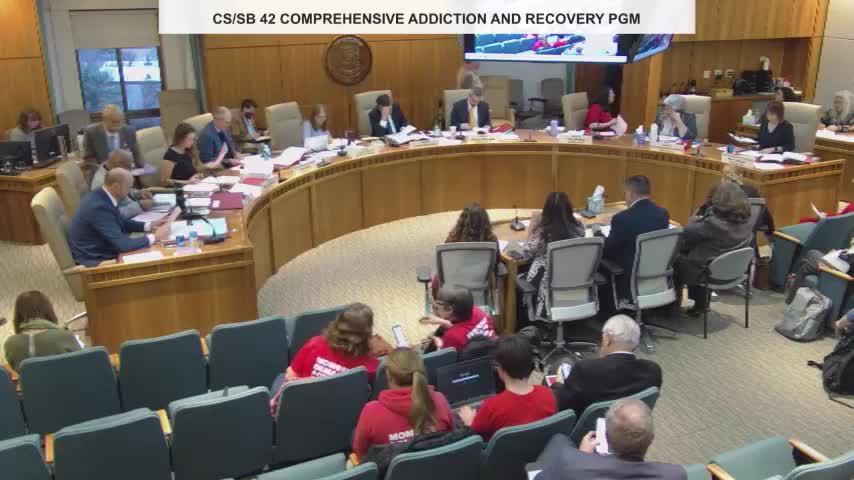
Senate committee hears wide‑ranging child welfare package: CARA, Families First, confidentiality changes and assault‑on‑worker penalties
Summary
Senate Bill 42, a multi‑part child‑welfare package, drew extended committee debate over plans of safe care for substance‑exposed newborns, Families First alignment, and criminal penalties for assaulting child‑welfare workers.
The committee held an extended hearing on Senate Bill 42, an omnibus child‑welfare package that sponsors described as implementing the New Mexico Child Safety and Welfare Act and consolidating multiple reforms, including CARA (Care Act) provisions, Families First Prevention Act implementation, and changes to confidentiality and data‑sharing rules.
Sponsor Senator Padilla said the bill would move certain CARA programs to the Department of Health to adopt a public‑health approach and argued the Families First plan would allow the state to expand preventive services statewide. “There is language in here that talks about prenatal. We want to start early with families as early as possible to identify issues that they may need support with,” said Theresa Gonzales, representing the Children, Youth and Families Department (CYFD).
Department of Health representatives said moving CARA to public health will allow use of Cara navigators, intensive case management and SBIRT screening protocols tied to managed care organizations’ care coordinators. “We will be taking a public health approach to the issue with our Cara navigators,” said a Department of Health official (transcript reference).
The bill also adds a new plan of safe care requirement for newborns identified as substance‑exposed. The proposal requires the birthing facility or health care provider to create a plan of safe care that, at discharge, will be explained to the parent or caregiver and include referrals (for example to early intervention, home visiting and other services).
Committee members pressed sponsors on drafting clarity: who signs and who is responsible for the plan at discharge; whether the term “guardian” should include a parental power of attorney in the CARA context; and how quickly a family assessment should be done after discharge. Sponsors and staff repeatedly said some operational details will be developed through rulemaking; Department of Health officials said the plan and an initial assessment would be followed up by care coordinators and navigators and that agency rules would specify timing (the department noted an expectation that navigators would follow cases and that family assessments would be completed within 24–48 hours in local implementation plans).
One of the most contested sections set out new criminal enhancements for assault or battery against child‑welfare workers, modeled closely on statutes that apply to school personnel and health‑care staff. Committee members debated levels of offenses and whether particular paragraphs should be struck. The committee adopted an amendment to strike paragraph f (language in the assault/battery enhancement) and other targeted edits; sponsors said the language was modeled on existing school‑personnel protections to give workers better protection on the job.
Public testimony included representatives from Bold Futures New Mexico and the Greater Albuquerque Chamber of Commerce who urged that the bill prioritize treatment and supports for substance‑exposed newborns. “This bill … prioritizes meaningful healthcare focused care, ensuring that responses to substance use during pregnancy prioritize care, support, and evidence‑based best practices over punishment,” said Micah Vitsini of Bold Futures (transcript).
The committee adopted several drafting amendments and reserved additional technical edits for subsequent drafts. Several senators said they want clearer statutory language or that certain implementation details — screening tools, exact referral roles, and evidentiary definitions — be set in rulemaking rather than statute.
What happens next: the bill will be worked into further committee substitute language; sponsors and agency staff will refine definitions and rule language for the plan of safe care and confidentiality provisions before returning to the committee for a final committee substitute and vote.