Get Full Government Meeting Transcripts, Videos, & Alerts Forever!
Get email alerts on the Arbitration Class Action Qui Tam topic
No spam. Unsubscribe anytime.
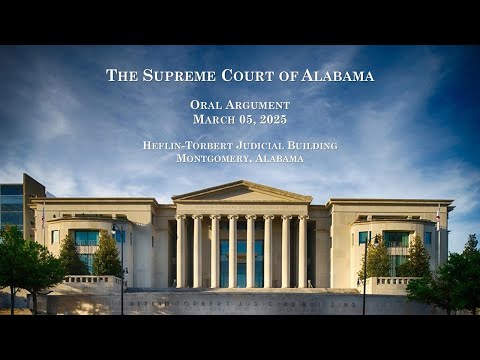
Alabama Supreme Court weighs whether qui tam-style suits escape arbitration and Rule 23 oversight
Summary
At oral argument in SC240455, justices questioned whether lawsuits brought under Ala. Code §8-1-150(b) can pursue money allegedly lost by unnamed game players without being bound by players' arbitration agreements or class-action procedures.
At an oral argument before the Supreme Court of Alabama, attorneys for competing parties sparred over whether lawsuits brought under Alabama Code §8-1-150(b) may seek money on behalf of unnamed game players without being subject to those players’ arbitration agreements or Rule 23 class-action protections.
Appellants’ counsel told the court the complaints are "unprecedented" and that plaintiffs are attempting to recover money spent on internet games by "thousands of unnamed people" who agreed to arbitration with the game companies. Appellant counsel argued that either the Federal Arbitration Act or the court’s precedents require the trial court to compel arbitration of those claims. "The Federal Arbitration Act required the circuit court to compel these plaintiffs to the same arbitration to which the players of these games ... had agreed," counsel said.
The appellee’s lawyer, Johnny Norris, told the court the statute at issue historically functions like a qui tam or relator cause of action and that the legislature can assign enforcement rights to private relators. Norris argued his clients pursue a statutory remedy for the benefit of families of alleged players and are not parties to the players’ arbitration agreements. "The rights ... to bring this case is founded in the Alabama statute," Norris said, and he urged the court to recognize that statutory structure when considering whether arbitration applies.
Justices pressed both sides on several recurring issues: (1) whether a plaintiff asserting a statutory claim under §8-1-150(b) "stands in the shoes" of the original player such that the player’s arbitration agreement binds the plaintiff; (2) whether plaintiffs’ pleadings — seeking recovery for unnamed people while disclaiming Rule 23 class procedures — effectively operate as class actions that Rule 23 or due-process principles should govern; and (3) whether preliminary factual questions (for example, whether a game constitutes illegal gambling and therefore voids arbitration provisions under precedent such as Macon County Greyhound Park v. Hoffman) must be decided by a court or by an arbitrator.
Appellants relied on this court’s decisions applying the ‘‘stand in the shoes’’ concept and on precedent addressing delegation clauses to argue that appellate courts should either compel arbitration or treat the trial court’s order as effecting a class certification that the trial court erred in entering. Appellees countered by citing historical qui tam and assignment authorities and by distinguishing cases in which personal representatives or executors were held bound by arbitration provisions when they pursued claims derived from a signatory’s contractual rights.
Several justices queried whether §8-1-150(b)’s text, which allows recovery "for the use of" another, requires a familial or other connection between the relator and the beneficiary. Others asked whether the trial court must first decide, as a threshold matter, whether a contract is void for gambling before arbitration questions are resolved. Appellate counsel pointed to U.S. Supreme Court precedents and recent state cases instructing that validity-of-contract questions may sometimes be routed to arbitrators under the Federal Arbitration Act, while appellee counsel said the statute’s assignment-of-state-rights features place the relator further removed from players’ arbitration agreements.
The court took the case under advisement. Chief Justice Stewart concluded, "We will be adjourned, and we'll take this under consideration." No decision was announced from the bench at the hearing’s end.
The dispute centers on identical or nearly identical suits filed against internet-game companies in Alabama state court (one docketed as SC240455) and implicates the intersection of arbitration law, class-procedure rules, and a long-standing Alabama statute used to recover money allegedly lost to gambling-like games.
Votes at a glance: no votes or formal orders were entered during the oral argument; the court took the matter under advisement.