Get Full Government Meeting Transcripts, Videos, & Alerts Forever!
Get email alerts on the Environmental Health topic
No spam. Unsubscribe anytime.
Committee advances PFAS disclosure and ban measure for downhole operations; industry and regulators split
Summary
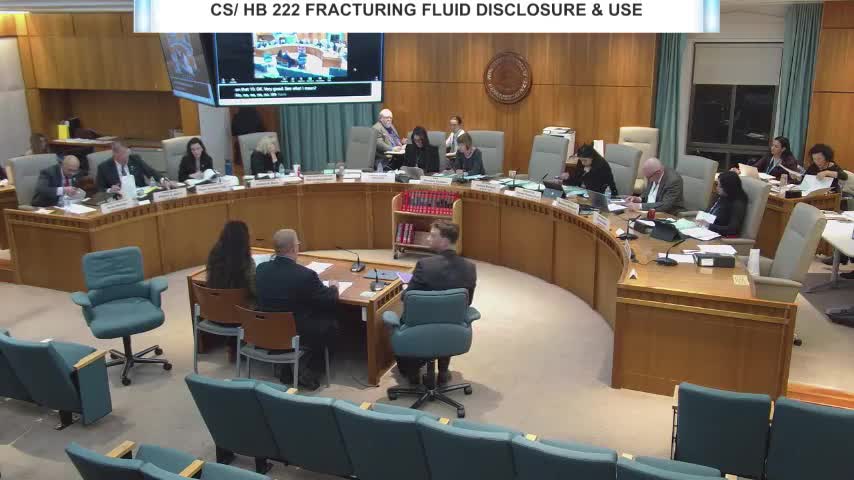
After extended testimony from industry, environmental groups and regulators, the House Judiciary Committee reported a committee substitute to House Bill 222 requiring chemical disclosure to state regulators and banning intentionally added PFAS in downhole oil-and-gas operations.
The committee advanced House Bill 222 after lengthy debate over trade secrets, existing rulemaking and how to regulate PFAS and other chemicals used in fracking and downhole oil-and-gas operations.
Sponsors and environmental advocates said the bill requires operators to disclose unique chemical identifiers to the Oil Conservation Division (OCD) before conducting downhole operations and prohibits intentional use of PFAS in those operations. Representative sponsors told the committee they sought to prevent PFAS and other “forever chemicals” from entering produced water and environmental pathways and to give scientists and regulators the information they need to assess risks and reuse produced water safely.
Opposition testimony came from the Independent Petroleum Association of New Mexico, the New Mexico Oil and Gas Association, and the Greater Albuquerque Chamber of Commerce. Industry witnesses argued the state’s existing disclosure mechanism (FracFocus) and a current rulemaking process at the Oil Conservation Division already address disclosure and PFAS concerns and warned the bill could be premature, legally uncertain, or administratively burdensome. Industry representatives also said the OCD lacks staffing and indicated concern that duplicative disclosure portals could fragment information.
Supporters — including conservation groups, water advocates and members of the public — said other states have enacted similar disclosure and PFAS restrictions and that Colorado and California remain active oil-and-gas producers while enforcing stricter rules. They urged statutory action rather than leaving the issue only to agency rulemaking, saying statutory language would be harder to reverse.
Committee members asked whether an operator could unintentionally introduce PFAS via contamination and whether the bill would impede ongoing OCD rulemaking. Sponsors said the draft focuses on intentionally added PFAS and that disclosure requirements include updates if chemicals change during operations; the bill also ties into the permitting process. The committee adopted a committee substitute (0.2) and voted to report the substitute out of committee.