Get Full Government Meeting Transcripts, Videos, & Alerts Forever!
Get email alerts on the Mesonet topic
No spam. Unsubscribe anytime.
LB595 would create Research Excellence Cash Fund to support Nebraska Mesonet; university and resource districts urge funding
Summary
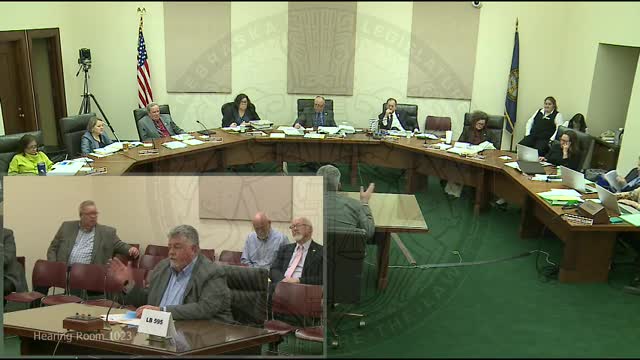
Sen. Jason Prokop introduced LB595 to create a Research Excellence Cash Fund administered by the University of Nebraska, naming the Nebraska Mesonet as an immediate priority for support.
Sen. Jason Prokop introduced LB595 to create a Research Excellence Cash Fund administered by the University of Nebraska, saying the fund would support research and data collection critical to Nebraska’s economy and public safety, and singled out the Nebraska Mesonet as a priority use.
University officials and natural‑resource witnesses described the Mesonet as a statewide network of meteorological stations that provide live weather and soil data to farmers, water managers, emergency responders and researchers. “The Nebraska Mesonet is a function of the Nebraska State Climate Office,” said Larkin Powell, director of the School of Natural Resources at the University of Nebraska–Lincoln, and the network currently includes 74 operational stations with additional sites planned or under construction through federal grants.
Why it matters: testimony emphasized practical uses — irrigation scheduling and water conservation, crop decision support, flood forecasting, wildfire early detection, and value for economic development and research. Witnesses estimated large benefit‑to‑cost ratios for agriculture and cited growing federal and local demand for higher‑resolution weather and soil data.
What witnesses said
Matt Blomstedt, associate vice president for government relations at the University of Nebraska, testified neutrally and described the bill as a mechanism to create sustainable, targeted funding for research priorities that could also be matched with federal resources. Larkin Powell provided technical detail: the Mesonet’s modern towers support multiple sensors; sensors typically need replacement roughly every 10–12 years; NOAA provides recurring funds (about $2,500 per station per year) that help offset operating costs.
Russell Callan of the Lower Loup Natural Resources District told senators the Lower Loup service area — roughly 1.2 million irrigated acres — has only two stations and would benefit from many more. He said Mesonet data are used for crop water‑use reports and that adding stations can improve irrigation efficiency and reduce nitrate leaching. John Erickson, Nebraska state forester, described how high‑resolution Mesonet data and cameras can support early wildfire detection and provide real‑time inputs for suppression decisions.
Funding and scale
Witnesses described recent federal construction funding and pending grant requests. Larkin Powell said about $5 million in construction funding was already in place from federal contracts and that an additional $10 million request was pending to complete the planned network build‑out. Multiple witnesses said that once the network is built out, state funding is needed for ongoing operation and maintenance (sensor replacement, communications, staffing).
Questions and clarifications
Committee members probed station spacing and durability, asking how many stations are in use (the witnesses said 74 active stations), typical sensor lifecycles (about 10–12 years), NOAA contributions (approximately $2,500 per station annually), and where advanced recycling or component sourcing occurs (witnesses said they would follow up with specific vendor sourcing information).
Ending
Supporters urged the committee to advance a funding mechanism; witnesses noted the Mesonet provides immediate operational benefits and long‑term research value. The committee closed the LB595 hearing after receiving proponents, opponents and neutral testimony; the transcript records no committee vote on LB595.