Get Full Government Meeting Transcripts, Videos, & Alerts Forever!
Get email alerts on the Municipal Governance topic
No spam. Unsubscribe anytime.
Committee advances measure to modernize municipal code for mayor–council cities
Summary
The House Judiciary Committee voted to advance House Bill 298, which updates long-unchanged municipal code provisions for mayor–council governments, including rules on filling mayoral vacancies and cross-jurisdictional law-enforcement support.
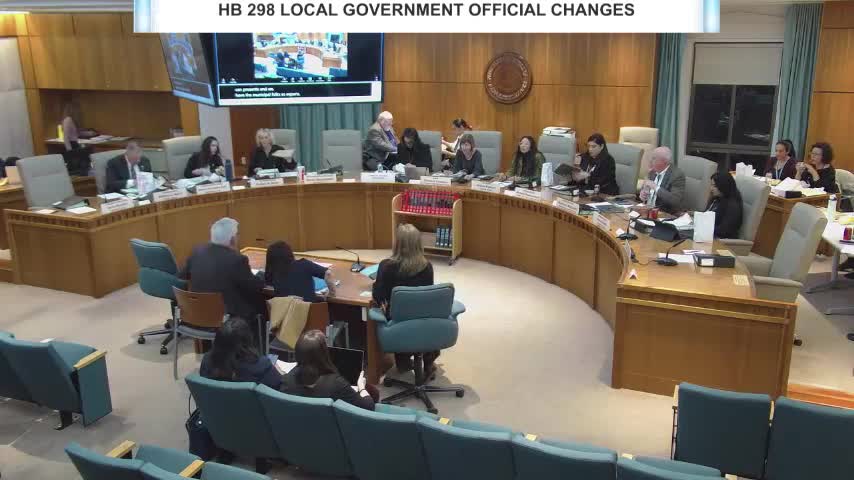
House Judiciary Committee members voted to advance House Bill 298, a package of updates to New Mexico’s municipal code that sponsors and municipal experts said are overdue.
Representative Duncan, the bill sponsor, told the committee the municipal code has seen minimal updates since the late 1970s and the measure applies only to mayor–council forms of government, not home-rule or commission-style governments. He said the bill standardizes procedures such as requiring a governing body to elect a mayor within 15 days after a vacancy and clarifies how a person filling a municipal vacancy would govern until an official replacement is chosen. “This bill is a modernization of the state’s municipal code,” Duncan said.
Rebecca Martinez and Allison Nichols of the New Mexico Municipal League described the changes as answers to recurring procedural questions. Mike Morris, mayor of Clovis and treasurer of the Municipal League board, testified in support and said municipalities had designated the League to help craft and prioritize the bill.
Committee members asked whether the bill applied to commission-style or home-rule municipalities; staff and sponsors confirmed it does not apply to home-rule or commission-style governments. After brief discussion, Representative Romero moved a “do pass” recommendation; Representative Hall seconded. The committee roll call recorded the motion and the committee chair announced passage to the next stage.
The bill’s text includes provisions allowing municipal governing bodies to temporarily cross-commission law enforcement officers from other jurisdictions for emergencies or increased need.
Supporters said the measure is procedural and meant to prevent long vacancies in mayoral offices and reduce uncertainty in municipal operations. The Municipal League and several municipal leaders spoke in favor; no public testimony in opposition was recorded.