Get Full Government Meeting Transcripts, Videos, & Alerts Forever!
Get email alerts on the School Finance topic
No spam. Unsubscribe anytime.
Norfolk Agricultural School presents FY26 budget; commissioners take it under advisement
Summary
School leaders presented a FY26 operating budget that holds headcount flat, includes a new development contractor line and an energy-analysis initiative, and relies in part on a newly enacted in‑county special‑education charge that contributes roughly $267,000 toward the school’s surplus; commissioners took the budget under advisement.
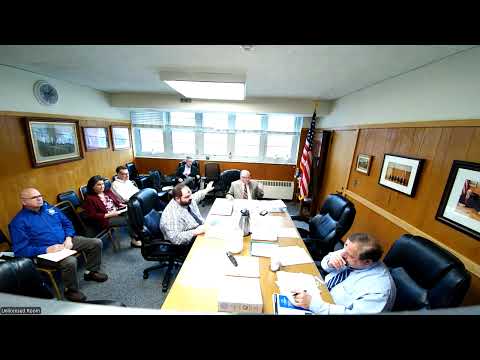
The Norfolk Agricultural School on March 5 presented its FY26 operating and capital budget to the Norfolk County Commissioners. Superintendent John Wallace and school business staff said the FY26 proposal holds total headcount flat, limits discretionary spending and reflects projected increases primarily from salary steps and county indirect costs. Commissioners took the budget under advisement.
John Wallace and the school business manager described two modest initiatives embedded in the FY26 budget: a contracted development specialist to pursue philanthropic or project‑specific fundraising (a contract line was added under "contractual services" in the packet), and a consultant to conduct a comprehensive energy analysis across utilities (electric, gas, propane and vehicle fuel) to seek energy savings and lower operating costs. Wallace said the development consultant would be project‑focused (for example, a greenhouse replacement or a building renovation) and would be paid from the school’s operating or project funds as agreed in any contract.
The presenters said the budget assumes a phased approach to a new in‑county special‑education charge. The packet lists an in‑county special‑education per‑student charge of $3,883 and an out‑of‑county special‑education charge roughly double that amount; school staff estimated the FY26 in‑county special‑education charge would yield about $267,000 in additional revenue for the school. Wallace and the business manager said that without that change the school would likely show a deficit position under the current assumptions.
The school reported an operating surplus on the packet of about $200,000 (near last year’s level of $189,000) but stressed that the figure is modest relative to overall revenues and that capital needs persist. The school presented a capital wish list and proposed four priority capital projects for FY26: replacement of an aging van/bus, campus lighting upgrades, window repairs and replacement of rooftop energy‑recovery units (two of four units to be replaced); the packet noted a combined estimated cost for those priorities in the general range presented by school staff (reference in meeting packet). Administrators said capital timing depends on staff capacity to manage projects and on whether outside funding (donations, grants or reserve use) is available.
Commissioners asked about risks including contract negotiations (teacher and support staff bargaining) and the pending retirement/turnover in administrative positions. Board members also requested a multi‑year capital plan and prioritization to help fit capital work into the county’s reserve and capital timetable. The presenters agreed to provide clearer multi‑year sequencing for capital items, and commissioners agreed to take the budget under advisement for further review.