Get Full Government Meeting Transcripts, Videos, & Alerts Forever!
Get email alerts on the Internet Provider Exemption topic
No spam. Unsubscribe anytime.
Sponsor seeks narrow fix to ensure non‑telecom internet providers are exempt from trafficking statute
Summary
Sen. Tanya Storer brought LB 385 to clean up last year’s amendment to the Uniform Deceptive Trade Practices Act so that broadband and other non‑telecommunications internet service providers are not unintentionally included in a ban targeting traffickers' public posting of exploitative material; Charter/Spectrum supported the cleanup.
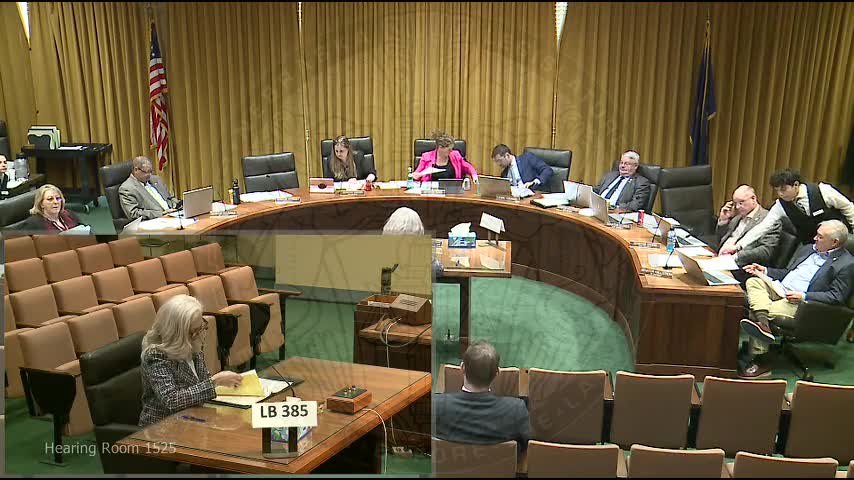
Senator Tanya Storer told the Judiciary Committee LB 385 is a statutory cleanup to match the law’s intent after last year’s amendment to the Uniform Deceptive Trade Practices Act. The earlier change created a deceptive trade practice for making certain sexually explicit depictions publicly available in a way the sponsor said targeted traffickers; LB 385 clarifies the statute does not apply to internet service providers that are not telecommunications carriers.
Storer explained that telecommunications companies had been explicitly excluded in the prior drafting but the statutory text left some broadband and cable providers outside that exemption. Dayton Murty of Charter Communications (Spectrum) testified in support, saying Spectrum serves roughly 156,000 Nebraskans and that the company was not the intended target of last year’s law. Murty and the sponsor said LB 385 simply extends the same exemption to non‑telecom internet providers so the statute reaches traffickers and not infrastructure providers.
No opponents testified and the Attorney General’s office provided a letter of support, according to the hearing record. The committee did not take a vote at the hearing; the sponsor said the change aligns the statute’s wording with its original intent.